

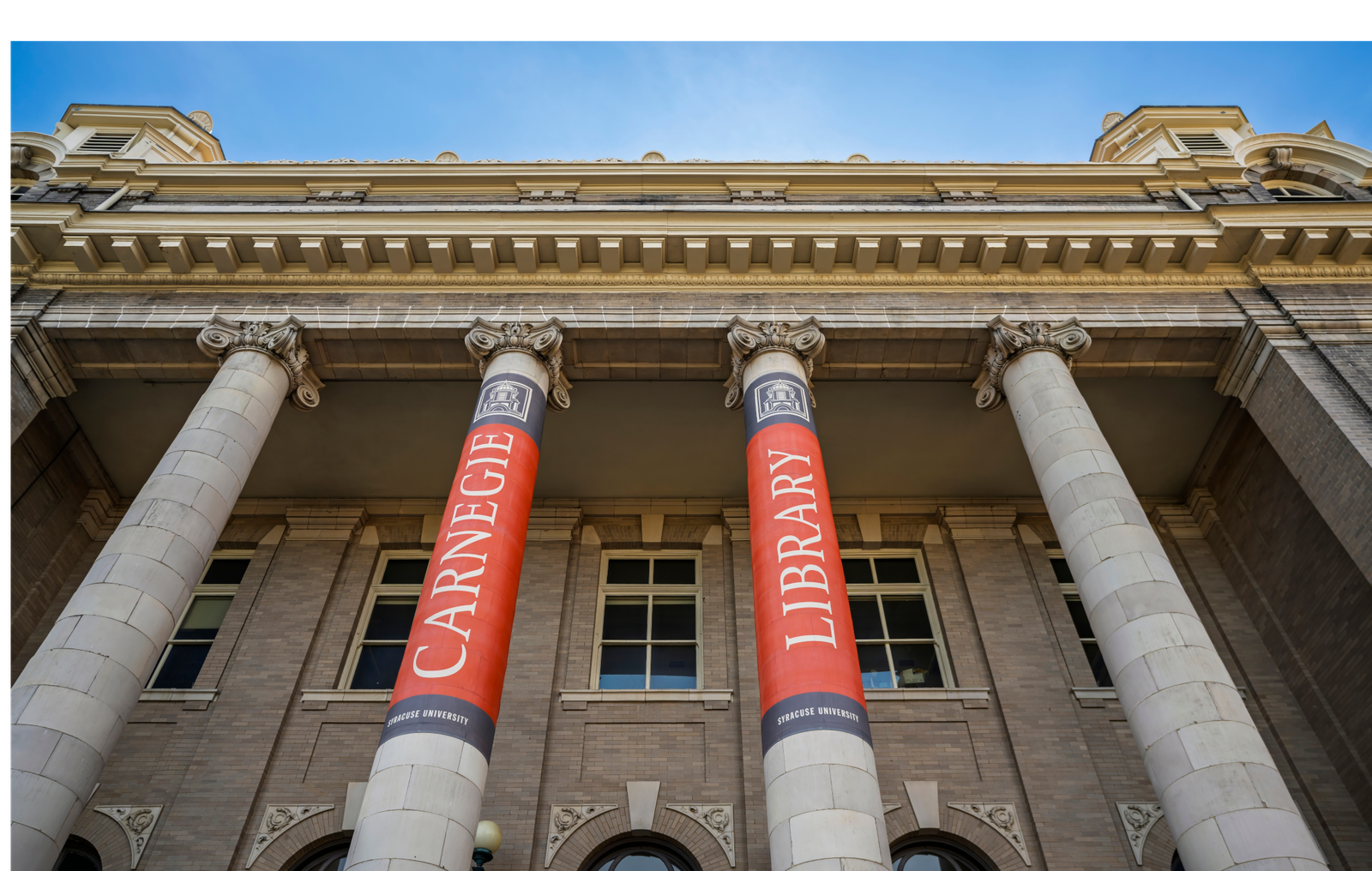
Overwhelmingly left-leaning college professors tend to offer sharp critiques of “ultra-wealth,” concentrated capital, and the supposed moral failings of industrialists and billionaires. Yet in a delicious and lasting bit of irony, many of those same professors — millions in total — entrust their retirement to a system that traces directly to one of the richest men in history: Andrew Carnegie, the Scottish immigrant who built a steel empire and then gave most of it away.
He wasn’t alone. In 1918 John D. Rockefeller established the Laura Spelman Rockefeller Memorial Foundation in honor of his late wife. By the mid-1920s the foundation had become a major funder of social science institutions, including substantial grants that helped transform the London School of Economics (LSE). With Edwin Cannan retiring, LSE Director William Beveridge sought a candidate of international stature for a new chair of political economy in 1925 — someone whose appointment would advance the LSE’s ambitions while remaining broadly consistent with the intellectual spirit of its Fabian socialist founders, including Sidney and Beatrice Webb. Beveridge extended an offer to Allyn A. Young of Harvard, then one of America’s most respected economists (at Cornell, Young had served as the dissertation chair for Frank Knight, who went on to mentor Milton Friedman, George Stigler, and James M. Buchanan). But, according to Charles Blitch’s Allyn Young: The Peripatetic Economist, the appointment nearly foundered over pension arrangements. This is where Andrew Carnegie comes into the story.
In 1905, Carnegie had transferred $10 million (the equivalent of roughly $360 million today) in United States Steel Corporation bonds to create what became the Carnegie Foundation for the Advancement of Teaching. College teaching was, in his view, “the least rewarded of all the professions.” Even at elite colleges and universities, salaries were low, and few institutions offered any form of retirement provision. Talented people hesitated to enter the field, and aging professors often clung to their posts because they had no means to retire. Carnegie had seen this firsthand, serving on the boards of Cornell University and the Stevens Institute of Technology. With his gift, he wanted to “remove a source of deep and constant anxiety to the poorest paid and yet one of the highest of all professions” and, in the process, dignify teaching and strengthen higher education itself.
The original design was simple. Participating institutions had to meet academic and institutional standards set by the foundation. Eligible professors received free pensions — no employee contributions required — typically structured around age or years of service. State-supported universities were initially left out, though Carnegie later added another $5 million to bring many of them in. The practical effect was to encourage colleges to raise academic standards — and standardize them under the Carnegie model — so their faculty could qualify. Pension eligibility also produced one of its most durable administrative inventions: the Carnegie Unit, now known as the credit hour as a common measure of preparation and instructional time. The standardization brought administrative coherence in a fragmented system, though it also weakened local experimentation and helped entrench the overly rigid model that plagues many colleges today.
Purely non-contributory pensions could not scale infinitely. In 1918, the foundation spun the function off into a new entity, the Teachers Insurance and Annuity Association of America (TIAA), seeded with capital from the Carnegie Corporation. TIAA offered portable, contributory annuity contracts jointly funded by institutions and individuals. The arrangement was fully vested in the participant, transferable across qualifying US colleges and universities, and designed for the nonprofit academic and research sector.
The economist Allyn Young was among the first cohort of professors to participate in the system. But it created a huge problem for the LSE. In 1926, Young’s career fell short of the 25-year service requirement built into the Carnegie Foundation’s rules. Young, like many faculty today depending on their TIAA plan for retirement, was concerned for his and his family’s future if he left the Carnegie Foundation system for a post abroad.
According to Charles Blitch, when Allyn Young initially turned down the chair over the pension, Beveridge proceeded to offer him not only the highest-paying professorship in all of Britain, but moving expenses and educational funds for his biological and adopted children. In addition, Beveridge received approval from the Carnegie Foundation to allow contributions to Young’s pension from “foreign institution” LSE. Finally, Beveridge also received approval for Young to work an additional five years past the mandatory LSE retirement age of 60. Unfortunately, he died of pneumonia well before this extension could take effect.
These special accommodations and the emerging portable framework that became TIAA ultimately allowed the move, illustrating how Carnegie’s philanthropy shaped not only domestic academic careers but the cross-border mobility of academic talent and the expansion of additional fringe benefits. Over the following decades the TIAA evolved into one of the largest and most influential retirement systems in the world. Today, TIAA, still operating using a not-for-profit model, continues to serve nearly five million educators, researchers, and employees of nonprofits.
Carnegie, in the TIAA case, voluntarily redirected private wealth to solve a concrete social problem that markets and governments had left unaddressed. Unlike the champagne socialists, he did not seek to nationalize higher education through a new government program. He instead donated his own money and expertise, created a nonprofit foundation, set clear conditions, and then, when the original design reached its limits, allowed a self-sustaining, market-compatible institution to take its place. The result was greater financial security for faculty, higher institutional quality, greater mobility of academic talent, and a portable retirement architecture that long predated Social Security and most private-sector plans.
The contemporary academy’s hostility toward concentrated private wealth sits uneasily beside this history. Millions of professors’ dignified retirement was built with steel profits, guided by a man who believed that the rich were trustees of their fortunes and that voluntary giving, not confiscation, was the proper means of social improvement. The pensions and the portable retirement infrastructure that followed were the practical fruits of both insistence and ingenuity. The institutions of a free society sometimes owe more to the voluntary generosity of the successful than current rhetoric admits.
Whether or not we approve of the broader consequences of Carnegie’s deliberate sculpting of American education, his pension experiment demonstrates something narrower and harder to dispute. Private capital, deployed with clear purpose and disciplined conditions, dramatically improved the material standing and mobility of the teaching profession. The next time you see an academic or professor denounce the “ultra-wealthy,” it might be worth remembering whose $10 million bond transfer established their TIAA retirement accounts. That architecture once shaped the career of an American economist crossing the ocean to London. Of particular note, without that portability, Allyn Young would not have been at the LSE to inspire a young high school student and future Nobel laureate, Ronald Coase.
The lasting influence of Carnegie’s wealth is complicated. Carnegie’s educational philanthropy raises questions about how much private wealth should be allowed to exercise control and apply its own standards to institutions as important as schools and universities, imposing one person’s judgment on many others. But that wealth also built institutions, libraries, pensions, and portable retirement options that solved real problems without waiting for government help. TIAA is one of those inheritances — born of Carnegie’s fortune, it long outlived its benefactor and is still paying dividends more than a century later.
