

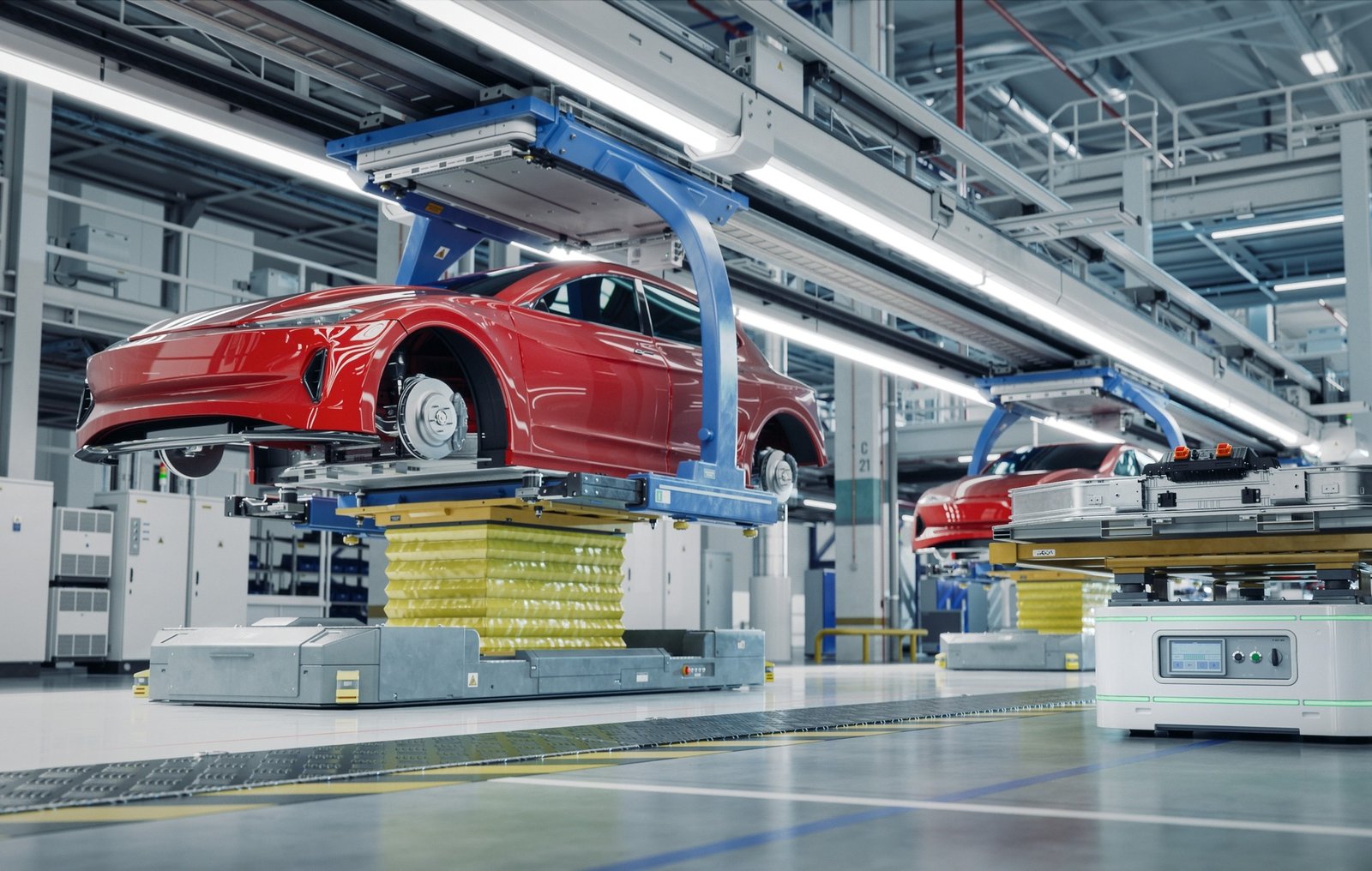
Nearly 1,000 plant workers near Kansas City find themselves on indefinite layoff. The reason for this, according to a union official? A gap of about 115,000 vehicles. General Motors had been on pace to produce about 150,000 Chevrolet Bolts before early 2027, buy now expect to only produce about 35,000 — a cut of 75 percent. Washington removing its $7,500 tax credit for EV purchases last September, and that federal policy change caused demand to fall sharply. GM plans on adding production of gasoline-powered automobiles at said plant, namely the Chevrolet Equinox and Buick Envision SUV, but this has yet to occur. This dramatic reduction in EV production illuminates a key economic reality. Lawmakers may introduce and eliminate tax credits or rewrite regulatory targets quickly, but manufacturers cannot retool production processes with nearly the same speed.
For almost twenty years, American auto manufacturers knew that Washington was stimulating EV demand. Beginning in 2008, a federal consumer credit worth $7,500 increased the expected return of producing and selling electric vehicles. A broader regulatory regime consisted of stringent fuel-economy requirements and government support for domestic battery production.
With federal policy in place, expected technological improvement, falling battery costs, and expanding consumer demand encouraged EV-specific investment. Market and governmental variables all contributed to this vision of the future in Detroit. While not the only cause, DC’s EV-related policies influenced decisions about what kinds of vehicle production will or ought to exist in five, ten, or twenty years.
Here, we find the economic rub. Capital becomes less and less malleable as it progresses through production: capital goods become increasingly specialized as resources are committed to the production of particular goods. Purchased iron may be directed into a handful of lines of production. Once the iron has been turned into a skillet or oven, it becomes harder to use in alternate lines of production. Good luck using that skillet as an engine block for a car.
Companies, then, have to choose their investments carefully. In 2020, GM announced a $27 billion investment plan in EVs for five years, a 35 percent increase in its plans from before the pandemic. In the month following the end of the EV credit last year, GM reported a “negative impact of $1.6 billion in its next quarter.”
GM could have used that $27 billion to finance myriad high-potential projects. Once GM started spending that money, though, the investment turned into particular things: specialized factory layouts, battery equipment, vehicle tooling, worker training, and logistical networks, just to name a few. The further down the production line resources moved, the less interchangeable they became. A battery-production line worth $100 million is not economically equivalent to $100 million of internal-combustion-engine production capacity simply because the accounting value is the same. They are not equally suitable for both types of production. If production plans have to change afterward, capital must be modified, combined with new capital, sold at a loss, or redirected as best as possible — and quite possibly to a lower-valued alternative, given the partial transformation of the resources already completed.
US automakers clearly anticipated higher US EV demand than ultimately materialized. In fact, through September of this year, US EV sales are down about 31 percent in 2026, accounting for only 6 percent of new-vehicle sales, after sitting at 8.5 percent in 2025. Hybrids, however, are up 23 percent, representing about 16 percent of the current US market.
Businesses can and frequently do misjudge consumers without any interference from the government. Per the US Bureau of Labor Statistics, 50 percent of small businesses fail within five years. Part of the EV adjustment is almost certainly a necessary market correction to overly optimistic forecasts that may have existed without government interference. EVs now constitute 23 percent of new-car sales in Europe, spurred by its own cocktail of regulatory incentives.
That said, entrepreneurs must take regime uncertainty into consideration if they hope to survive. Detroit must attempt to forecast consumer preferences, gas prices, battery costs, and the like in order to determine EV production. On top of that, it must develop an answer to the question: “what will Washington’s rules be in 10 years?”
This is an especially difficult task when even DC’s own goals are not necessarily implemented. Some two dozen states, cities, counties, and environmental groups are contesting the new fuel-economy rules issued on September 28. This creates a wonderfully terrible need to predict not only current regulations, but whether said rules will survive judicial review, the upcoming midterms, and a new Congress in January.
And so, we return to Kansas City. General Motors can stop its Chevrolet Bolt production much quicker than it can change the factories and capital equipment it’s dedicated to producing them. Expiring tax credits, ever-changing regulatory targets, and an uncertain court case can change circumstances and conditions in an instant. Meanwhile, factory floors, machinery, supply logistics, and worker skills cannot adapt at the same pace.
Industrial policy, then, has a greater influence than just redirecting money. It has the effect of changing expectations, then guiding investments, which in turn become physical capital with increasing specificity. Factories cannot be refitted and supply lines rerouted as quickly as pens can alter laws. Manipulation of expected returns manifests itself in real production decisions — and misallocation — of our scarce resources.
Entrepreneurship is difficult enough under normal conditions. GM was not foolish in thinking the EV might be as successful in the US as it was in Europe. But the knowledge problem, as elucidated by the likes of Frederich Hayek, consists in more than identifying useful technologies; it lies also in the realities of timing, scale, location, and the composition of the capital structure required to produce the goods in question — all of which can be radically and quickly altered by new ink in DC.
