

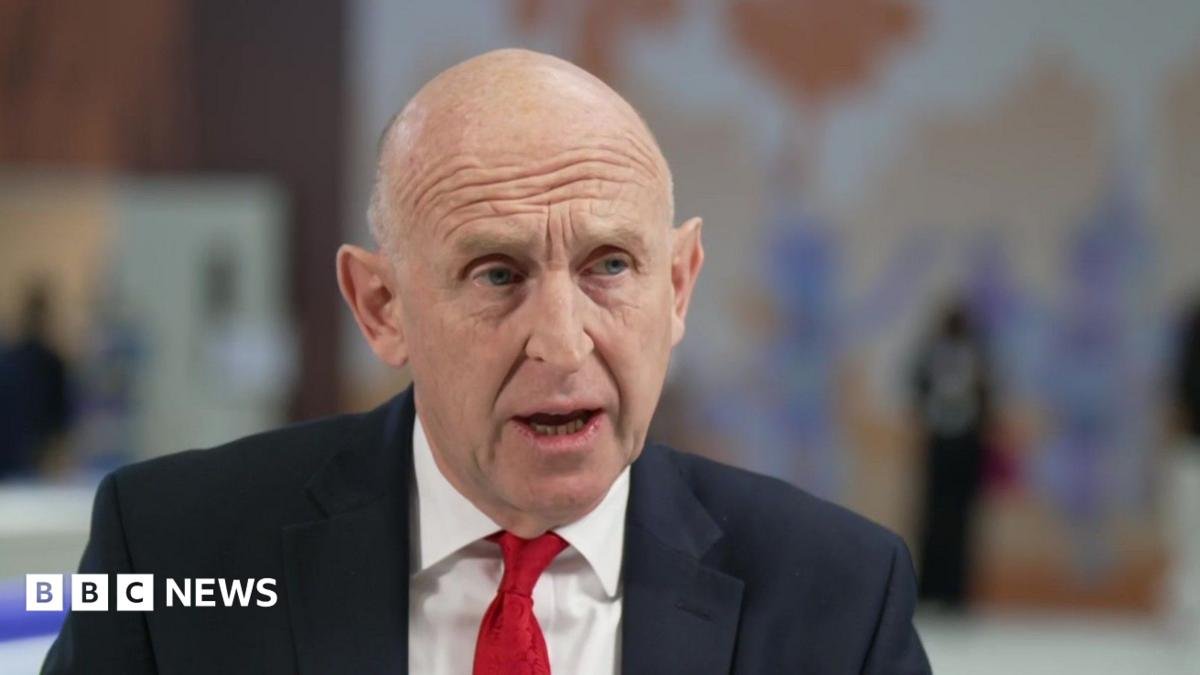
Healey told the BBC the “impact of AI on the economy, on productivity, is only just beginning to register”.
He said the technology has “huge potential, as well as huge risks”, adding that Britain’s priority would be to ensure AI can be developed safely while unlocking the opportunities it presents.
The latest growth figures were released after Healey landed in Bangkok for the annual meeting of the International Monetary Fund (IMF).
Earlier this week, the global financial watchdog praised the UK’s plans to cut debt levels, with global borrowing costs on the rise, with managing director Kristalina Georgieva adding that the country was seeing “a bit of a better growth prospect” than other G7 nations.
Healey said: “Despite conflicts in the Middle East and Europe hitting people across the world, today’s figures offer more proof of Britain’s resilience in the face of these global shocks.”
The Conservatives said the economic growth figures “conceal worrying trends in key sectors as we approach a crucial Budget”.
Shadow chancellor Andrew Griffith said: “Construction has now shrunk for four months in a row, with private housebuilding falling fastest. Labour promised to get Britain building, but they are failing.”
He called for Healey to cut taxes and reduce red tape.
Liberal Democrat Treasury spokesperson, Daisy Cooper, said the growth of 0.1% in August was “nothing to celebrate”.
“The economy is stuck in first gear and barely crawling forward, while families are still struggling to make ends meet.”
Healey went on to say the Budget would be tough and not include inflation top-ups for public sector pay.
Some experts and unions have called for extra cash for some departmental budgets, to account for the rising costs of providing public services and pay.
But, asked whether there would be extra money made available for nurses and doctors, the chancellor said: “People recognise these times that are tough for everyone, and what they do expect of a government is to manage with the budgets we’ve got, deliver the public services they need, and that’s the challenge.
“Our departments have their spending, and the prime minister and I, being in lockstep about this, where we want to do things, we have to make sure that we can pay for them within the budgets that we’ve got and control spending.”
