

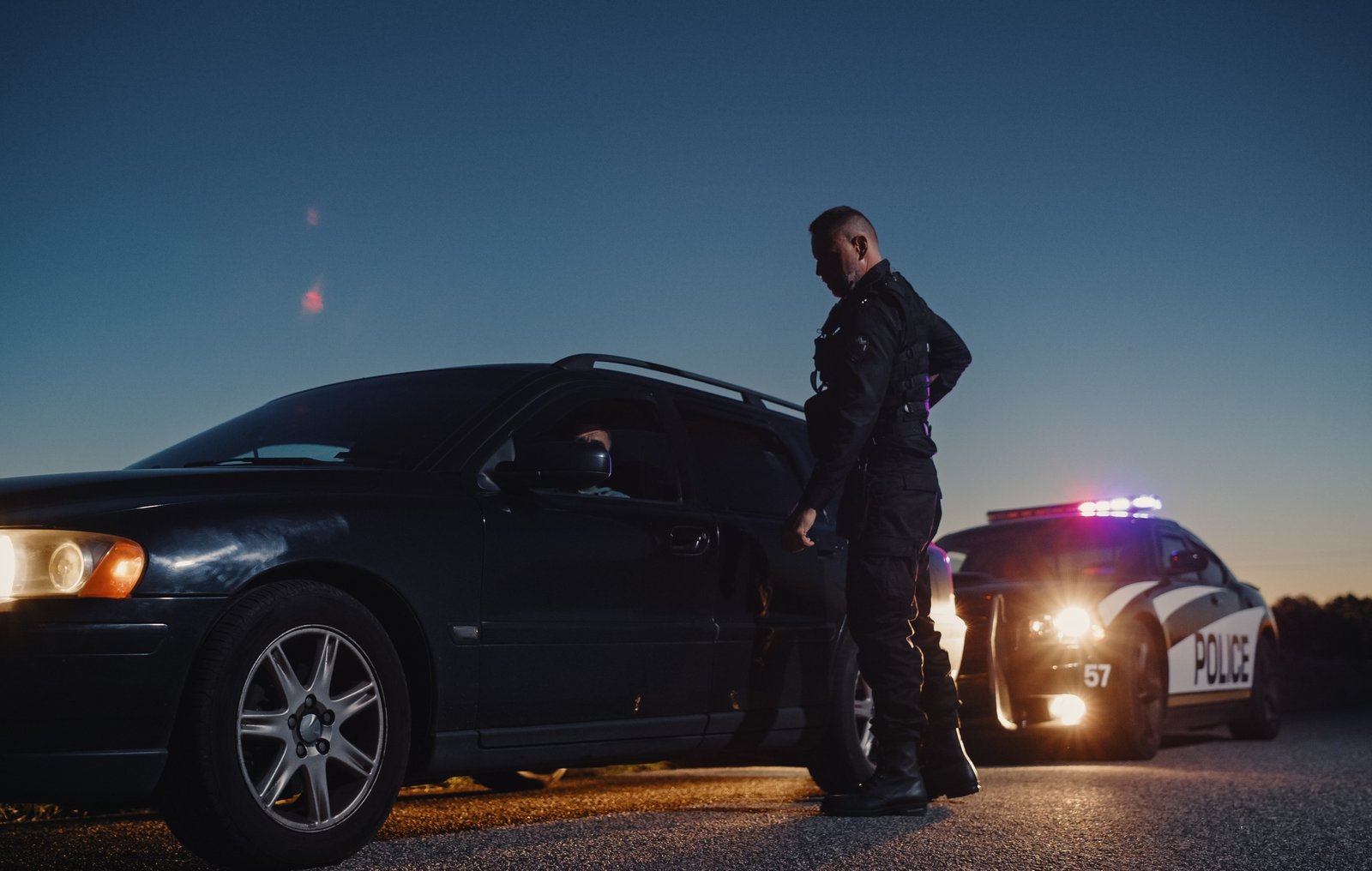
In 2020, following the death of George Floyd in Minneapolis, a strange political alliance formed around ending “qualified immunity,” a legal doctrine that for more than a half-century has shielded government officials from civil lawsuits, particularly police officers.
Writing in the New York Times, attorney Daniel Epps said factions on the left and right, as well as many libertarian groups, supported eliminating or weakening qualified immunity because the doctrine protects police officers from liability even when they clearly violate someone’s constitutional rights.
“Left liberals and libertarians argue that qualified immunity improperly denies recovery to injured persons and encourages police misconduct,” Epps noted. “At the same time, some legal conservatives have questioned qualified immunity’s doctrinal foundations.”
Qualified Immunity or ‘Absolute Immunity’?
Those foundations stretch back to Pierson v. Ray, a Supreme Court case involving 15 clergymen who were arrested in 1961 for gathering in the segregated waiting room of a Mississippi bus station. When the charges were dropped (the Mississippi statute the priests were intentionally violating would be overturned in 1965), clergy members sued the police officers for false arrest and imprisonment. The officers argued that their actions were immune from civil liability, and the Supreme Court partially agreed, ruling that while police do not possess “unqualified immunity” under the law, they enjoy “qualified immunity,” because an officer “must choose between being charged with dereliction of duty if he does not arrest when he has probable cause, and being mulcted in damages if he does.”
In the decades that followed Pierson, courts interpreted the “qualified immunity” doctrine increasingly broadly. Courts ruled it could shield government officials from liability unless they violated “clearly established” federal law, even when their conduct could expose them to criminal charges. Ilya Somin, a law professor at George Mason University, recently summarized that courts have historically set the doctrine aside only “in cases where facts are particularly egregious.” To give a sense of what Somin means by “particularly egregious,” consider some of the civil cases in which courts have upheld qualified immunity for police officers.
In 2019, the Ninth Circuit US Court of Appeals ruled in favor of Fresno police officers who allegedly stole more than $225,000 in cash and rare coins during a search. The court held that the officers were entitled to qualified immunity because no previous case had clearly established that such theft on duty was unconstitutional.
The following year, in Baxter v. Bracey, the Sixth Circuit granted qualified immunity to officers who allegedly set a police dog on a man after he had surrendered to police. Once again, the court reasoned that there was no clear precedent establishing the conduct as unconstitutional.
That same year, in Jamison v. McClendon (2020), a federal court in the Fifth Circuit granted qualified immunity to police officer Nick McClendon, who in 2013 pulled over Clarence Jamison in Pelahatchie, Mississippi, and performed a drug search. Jamison alleged that he repeatedly refused to consent to the search and that McClendon falsely claimed an anonymous caller had reported that Jamison had “10 kilos of cocaine” in his vehicle. Though the court upheld qualified immunity in Jamison, it issued a withering rebuke of the legal doctrine, saying it works in practice more like “absolute immunity” and should be destined for the “dustbin.”
“The Constitution says everyone is entitled to equal protection of the law — even at the hands of law enforcement,” wrote US District Court Judge Carlton W. Reeves. “Over the decades, however, judges have invented a legal doctrine to protect law enforcement officers from having to face any consequences for wrongdoing.”
Reeves’s scathing 2020 ruling suggested cracks were finally forming in the seemingly impervious legal shield of qualified immunity. A September ruling suggests those cracks may be widening.
Police Accountability for a ‘Fishing Expedition’?
In September, the Fifth US Circuit Court of Appeals affirmed a federal court ruling, rejecting police officers’ claims in a case involving a pair of motorists in Louisiana, who allege they were detained and investigated for no valid reason and in violation of the Constitution’s Fourth Amendment.
According to public documents, Mario Rosales was driving a red Mustang on Jackson Street in Alexandria when a police vehicle drove up behind him. When the traffic light turned green, Rosales made a left turn, at which point police officers Samuel Terrell and Jim Lewis pulled him over for “failure to signal,” adding that they were “curious” about what he was up to.
During the 20 minutes Rosales and his passenger Gracie Lasyone were detained, they were frisked and questioned about drugs, prior police encounters, and their views on the US Constitution. After searches found no evidence of illegal drugs and computerized ID checks came back clean, Terrell and Lewis cited Rosales for minor traffic infractions: failure to signal and failure to register his vehicle. These charges were later dismissed, as Rosales’s vehicle was registered in New Mexico and dashcam footage clearly shows the Mustang’s turn signal blinking at the traffic light moments before Rosales made a left turn.
Terrell and Lewis argue that Rosales did not put his turn signal on soon enough, violating a Louisiana law that requires drivers to signal turns 100 feet before intersections. Attorneys for Rosales and Lasyone reject this claim and say there was no legal justification for the stop or the search.
“The officers pulled them over on bogus traffic infractions to go on a fishing expedition for drug crimes,” said Phillip Suderman of the Institute for Justice, the organization representing Rosales and Lasyone. “The Constitution protects Americans from being detained and investigated without a valid reason. But that is precisely what happened to Mario and Gracie.”
Fix the Incentives
It’s unclear whether Rosales and Lasyone will win their case. What matters is that the courts are allowing it to proceed. In previous decades, the civil suit against Terrell and Lewis would have almost certainly been dismissed at summary judgment. Instead, it has been repeatedly allowed to proceed.
“This is the third ruling denying the officers qualified immunity,” IJ Attorney Marie Miller noted after the recent Fifth Circuit decision.
Qualified immunity is far from dead, but the sweeping deference courts established after Pierson appears to be waning. This invites an important question: What would happen if courts continued to narrow the doctrine, or if the Supreme Court abolished it altogether? (There seems to be little hope that Congress will seriously take up the subject.)
Critics of qualified immunity say abolishing the doctrine would bring much-needed accountability and encourage police officers and departments to purchase liability insurance, much like doctors insure themselves for malpractice.
Yet some scholars, including Kenneth S. Abraham, a professor at the University of Virginia School of Law, have questioned whether liability insurance would provide police with sufficient incentives to curb misconduct, as well as whether the market could absorb expanded liability.
“The insurance market is already in turmoil,” Abraham said in a 2021 interview, “and any expansion of liability is likely to aggravate that turmoil.”
Epps, writing in the Times, said abolishing qualified immunity might be the right thing to do, but also questioned whether doing so would curb police misconduct. He noted that municipalities (taxpayers) have paid millions of dollars in settlements and legal fees over allegations of police misconduct, yet the misconduct has persisted.
“In the end, the best argument for eliminating qualified immunity is less about deterrence and more about symbolism,” Epps wrote. “Qualified immunity routinely requires courts to say that there will be no penalty for a police officer who has violated the Constitution. That sends the message — to officers and the public — that the police are above the law.”
On this last point, Epps is mostly correct. I say mostly because qualified immunity does more than send the message that police are above the law. It often literally places them above the law.
That is precisely why repealing, or at least narrowing, qualified immunity is so important.
Incentives matter. By maintaining a legal doctrine that for decades has shielded police officers from personal liability for violating constitutional rights, the American legal system has sent a clear message to law enforcement: officers can violate the rights of citizens without facing civil penalties for their actions.
Economics is largely a study of human action, and one of its basic lessons is simple: If you want different behavior, change the incentives. And holding police civilly accountable when they violate the rights of citizens is likely to alter the behavior of bad actors in law enforcement.
