

In the spring of 2019, while on tour for my book Digital Minimalism, I stopped by the Manhattan production offices of Brian Koppleman to record an episode of his podcast, The Moment.
We had a good conversation covering a lot of territory. But there was one point, around the twenty-minute mark, where things got mildly heated. Koppleman took exception to my skepticism surrounding social media, which he found to be reactionary and resisting the inevitable.
As he argued:
“I was thinking a lot today about the horse and buggy and the cars. Right? Because I could have been a car minimalist. And I could have said, you know, there are all these costs of having a car: you’re not going to see the scenery, and we need nature, and we need to see nature, [and] you’re risking…if you have a slight inattention, you could crash. So, to me, it is this, this argument is also the cars are taking over, there is nothing you can do about it. We better instead learn how to use this stuff; how to drive well.”
Koppleman’s basic thesis, that all sufficiently disruptive new technologies generate initial resistance that eventually fades, is recognizable to any techno-critic. It’s an argument for moderating pushback and focusing more on learning to live with the new thing, whatever form it happens to take.
This reasoning seems particularly well-fitted to fears about mass media. Comic books once terrified the fedora-wearing, pearl-clutching adults of the era, who were convinced that they corrupted youth. In a 1954 Senate subcommittee meeting, leading anti-comic advocate Fredric Wertham testified: “It is my opinion, without any reasonable doubt and without any reservation, that comic books are an important contributing factor in many cases of juvenile delinquency.” He later accused Wonder Woman of promoting sadomasochism (to be fair, she was quick to use that lasso).
Television engendered similar concern. “As soon as we see that the TV cord is a vacuum line, piping life and meaning out of the household, we can unplug it,” preached Wendell Berry in his 1981 essay collection, The Gift of the Good Land.
It’s easy to envision social media content as simply the next stop in this ongoing trajectory. We worry about it now,but we’ll eventually make peace with it before turning our concern to VR, or brain implants, or whatever new form of diversion comes next.
But is this true?
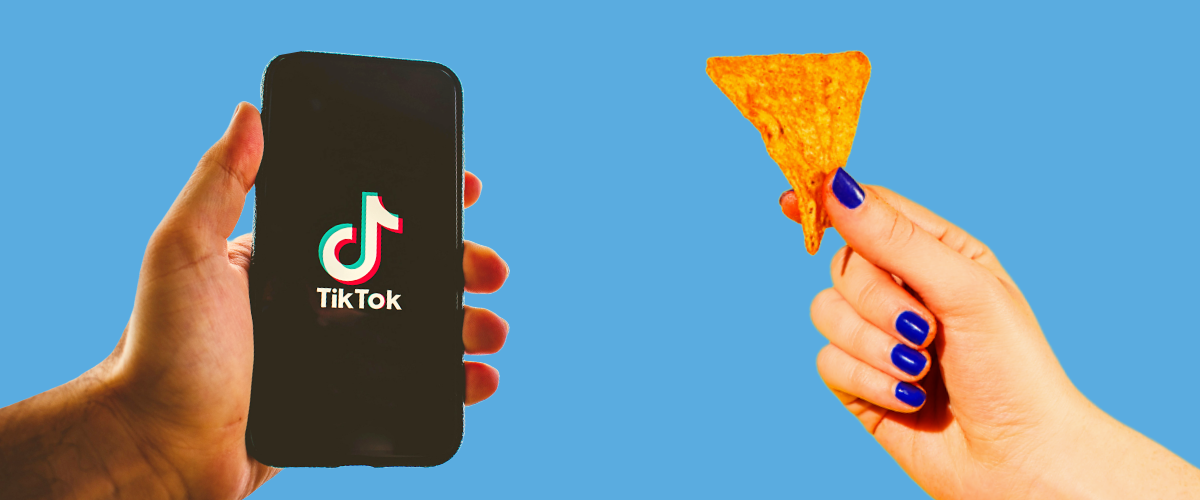
I would like to revisit an analogy I introduced last spring, which will help us better understand this conundrum. It was in an essay titled “On Ultra-Processed Content,” and it related the content produced by attention economy applications like TikTok and Instagram to the factory-contrived “foodlike edible substances” we’ve taken to calling ultra-processed food.
Ultra-processed food is made by breaking down basic food stock, like corn and soy, into their constituent components, which are then recombined to produce simulated foodstuffs, like Oreos or Doritos. These franken-snacks are hyper-palatable, so we tend to eat way too much of them. They’re so filled with chemicals and other artificial junk that they make us sicker than almost anything else we consume.
As I argued, we can think of the content that cuts through modern attention economy apps as ultra-processed content. This digital fare is made by breaking down hundreds of millions of social posts and reactions into vectors of numbers, which are then processed algorithmically to isolate the most engaging possible snippets. This then creates a feedback loop in which users chase what seems to be working from an engagement perspective, shifting the system’s inputs toward increasingly unnatural directions.
The resulting content might resemble normal media, but in reality, it’s a fun house-mirror distortion. As with its ultra-processed edible counterparts, this content is hyper-palatable, meaning we use apps like TikTok or Instagram way more than we know is useful or healthy, and because of the unnatural way in which it’s constructed, it leaves us, over time, feeling increasingly (psychologically) unwell.
This analogy offers a useful distinction between social media and related media content, like television and comic books. In the nutrition world, experts often separate ultra-processed foods from the broader category of processed foods, which capture any food that has been altered from its natural state. These include everything from roasted nuts to bread, cheese, pasta, canned soup and pizza.
As processed foods became more prevalent during the twentieth century, experts warned against consuming too many of them. A diet consisting only of processed foods isn’t healthy.
But few experts argued against eliminating processed foods altogether. This would be practically difficult, and many argue that it would lead to an unappealingly and ascetic diet. It would also cut people off from cultural traditions, preventing them from enjoying their grandmother’s pasta or bubbe’s kugel.
These same experts, however, are often quick to say that when it comes to ultra-processed foods, it’s best to just avoid them altogether. They’re more dangerous than their less-processed counterparts and have almost none of their redeeming values.
It’s possible, then, that we’re confronting a similar dichotomy with modern media. When it comes to watching Netflix, say, or killing some time with Wordle on the phone, we are in processed food territory, and the operative advice is moderation.
But when it comes to TikTok, we’re talking about a digital bag of Doritos. Maybe the obvious choice is to decide not to open it at all. In other words, just because we’ve been worried about similar things in the past doesn’t mean we’re wrong to worry today.
