

French philosopher Jean-François Revel, sometime after Augusto Pinochet’s coup in Chile, reportedly remarked that when the dictator came to kill Chilean democracy, he found only a cadaver. That quip carries crucial lessons for the contemporary popularity of the Democratic Socialists of America, the postliberal right, and their rising equivalents in European countries like France and Germany.
Revel’s point was not to absolve Pinochet. The government under Salvador Allende, overthrown by Pinochet, had its own antidemocratic momentum. Democracies at risk of succumbing to control rarely face only one threat. Only attacks from multiple sides can sufficiently weaken political legitimacy for would-be authoritarians to capture an existing state.
Chilean democracy had not merely been wounded by political polarization. It had suffered for decades from another disease: the creeping politicization of economic life.
For decades, the Chilean government got increasingly involved in economic affairs: it increased tariffs and protectionist regulations, nationalized industries, including banking, and pursued strong central planning in pursuit of industrialization. These changes were enacted in the name of supposed liberalism — not socialism.
Two problems immediately emerged. First, this enlargement of government power raised the value of possessing government. Second, government interventions produce unintended consequences. As a result, rather than repeal the original measure, governments frequently respond with another intervention, followed by another. The unintended consequences multiply, and so do the interventions. Growth grinds down to a halt.
Starting in the 1950s, Chile grew more slowly than most comparison countries and regions. From 1950 to 1970, GDP growth was 3.8 percent annually, and real GDP per capita growth was only 1.6 percent, which was slower than countries like the United States and Japan but also cultural cousins like Mexico and Spain. In fact, in 1950, Chileans were richer than Mexicans by more than 75 percent. By 1970, the gap had melted to near zero with Mexicans being nearly richer. During the 1960s, it had a GDP per capita growth of 1.9 percent per year compared to 2.6 percent for the rest of Latin America, 2.5 percent for East Asia and Pacific countries and the United States, while world GDP per capita rose 3.3 percent on average. This contrasts with earlier periods when Chile had either steamed faster ahead than other nations or grew at least as fast.
As growth slowed, populism rose. Socialist Salvador Allende won on the promise of more interventions to remedy the problems of previous interventions. He did not initiate them; he simply proposed to continue the cycle more radically. At the same time, some interest groups or segments of the electorate saw that losing control of the state meant incredible potential harm to them. As the government determined which firms received protection, which sectors obtained credit or regulatory protections, which prices could rise, which goods may be imported, control of government became worth almost any price. For some, it was worth a coup to replace a Socialist with a military dictator.
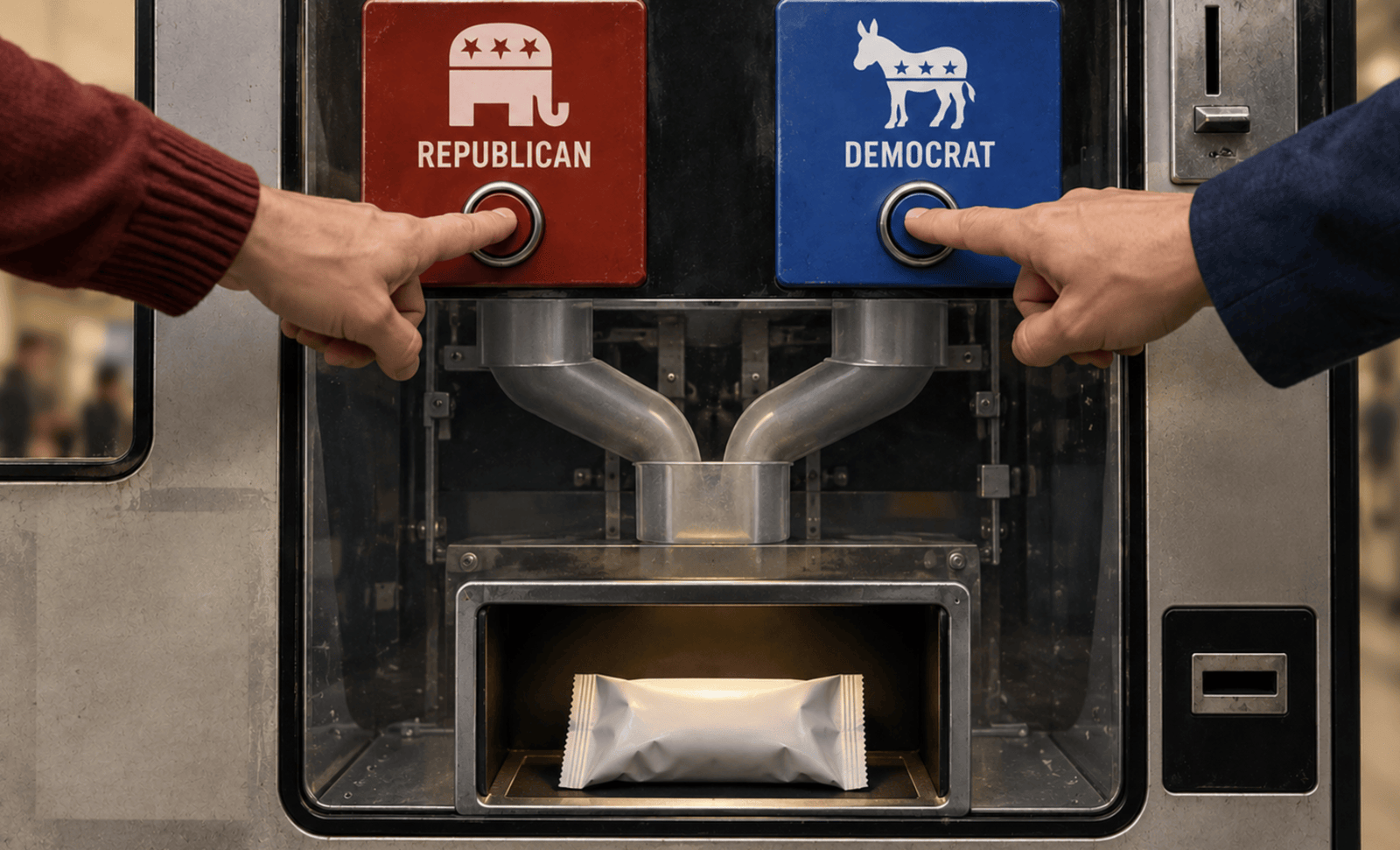
The danger for the United States is not that it has reproduced Chile in 1973. It plainly has not. (Yet.) The danger is that American politics is beginning to reproduce the underlying dynamic: rival movements encouraging one another to abandon liberal restraints.
On the right, the postliberal right or “beefsteak socialists” (brownish on the outside, red on the inside) propose to use tariffs as devices for reorganizing industries, promoting civic virtues, and protecting workers from “globalists.” These intellectuals include figures such as Adrian Vermeule, Sohrab Ahmari, Patrick Deneen, Oren Cass and Gladden Pappin. They defend state ownership in private corporations in order to direct investments toward national revival. In addition to tariffs, they defend subsidizing “key” (rarely defined consistently) industries to protect national interests. Their talking points have the ear of our current vice president, who explicitly replicates their arguments.
On the left, the Democratic Socialists of America are no longer a mere ragtag bunch of campus activists. They have great electoral visibility and competitiveness. They have won competitive primary races in Democratic strongholds in New York State; won primaries in more purple states such as Michigan; and ran surprisingly competitive candidates in Maine’s Senate race and Wisconsin’s gubernatorial race, despite those candidates being flawed in many ways, either because of personal scandals or because they expressed views far from the median voter. One of their key figures, Alexandria Ocasio-Cortez (D-NY), also features prominently in betting markets for winning the Democratic presidential primaries in 2028. They want, however, essentially the same policies as their beefsteak socialist counterparts. They merely use different justifications for increased state control of the economy.
Normally, we could dismiss them all as cranks on the margin. However, the problem is that their views and policy proposals are frequently advanced in public. They hold sway with many and are actually implemented in many state-level or municipal governments. There are even federal-level moves in that direction as the federal government acquired large ownership stakes in strategic firms in order to influence them — all of which have been combined with a renewed use of tariffs as industrial policy.
Thus, the ingredients for something similar to the Chilean spiral are present. The two movements are not merely growing simultaneously. They feed one another. To be sure, America is nowhere near where Chile was in 1973, or even in 1970. However, the calls for intervention that emanate from both sides, if heeded, will generate their own unintended consequences. They, in turn, will fuel further calls for intervention. Simultaneously, as the state grows, the temptation to dedicate resources to acquiring control of it will grow as well.
Revel’s quip may thus be refined slightly to become a warning. To succumb, there must first be a long weakening process. There must first be a long process of politicization of every aspect of social and economic life. Reverse that politicization and you halt the weakening.
