


What Is Emotional Intelligence Training?
Emotional intelligence training is now a key investment for organizations operating in AI-focused environments. As automation changes technical roles, companies rely more on human skills that technology cannot easily replace, such as leadership, communication, teamwork, adaptability, and good judgment. Because of this, many L&D and HR leaders are asking what emotional intelligence training is and how it can help business performance over time.
Emotional intelligence training is a structured approach to help people recognize, understand, manage, and use their own and others’ emotions to improve how they communicate, lead, make decisions, and work with others. Instead of focusing just on theory, good programs teach practical emotional intelligence skills that employees can use every day. Most programs focus on five main areas: self-awareness, self-regulation, motivation, empathy, and social skills. These skills help professionals handle conflict, work effectively with diverse teams, and lead with greater confidence and resilience. For organizations, teaching emotional intelligence is now seen as a key skill that builds stronger leaders, boosts employee engagement, and improves overall performance.
Why Emotional Intelligence Matters More Than Ever In Today’s Workplace
Emotional intelligence training is now a key focus for many organizations because technical skills alone are not enough in today’s complex workplace. With hybrid work, AI tools, and ongoing changes affecting how people work together, being able to recognize, understand, and manage emotions is a real advantage for everyone, not just leaders.
Hybrid Work
In hybrid work settings, it is harder to notice the nonverbal cues that help build trust and clear up misunderstandings. Managers need to spot when team members feel disconnected or stressed, even if they do not meet face-to-face often.
AI
As AI takes over routine tasks, human skills like empathy, listening, and building relationships become even more important. These emotional intelligence skills help people handle tough conversations, work well with remote teams, and make good decisions when technology cannot solve everything.
Psychological Safety
Emotional intelligence is also key to creating psychological safety, where employees feel safe to share ideas, ask questions, and admit mistakes without worrying about negative consequences. More HR leaders, executives, and managers now see that psychological safety encourages innovation and that emotionally intelligent leaders help keep employees engaged and loyal.
Customer Interactions
For sales teams, understanding how customers feel builds trust and lasting relationships. Customer success teams use empathy and emotional control to handle tough situations and keep clients happy. When organizations go through change, leaders with strong emotional intelligence explain changes clearly, handle resistance well, and keep trust strong throughout the company.
Who Benefits Most From Emotional Intelligence Training?
Emotional intelligence training benefits everyone in an organization, but it is especially valuable for employees who rely on communication, influence, and decision-making in their roles. Although anyone can improve their emotional intelligence, different groups use these skills in unique ways to boost both individual and organizational performance.
Emerging Leaders
New and aspiring managers often have a lot to learn as they move from individual roles to leading others. Technical skills by themselves usually are not enough to motivate teams, handle conflict, or give helpful feedback. Emotional intelligence training helps new leaders build self-awareness, empathy, and emotional control early on, so they can earn trust and confidence right from the start.
People Managers
People managers have a big impact on employees’ daily experiences. When they can recognize emotions, coach well, and handle tough conversations thoughtfully, it helps keep employees engaged and encourages them to stay. Emotional intelligence leadership training gives managers useful tools to improve communication, solve conflicts, and build teams where everyone feels supported and listened to.
Executive Teams
Senior leaders influence the overall mood of the organization. When the company is growing, changing, or facing uncertainty, executives with strong emotional intelligence make better decisions, communicate more clearly, and build trust throughout the business. That’s why many organizations invest in EQ training or executive coaching to help leaders work together, guide strategy, and lead with resilience.
HR And Talent Leaders
HR and L&D professionals are key to shaping workplace culture and building leadership skills. Understanding emotional intelligence helps them not only as leaders themselves, but also when creating better learning programs, coaching, and talent development that support the company’s long-term goals.
Customer-Facing Teams
Sales, customer success, and support teams use emotional intelligence to connect with customers, handle tough situations, and respond with empathy. EQ leadership training and emotional intelligence programs help these teams build stronger relationships, deliver better service, and create positive customer experiences, even when their jobs are challenging.
What Does an Effective Emotional Intelligence Training Program Include?
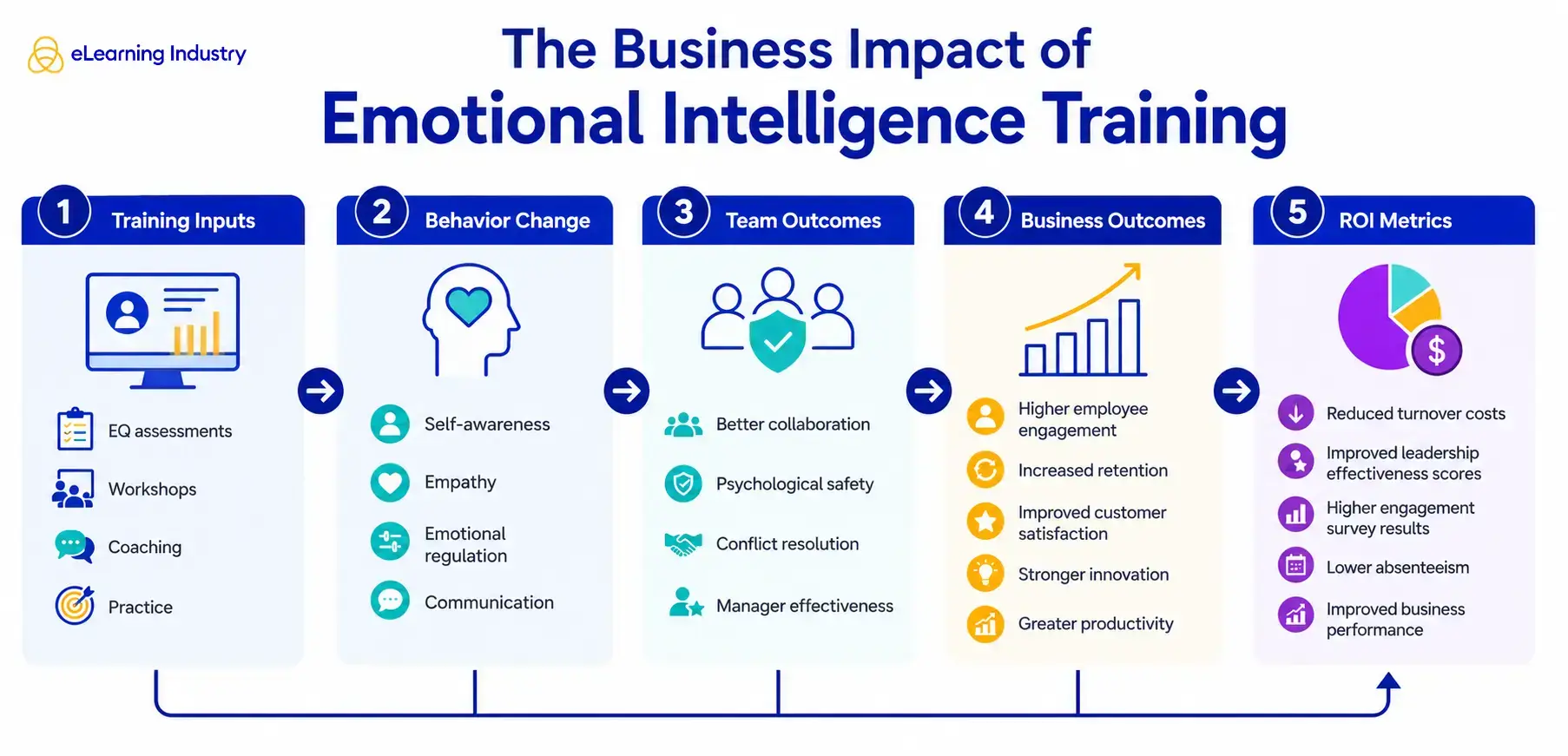
Emotional intelligence training works best when it is more than just a one-time workshop. A structured program helps people build, practice, and keep new behaviors over time. A high-impact emotional intelligence training program combines assessment, skill development, coaching, and real-world practice to create lasting change. Instead of focusing only on theory, good emotional intelligence training shows learners how their emotional habits affect leadership, teamwork, and decision-making at work.
Assessment And Baseline Measurement
A strong emotional intelligence program starts by finding out where learners are right now. Without this baseline, it is hard to tailor development or track progress later on.
Organizations often use EQ assessments, 360-degree feedback, personality tests, and observations to find strengths and areas for growth. These tools help show how people communicate under stress, handle emotions, take feedback, and build relationships at work.
For L&D leaders, this first assessment also sets clear benchmarks. This makes it easier to measure the training’s impact over time, rather than just looking at satisfaction scores.
Practical Skill Development
After strengths and gaps are found, participants start building the key emotional intelligence skills they use daily at work. Instead of just listening to lectures, good training focuses on practice and reflection.
Key areas often include active listening, empathy, managing emotions, resolving conflicts, handling tough conversations, and giving helpful feedback. Learners also build self-awareness by noticing their emotional triggers and seeing how their reactions affect the team.
One of the most valuable emotional intelligence tips for learners is to treat these skills as daily habits rather than isolated techniques. Small, consistent changes, such as pausing before responding during a difficult conversation or asking more open-ended questions, often have a greater long-term impact than dramatic behavioral shifts.
Coaching And Reflection
Building emotional intelligence takes time and is not a one-time event. Even the best training will not lead to lasting change unless people have chances to reflect, get feedback, and use new skills over time.
Coaching, peer talks, journals, and regular check-ins help learners link training to real work situations. This ongoing support builds self-awareness, helps people spot patterns, celebrate progress, and adjust as new challenges come up.
Real Workplace Application
The most effective emotional intelligence training program connects learning with real job performance. Simulations, role-plays, scenarios, peer coaching, and manager support let people practice new behaviors in realistic settings before using them at work.
Ongoing manager support is just as important. Leaders who show emotionally intelligent behaviors, give timely feedback, and encourage reflection help learning stick long after training ends. When emotional intelligence is part of daily conversations, reviews, and leadership goals, it becomes a natural part of how the organization works.
Delivery Formats: Which Emotional Intelligence Training Option Fits Your Organization?
Emotional intelligence training works best when the way it is delivered matches your organization’s goals, people, and learning style. There is no universal solution, but picking the right method can make a big difference in how engaged people are, how much they remember, and whether they change their behavior over time. For instance, leadership teams often get the most from interactive discussions and coaching. In contrast, large or spread-out teams may need flexible online learning. Many organizations use a mix of formats to build a learning journey that fits different roles and experience levels.
Format |
Best For |
Advantages |
Considerations |
Instructor-led workshops |
Leadership cohorts |
|
Requires scheduling and facilitator availability |
Virtual instructor-led |
Distributed teams |
|
Maintaining engagement requires skilled facilitation |
Self-paced learning |
Large organizations |
|
Lower accountability without manager support |
Blended learning |
Enterprise rollouts |
|
Higher investment in design and delivery |
Coaching |
Executives and senior leaders |
|
Higher cost and limited scalability |
In-person emotional intelligence courses remain a great way to build interpersonal skills through activities such as role-playing, group discussions, and live feedback. Virtual classes also help reach teams in different locations while keeping instructor interaction. For those who need more flexibility, online or self-paced emotional intelligence courses let employees learn when it suits them. However, it helps if organizations support this learning with manager check-ins and practical assignments.
To make a real difference, organizations get the best results from emotional intelligence training when it is part of a larger leadership development plan. Instead of just offering a single workshop, many Learning and Development teams mix digital courses, instructor-led sessions, coaching, and on-the-job practice. This blended approach is now the most popular for corporate emotional intelligence training because it combines reach with real skill-building. The most effective programs go beyond simply sharing information; they provide employees with ongoing opportunities to reflect, receive feedback, and practice in real situations.
How To Implement Emotional Intelligence In The Workplace
Emotional intelligence training is most effective when it supports business priorities instead of standing alone. For L&D leaders, a structured approach that links learning to clear organizational results and encourages lasting behavior change is key to success.
Step 1: Align With Business Objectives
Begin by figuring out which business challenges emotional intelligence can help solve. Are managers having trouble with change? Is employee engagement dropping? Are there issues with conflict resolution, teamwork, or customer satisfaction? Setting these goals early ensures your emotional intelligence training supports the company’s broader objectives, not just another separate program. This clear connection also helps get executive support by showing how emotional intelligence improves leadership, retention, and team results.
Step 2: Assess Current Capability
Before you design an emotional intelligence training program, find out where your organization stands. Use self-assessments, 360-degree feedback, manager observations, and employee surveys to spot strengths and areas for growth. Instead of just looking at individual scores, look for trends that reveal what the organization needs, such as low empathy during change or uneven communication between teams. These findings help you create training that fits your company, rather than using a generic approach.
Step 3: Build Manager Buy-In
Managers connect learning to real behavior change. Without their support, even the best emotional intelligence training may not stick. Give managers practical coaching tools, conversation guides, and chances to show emotionally intelligent behavior themselves. When leaders regularly give feedback, recognize progress, and check in with their teams, employees are more likely to use what they’ve learned every day.
Step 4: Create Opportunities For Practice
People build emotional intelligence by practicing, not just by listening to lessons. Courses and workshops teach the basics, but employees need real chances to use these skills. Add role-playing, peer coaching, journaling, scenario-based learning, and group problem-solving to your training plan. These activities help employees improve important skills such as listening, empathy, emotion management, and conflict resolution, so learning remains useful long after the training ends.
Step 5: Measure Outcomes Continuously
Changing behavior takes time, so it’s important to keep checking progress. Track things like employee engagement, manager performance, teamwork, turnover, and customer satisfaction, along with training scores and feedback. Regular reviews help L&D teams improve emotional intelligence programs, identify where more support is needed, and demonstrate the business value to leaders. When organizations treat emotional intelligence as an ongoing skill, they build a culture of strong relationships, better leadership, and lasting performance.
Technical expertise may get people into leadership roles, but emotional intelligence determines whether they earn trust, inspire teams, and sustain high performance. Organizations that invest in emotional intelligence training aren’t just developing better leaders but building more resilient businesses.
-Christopher Pappas, CEO and founder of eLearning Industry
Conclusion
Emotional intelligence training has grown from a nice-to-have leadership skill into a key business capability that influences how people lead, work together, adapt, and perform. As organizations face constant change, investing in emotional intelligence helps create stronger leaders, healthier teams, and more resilient workplaces. But real results usually do not come from single workshops. The best programs use assessments, hands-on practice, coaching, manager support, and regular feedback as part of a larger learning plan. When emotional intelligence becomes part of daily development, L&D leaders can encourage real behavior change and support long-term business goals, employee growth, and overall success.
