

Maya Annik Bedward’s incisive documentary “Black Zombie” isn’t merely a look back at the cinematic origins of the supernatural re-animated monster. It’s a powerful parsing of how the historical distortion of Vodou and the Black diasporic people of Haiti was engineered by exploitative white colonialists, showmen, and hacks to create a being whose obvious racist undertones have altered the perception of an entire religious community.
Premiering at this year’s SXSW, the deeply researched yet wonderfully engaging text traces the origins of the zombie from its chattel slavery and African spiritual roots to today’s apocalyptic residue. Bedward remixes archival footage of sugarcane workers with bold black-and-white recreations and graphic-novel-inspired animation to give a visual arc to the complex series of re-imaginations that have overwhelmed the true history and beauty of Vodou.
She reinforces this point by assembling captivating images of Raras and other ceremonial celebrations, giving her thought-provoking thesis a lived-in vitality. “Black Zombie” is a forceful film, featuring a wide range of talking heads—from Slash to Tananarive Due—who, when balanced with the film’s imperative lessons and pop sensibilities, make for one of the best documentaries of the year.
Bedward spoke with RogerEbert.com about the many obstacles necessary to set the record straight about Haiti, Vodou, and zombies.
This interview has been edited for length and clarity.
I often find watching racist caricatures of Black people in older Hollywood films to be so overwhelming. You had to do a lot of it with this film. What was that experience like for you?
It was a journey. Some of it was done with a sense of humor because some of it is just so ridiculous. The more you see, the more you’re just like: Are you crazy? This is nuts? So, I just decided to laugh at a lot of the stupidity. But when you actually see the ramifications of what this misrepresentation has done to a culture and its people, that’s where you get a lot of anger, and it’s quite upsetting. Some people might argue that it’s just a film; it’s not a big deal, but I think that’s why I made this film. I wanted to show that films are super powerful mediums that can shape our entire perspective on society, cultures, people, and who we are. It’s something we need to be very critical of and thoughtful of as filmmakers when we’re making stuff. When I look at more of the politics of things or the history of things, particularly Black representation in media, that’s where I get more upset.
In your film, many of the Haitian subjects talk about the impact of seeing these very racist Western-skewed depictions of themselves in media where they’re depicted as evil Vodou practitioners and lament it.
Film is also the reason a lot of people from the Black diaspora are hesitant to learn more about African traditional religions because we’ve been taught, especially through media, that this stuff is dark magic, that it’s nefarious, that we should stay away from it. But for those of us who have family who do actually practice, whether it’s Santeria, Obeah, or Vodou, we might not talk about it, or we might remove ourselves from our proximity to that—it all comes from these horrible representations. This shame has been brought onto us. Undoing that shame was a huge motivation for making this film.
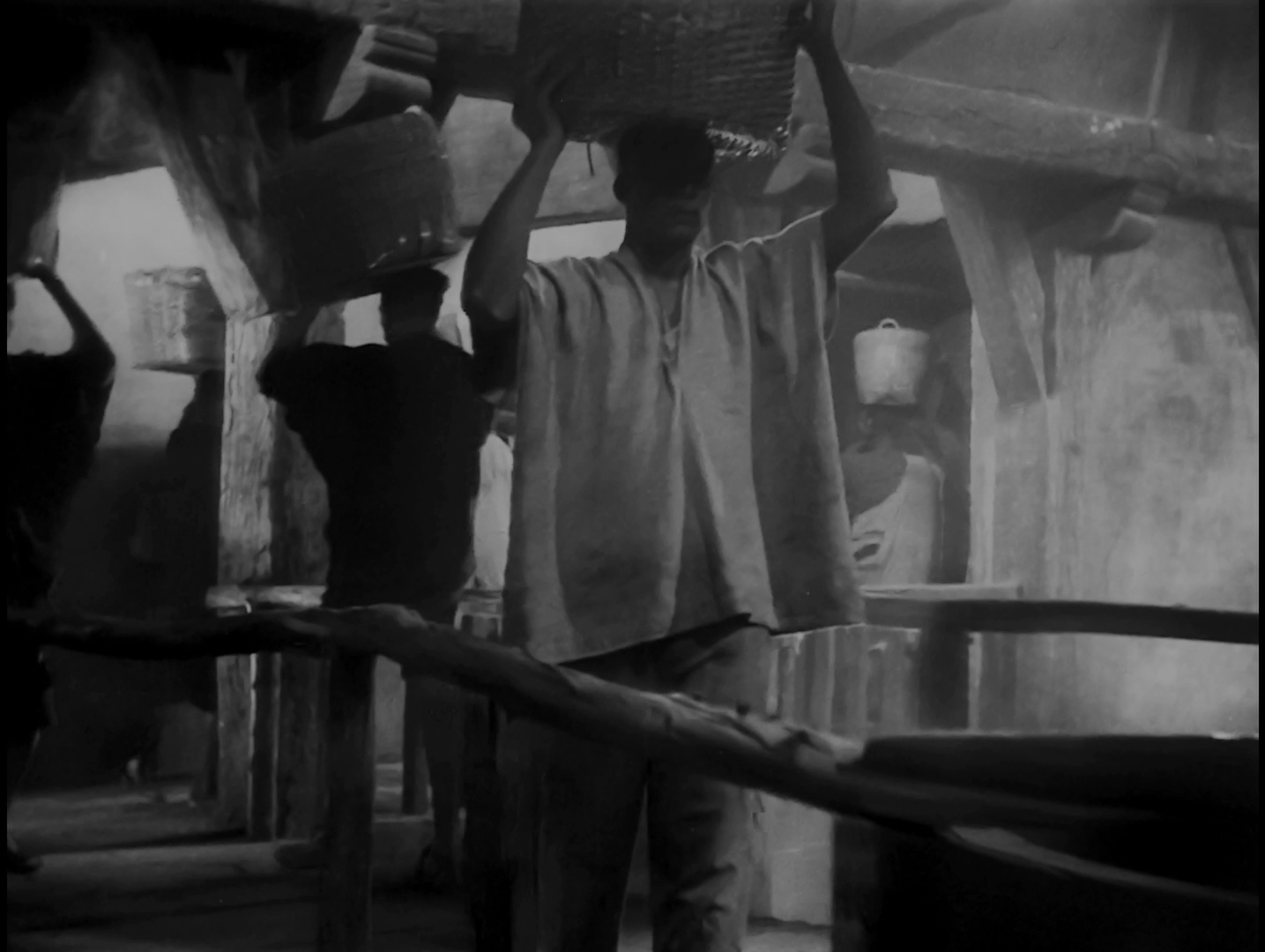
I’m always interested in the hunting down of archival footage. You have some black-and-white film here that appears to be from the 1920s of Haitians working in sugarcane fields. Where did you find that?
We didn’t want the film to just feel like a history book. I really wanted this film to resonate with audiences. So with the black-and-white archival video footage, I wanted to make the film feel as alive as possible. In telling this history, we wanted to find a way for photographs or illustrations to grip you. So we used a lot of animation to add another dimension and pull people in. And then we also found archival footage that, obviously, is not from that era because there weren’t films back then, but it kind of represented the conditions under which these people worked and could complement the film within the film—the footage [of men walking through sugarcane fields with torches] that I recreated as well. I wanted to grab people.
There’s a lot of educational content in the film, but I really wanted people to stay with me as we dug deeper and deeper and deeper into the history of the zombie and where it really comes from, and consequently the history of slavery in Haiti and what happened to Vodou. That required a lot of work to find sources in many different ways, including hiring archival researchers and using what I looked up.
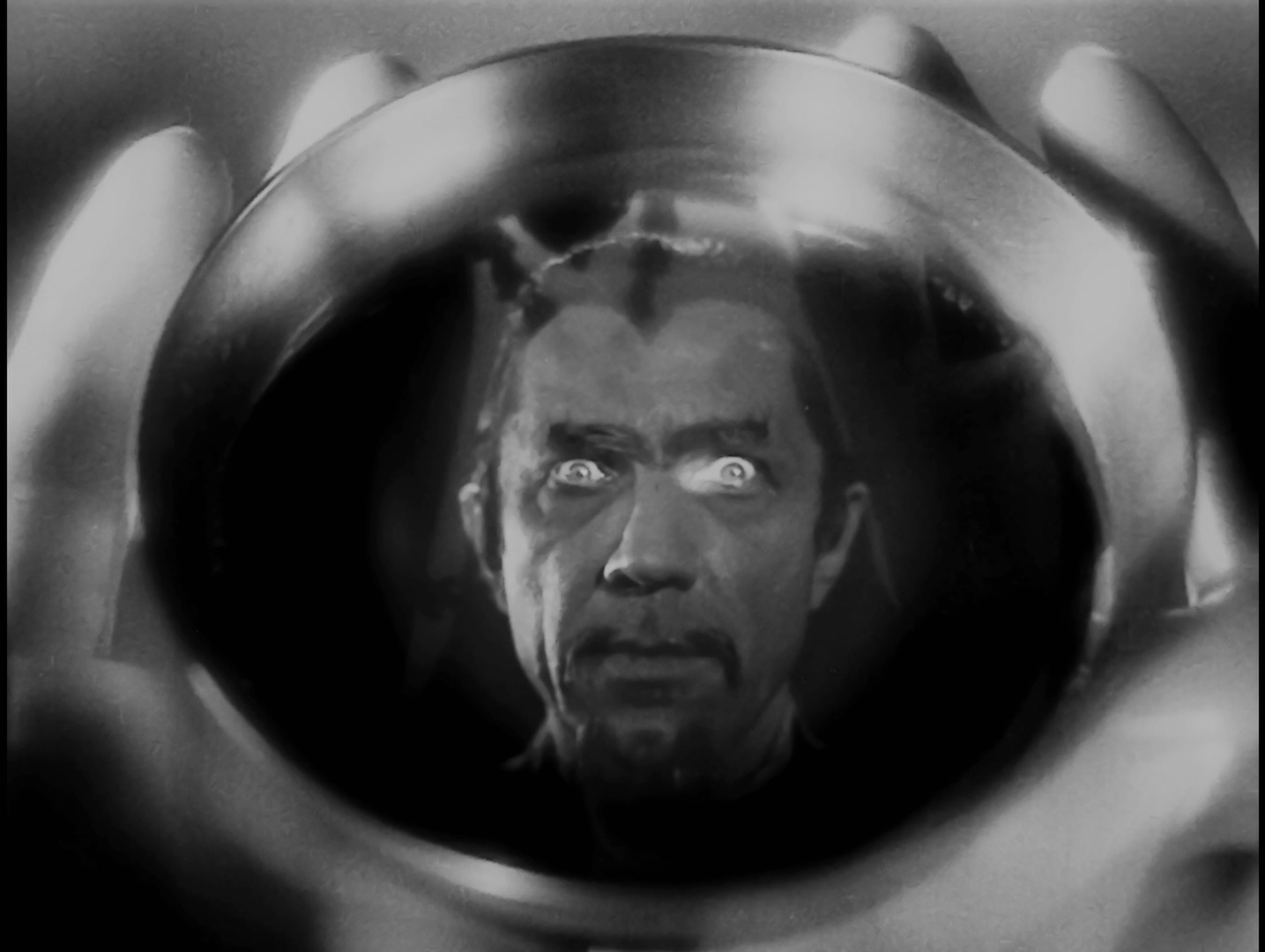
To touch on the black-and-white recreations, which are set in the 1790s, the photography in those moments isn’t necessarily trying to match the archival footage. It’s more spellbinding and ethereal. Could you talk about shooting those sequences and finding the right visual tone for them?
For me, the heart of the film was the story of the zombie that I learned about, which was really connected to one of the central tenets of Vodou, which is this idea that when you die, you return to this mythical Africa, and there’s this reconnection that happens with the ancestors and the spirits. I thought that was such a powerful story, especially for people who’ve been enslaved and have been uprooted from their lands and brought to the New World to toil—this idea that when you die you finally get to be free. The concept that the zombie would prevent you from having this reconnection and enslave you not just in your life, but in your afterlife, I thought was just such a horrific idea. Like, you can’t even control your spirit; it’s enslaved.
So I wanted to figure out how to tell that story in a way that would emotionally connect with people in the same way it connected with me. I came up with the idea of doing these recreations when I could get access to a sugarcane field and actually shoot in that kind of space. In terms of the aesthetic, I’m definitely referencing some of the older zombie films, so it’s kind of this visual reclamation of the story by taking back from these early zombie films that were very much rooted in this colonial space where they did talk about enslavement and Vodou, and the zombie was very much connected to these stories, but distorted.
And toward the end, you pull back from those recreations to show this meta-textual layer that’s happening where part of your film is about how cinema has destabilized these traditions, and here you are, toward the end, showing how your film is rectifying that in some way via these meta-textual means.
I hope so. Even though I am Afro-Caribbean and I’m part of the diaspora, I’m not Haitian, and I’m not, most importantly, a Vodou practitioner, so I felt like it was important to pull back and put the lens on me and why I’m doing this, what my intentions are, and what I’m really hoping to achieve with this film. Because so many people have come in and tried to tell the story of the zombie, and it’s just become a total show.
There’s also the globetrotting aspect to your film. You not only film in Haiti but also Montreal, Paris and New Orleans. When did the geographic scope of the film expand?
What’s happened is that zombies and Vodou have had such a far-reaching effect. The zombie isn’t just huge in the US. It’s also huge all around the world. The word is a common household name. So, the story was always more global as a result. Although many of the distortions do come from Hollywood, I think other places’ roles in the bigger story are very important. France, for example, being the place that colonized Haiti, a lot of the prior exploitation and oppression starts with that colonial story.
In fact, I always knew we were going to France. That was always on the table. I didn’t know how, but I always knew it. Because a lot of people will look at stories like this and be like, “Oh well, it has nothing to do with me. I’m not interested.” But this story involves us all. Colonialism has affected everyone on this planet. Some people got a lot out of it, and for others there was a lot of exploitation and oppression. It’s important to acknowledge that we’re all complicit in different ways, especially given what’s happened to Haiti. So, I always saw myself traveling to different places.
That said, the place I was most shocked to spend so much time in was Pittsburgh. I don’t actually give it a title card in the film, but Pittsburgh is the zombie capital of the world because that’s where Romero’s from, and that’s where “Night of the Living Dead” was shot.
I believe you watched 500 zombie-related films as research. In another filmmaker’s hands, this film would’ve purely been a historical Hollywood critique. But you’re balancing the cinematic legacy with larger themes. How did you strike that balance in the edit?
That was the hardest part of making the film: that balance of figuring out the story I wanted to tell about what happened to the zombie and how that extraction has shaped our popular misunderstanding of Bodhu and other African traditional religions, and also getting into the nitty-gritty of how that happened and the effects of that while showing zombie films. How do you do all that? The zombie film pieces I thought were particularly important were the comedic moments that bring key people into the film, so I can get them to the point where they’ll learn about the Haitian Revolution and what happened after that. So, there was a lot of editing and re-editing and re-editing and re-editing and re-editing to strike that balance.
There’s also so much on-the-ground footage featuring these Haitian parades and ceremonies. Could you talk about pulling these immersive images together?
I spent a lot of time with Yves-Grégory, who’s one of the contributors in the film, in his hometown of Jacmel, and we went to a lot of festivals and events with him. We were there during the Raras, and I worked with an incredible Haitian crew to shoot that and the Fèt Gede. My goal was to go back to Haiti when I had the funding to shoot with nicer cameras, because at the time I was only working on a really small research budget. I had this entire idea of how I wanted the color, the light, and the movement from these events to translate on film.
Unfortunately, our film was greenlit right before March 2020. COVID happened and the world shut down. We were in LA starting our first day of principal photography, and we had to cancel the whole thing. Because the film involved so much travel, I decided to take some time before going back into production. But then the really unfortunate event of the assassination of the president of Haiti happened, and things just descended into absolute turmoil, which made things very dangerous there. A lot of my crew and contributors were on lockdown half the time just because it became too risky to be out in the streets. Even in Jacmel, which is usually quite a calm city. The idea of going there and bringing out a camera to shoot in the streets would have put everyone’s lives at risk. I couldn’t go back to shoot what I had hoped to shoot.
All of the footage in the film was shot during research. Eventually, I had to bring the Haitian crew and our contributors to the Dominican Republic, which was very upsetting to do given the relationship between the two countries and how the Dominican Republic treats Haitians. Fortunately, we had a great Afro-Dominican team who made sure everyone was very safe. We worked with incredible Haitian communities in the Dominican Republic to show some of the culture there, because there is such a big Haitian community.
In the post-credit scene, there’s additional footage of one of the subjects, Erol Josué, doing a ceremonial dance. Why did you decide to end the film with that?
If I could, I would’ve had the whole film just be Erol’s performance. It was so powerful. We shot that in the ruins of a sugarcane mill in the Dominican Republic. Erol took the energy of the space and created this impromptu performance there. It’s 30 minutes long, and it’s incredible. I moved it around a lot in the film because it often got cut short to fit the narrative, and I wanted to give it more space. I kind of wanted it to stand on its own as something powerful.
You actually see him prepare for it and start it earlier in the film, but I thought it’d be really nice to have that at the end. It’s a kind of gift after the credits for those who have the patience to see it. People have asked me why I didn’t translate what he’s saying, and I didn’t want his performance to be about our consumption or the audience’s. It’s about being in this moment with him in this important place.
Speaking of consumption, what do you hope audiences take from the film?
I think the big thing I hope is that everyone knows about the origin of the zombie and its connection to Haiti. I really hope that just becomes commonplace knowledge. I also want people to better understand and want to learn more about the Haitian Revolution and to understand how Vodou is misrepresented and isn’t dark magic in any shape or form. It’s a religion to be respected and celebrated.
