

Taking full advantage of its sun-kissed ambiance and featuring wonderfully lived-in performances from its central cast, director Joe Swanberg’s “The Sun Never Sets” is an understated, whimsical look at the ways adults fail to love one another, while also being a testament to how it’s never too late to start over, even if you think the script for your life is set.
The film benefits, as most of Swanberg’s films do, from its truly collaborative nature: the core actors receive producer credits and improvise during takes based on an outline he writes. The result is filled with characters who are earnest in their imperfections, people who mean well but are still very much figuring life out, even as they feel the tension of time and the need to settle down.
At its core is Wendy (Dakota Fanning), a construction manager who lives in Anchorage, Alaska, whose relationship with her partner, Jack (Jake Johnson), is upended when he tells her that they should go on a break so she can go on other dates to explore if being with him is what she really wants.
Jack’s big-brained plan didn’t factor in the potential re-entry of Wendy’s ex-boyfriend, Chuck (Cory Michael Smith), a suave pilot with questionable credit, who scratches Wendy’s itch for adventure and spontaneity. Caught between the orbit of these two strong personalities, Wendy wrestles with whether it’s possible to live a life in relationship with both of them, if she has to choose, or if she needs to expand her horizons beyond this binary.
Although “The Sun Never Sets” marks six years since Swanberg’s last feature, the intervening years haven’t been idle, from acting in projects like “Invention,” “Invader,” and “Loafers” to his extensive producer work. This project is a delightful reminder of what makes his mumblecore work so beloved, and feels as though it’s the most robust version of films of this ilk, whether it’s the Alaska setting that’s beautifully captured by cinematographer Eon Mora’s 35mm filming, or Swanberg’s own willingness to not settle for easy resolutions when dealing with such sensitive matters of the heart.
Contrary to most limited releases, “The Sun Never Sets” opened first in Chicago before expanding to other territories this weekend. While in Chicago last week for a pair of in-person Q&As at the Music Box Theatre, RogerEbert.com sat with Swanberg and Smith to talk about the role of silence in understanding a character like Chuck, how Swanberg’s improvisational approach to scriptwriting has changed, and how spending time in Alaska has reframed their relationship to darkness and light.
This conversation has been edited and condensed for clarity.
Most movies usually open in LA/NY first, but it was heartening to see “Exclusively in Chicago” pop up on the poster and trailer screen. Can you speak to the importance of starting this film’s theatrical run in Chicago?
JS: That was an IFC choice, but I totally agree with you, and I love that it’s met with some confusion and possibly some jealousy from the New Yorkers.
Cory, as our resident East Coaster here, can you confirm if this is the case?
Cory Michael Smith: (Laughs) Yeah … why the hell is Chicago getting it first?
JS: The Music Box Theatre, to me, was a holy place since I was 16 years old, and as early as I could take the train from the suburbs into the city to start watching movies, I was having important experiences there. I saw many of my favorite films there for the first time. I saw millions of films I had never heard of, and they completely expanded my idea of what movies could be. When I went to film school, I dreamed of making movies that would play there. That, combined with IFC looking at the calendar, felt like the right factors for that release.
What’s also significant is that this is the biggest release any of my films has had by a wide margin. I think “Drinking Buddies” at its widest was in twenty-seven screens one weekend. We’re going over five hundred screens next weekend. So I got to say, I’m middle-aged, and careers don’t go in straight lines, but there were still points in my life where I thought, “I wonder if I kind of already saw the best of my career ten years ago.” It’s so nice to feel like, “I’m getting better at my job.”
I also enjoyed seeing Chicago directors like Brandon Daley, who directed “$Positions,” and Katelyn Douglass in small roles here. Can you talk a bit about bringing Chicago with you to these productions?
JS: I really wanted Dakota and Debby Ryan to feel like part of a real friend group, and Brandon, Katelyn, and Drew Angle are all actual real-life, longtime friends. Dakota and Debby don’t know each other, and I was nervous to cast some Alaska locals to play this friend group and throw them into a world that needed to feel unified. I knew that if I could get that trio out there, from a vibes perspective, Dakota and Debby could plug right in.
I’m also a huge fan of all of their filmmaking. I love casting directors in my movies in particular. Timing-wise, Brandon was having a nice moment with “$Positions,” and Katelyn with “Spanked by a Ghost.” I thought it would be great to capture these two during a year when their movies are really blowing up, and it’ll be a neat feather in the movie’s cap. They’re both going to go on and have big directing careers, and it’ll be cool in ten years to be like, “Oh my God, look, they’re both in this movie.”
The other thing we laugh about is that Brandon isn’t in that many scenes in the movie, but his character, Brad, casts a long shadow. There’s a team Brad situation, not team Chuck or Jack, that’s brewing and is going to blow back on all of us. I see it on Letterboxd where all the comments are saying “Pour one out for him; he didn’t do anything wrong.”
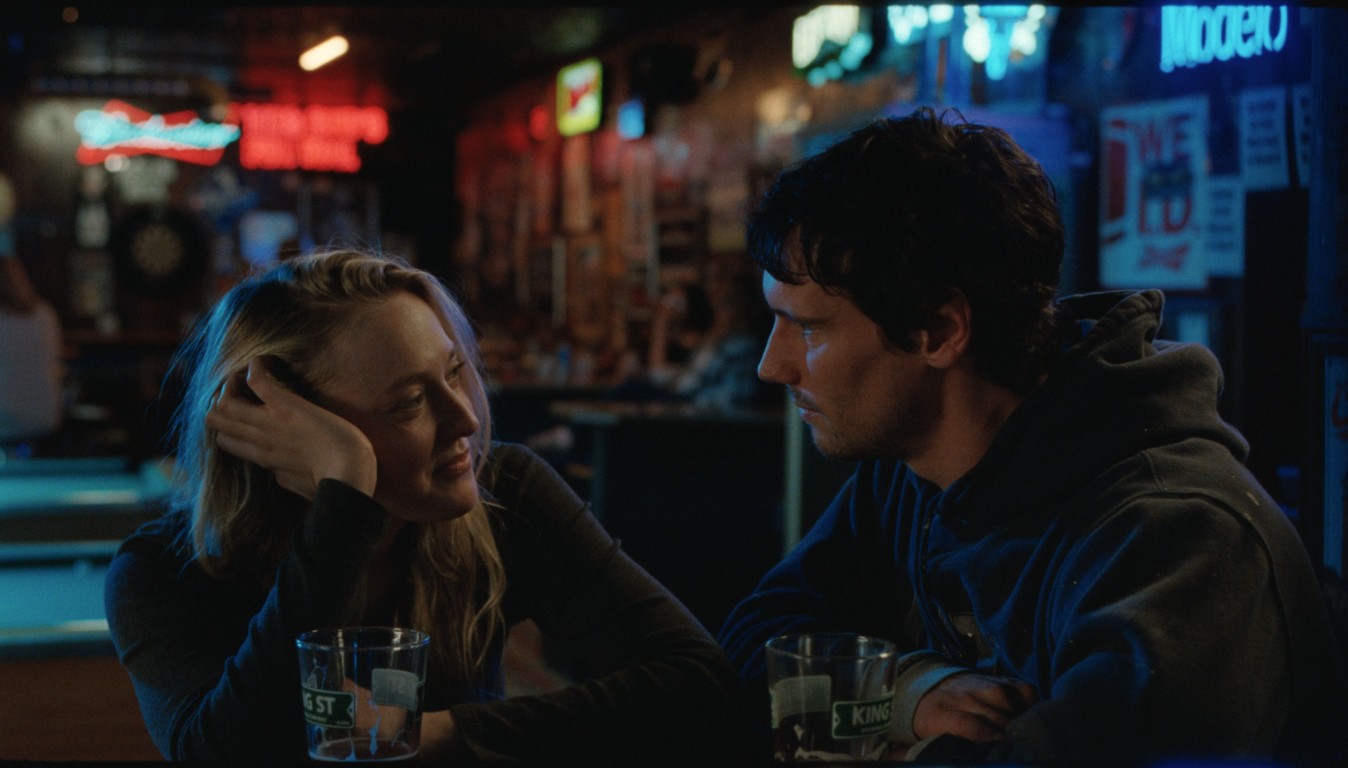
Joe, I heard you talk about something Cory does in the film that you love: the beat of silence he takes between scenes. I’d love to hear you expand on that, and also, Cory, how you were thinking through the role of silence in someone like Chuck.
JS: Chuck’s silence in the film is very powerful; it gives him a unique vibe. It’s funny and intimidating. It functions in all these different ways and is perpetually watchable. It’s the opposite of dead time; it’s extremely active time. There’s that scene in the movie where Wendy asks him, “Can I call you?” and the pause that Chuck takes before answering … you see him work through five years of their relationship history in real time. These brief moments become so magnetic through that silence. It’s going to affect my direction going forward a lot. It’s a tool that I know I’m going to use in future movies. Maybe the right way to play a moment is for the actor to say nothing.
CMS: As an actor, I’m not afraid of using silence. I think it’s an incredible storytelling tool. With this project specifically, I had the benefit of being cast last and understanding Jake’s assets. Jake is an unbelievably hilarious, witty, fast-talking man. Chuck needs to offer something else, and I think Dakota and I had agreed that there’s a different kind of sexual tension in this relationship, and often sexual tension can be born out of relationships where physical communication outweighs verbal communication. So it felt important to build a relationship with Dakota where the connection felt inexplicable and nonverbal.
Then there also needed to be some understanding of what the problems were in the past. If your strength is a sexual connection, the weakness might be talking through things. “Why would Wendy be drawn to someone who can’t communicate their feelings?” was a question running through my mind. You can really be drawn to somebody just because you can’t understand them, and that made leaning into the silence the more natural reaction.
JS: It does make Chuck thoughtful in his own way. He’s not a knee-jerk guy who is going to just say something to get himself out of a situation. Those moments of silence let you see Chuck as a compelling, mature character in his own way. He has his flaws and shit he’s dealing with, but there are a lot of moments where you just feel him thinking and being considerate. He doesn’t want to answer a question just because it was asked, or say the easy thing that’s going to solve the problem right then.
He’s weighing his response, and in those moments you’re like, “I do see why she likes him.” He’s not just a blabbermouth; he’s more like, “Let me make sure what I’m about to say is how I feel so that whatever the outcome of that is, I’m not losing sleep about it later.” As an audience member, I love the ability to sit in that tension and think, “I’m leaning in right now. What’s about to happen?” He doesn’t even know what’s coming next in his life, but it also creates an excitement and charismatic energy that Jake, who is loaded with charisma, doesn’t bring to that character.
I think about the sequence where Wendy and Chuck are looking at properties, and once Chuck looks at the housing application and realizes it’s going to be an issue, he immediately closes off and resorts to a type of formality that’s disarming.
JS: Chuck’s ability to close off like that leaves other people flabbergasted. You also realize in that scene, “This guy has a sense of humor. It’s dry as hell, and it makes Wendy laugh.” He’s fun, and he’s funny, but he chooses his moments to let it out.
CMS: It’s a humor made for one other person. You can see why Wendy would love someone like him.
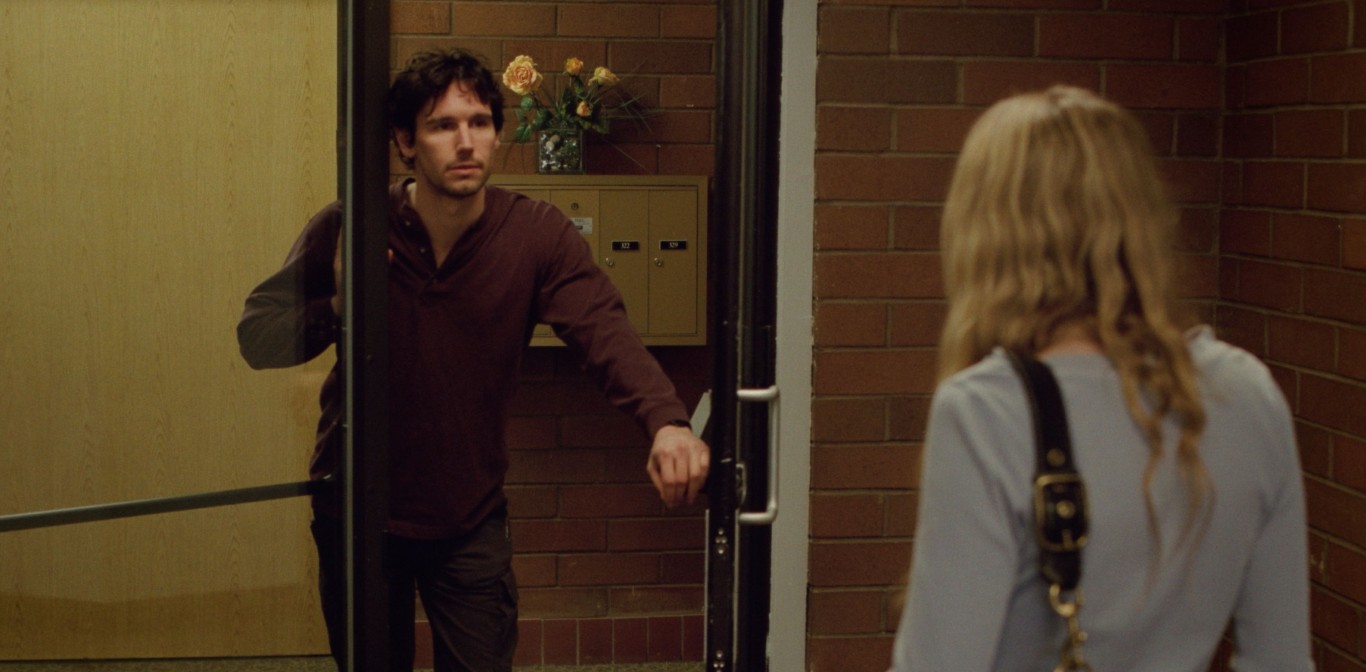
Did these conversations around personality differences manifest in any tangible way in the direction of the kissing scenes? I feel like the way the characters express their passion to each other is often another way to see how each man offers something different to Wendy.
JS: It was a huge part of the conversation around what this movie was. To put it in its most basic terms, I think I probably said something like, “We need to feel like Wendy and Chuck, fuck.” Whereas Wendy and Jack have sex, we see them; they’re intimate too. That relationship is not devoid of a sex life. I’m not sure they “fuck.” So that, to me, was maybe from a directing standpoint where I was trying to send that thing. To me, it’s a huge distinction. It’s a big part of why, after two years with Jack, when Wendy runs into Chuck at the pool table, she realizes he’s going to bring something to the table that is missing.
CMS: I think that we had a collective understanding that that was what we needed to do, but in terms of actual execution, I don’t think we really had conversations over specific choreography or movement. Dakota is an excellent storyteller, and it was easy to capture these physical differences because we all started on the same page.
Dakota also shared that Wendy would carry characteristics similar to her because when you’re trying to come up with things on the spot, you naturally dig into the reservoir of your own life. I’m wondering if that was a familiar experience for you, and whether you resisted or embraced it?
I think there are experiences I’ve had or behaviors I’ve exhibited in the past that I find familiar in this, but ultimately, I was still trying to make a character. I haven’t said anything to my parents, but I would be interested to hear what they think of this performance. I think there’s a lot of my brother, Chad, in here. I found that, inherently, communicating more freely without a script just feels more personal, despite it being a character. This has been an enjoyable but challenging film to watch, I think, because you’re watching the manifestation of instincts beyond what I’m used to seeing in a normal film.
When I see the film, or even past takes, what I’m seeing on-screen are the specific choices with those words and those ideas from, say, take three. What I’m saying at any given moment is in reaction to Dakota, how she’s looking at me–which can shift from scene to scene. Some scenes were truly a real swerve from what we intended initially, simply by existing in space with her and being comfortable enough to freestyle with her in real time.
It was not terrifying, but I was nervous about how it would really go early on. Maybe what I’m about to say is terrible for art, but I don’t like wasting time. I like having intention and purpose when working, and so I didn’t want to waste time with instincts. With an actor like Dakota, though, it’s difficult to do that. I learned that nothing is wasted; everything is worthwhile.
Joe, you talked about the role of improv in your script writing as being “in the service of naturalism.” How did that manifest tangibly in your work?
JS: I know, improv is a tough word because I do feel like a lot of people have a lot of associations with it. I love improvisation and the shows associated with that word, but when I say, “My movie is improvised,” I know I’m invoking a very cringe idea of a type of performance.
I also think there’s no other way to say what it is. It is an improvised movie, but it’s a very drama-based, character-based, storytelling-based improv. Especially being an improv filmmaker in Chicago, I know I’m drawing connotations to beautiful institutions like Second City. I’m in no way trying to throw people or that work under the bus. I’m referencing it to get people into the flow and rhythm of naturalism found through living life, as opposed to saying memorized words.
One thing that has changed, though, is that my approach was born out of working with non-actors in my early films, and there was a real hard line between an inability to speak dialogue and a real ability to be themselves a thousand times more compelling. Now that I’m working with actors this good, I am often sitting there going like, “I could write dialogue. These are good actors who can handle this dialogue. So I’m getting over my fear and I’m writing more and more each time I work on a project because I’m less like, “I’m going to give this person this script and it’s just going to sound bad when they try and do it,” and more”I could give this person the script and it’s going to be great.”
Across your filmography, you play characters with rich inner lives who have to suppress them. Whether it’s Edward Nygma from “Gotham,” the insecurity of Chevy Chase in “Saturday Night,” or Adrian Lester in “1985.” I think there’s something similar here with Chuck, so I’m wondering if you can speak to this throughline.
CMS: Yeah, I tend to like characters that struggle to communicate or that have a big secret and that don’t feel comfortable speaking. Adrian in “1985,” he’s just holding a secret the whole time. He’s with his family, whom he loves dearly, and he can’t live or speak freely or talk about the biggest thing in his life. That was a truly profound experience for me to play a heartbreaking character. I had to make that movie because when I read it, I was like, “This is a particular kind of pain that I actually want to exercise.”
Chevy was interesting and a completely different experience, and I was petrified in pre-production that I wouldn’t be able to live up to his speed, wit, and dynamism. I was just watching him exclusively for two months out of paranoia that I would show up and not be able to embody that prowess and cockiness. The crazy thing that happened during that experience was that I started writing jokes in the voice of Chevy Chase. Because he was all I was listening to, it was exciting to channel him, to know one man’s voice so specifically that it could infiltrate my writing process.
That second scene where we see him doing standup was initially just two jokes on a page that Jason wrote. I told Jason, though, “I just don’t see how this man could get up in a room filled with a bunch of men from around the country who are drunk and smoking, and leave the stage unless he gets some laughs from these guys.” I know the movie has to have momentum, but I showed up that day with all these jokes I had written, and to Jason’s credit, he let me perform them. He said, “Start the scene with what’s written, then do whatever the fuck you want.” It felt nice to have this instinct I had about him get validated.
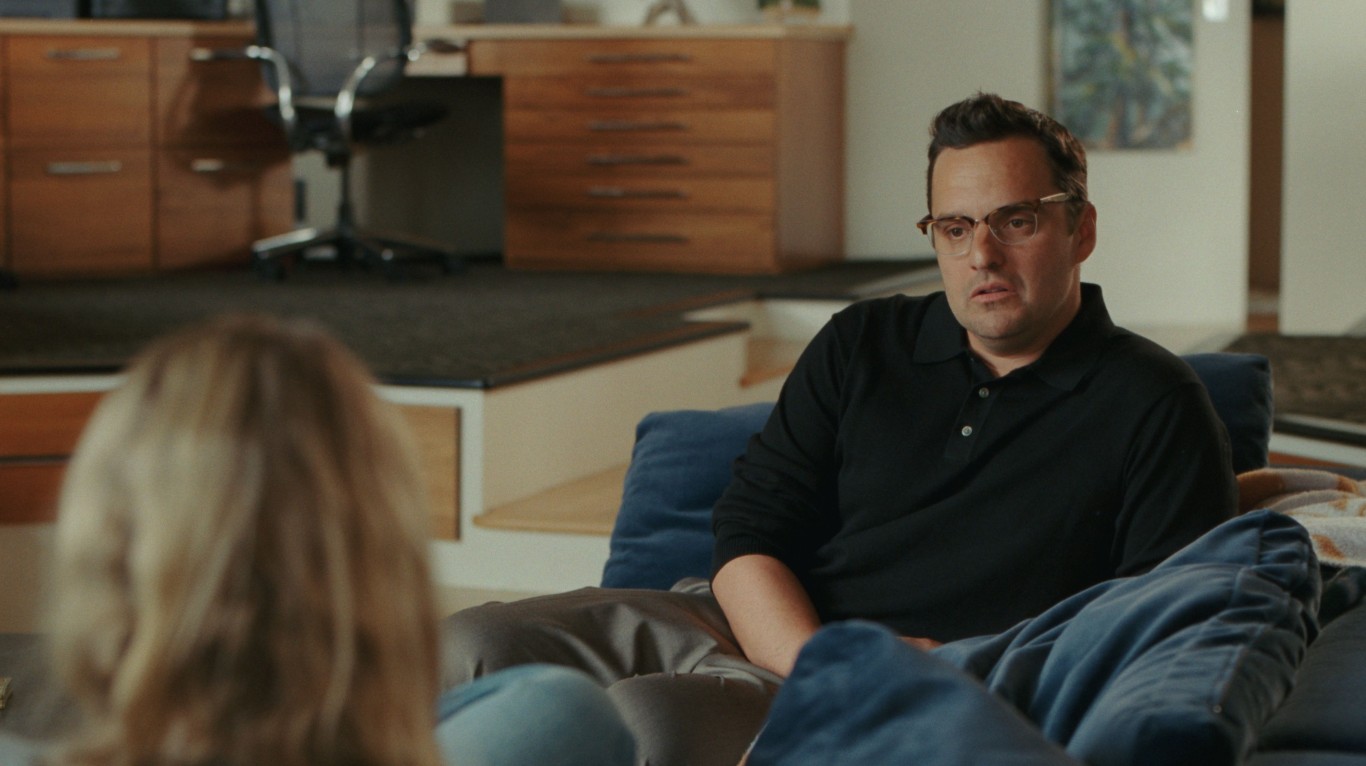
I’ve heard Jake talk about how the pervasive light in Alaska–from which the film gets its title–was one of the hardest things to get used to, because it would be 10 PM, you’d see kids playing at the playground still, and then you’d see other people doing drugs in a gas station. We associate so many activities with light or darkness, and I’m wondering how filming in Alaska, during a season of such full light, reshaped your relationship to darkness?
JS: (Laughs) Jake was most certainly the most tripped out of all of us with the pervasive light. I don’t know what world he’s living in, but it seems to me that there are things he doesn’t want to see, and that Alaska forced him to look at. We shot the whole movie without the title, and the only thing in my head was “If the title does not remind the audience and address this daylight situation, we’re cooked.”
I didn’t know what that title was, but I just thought some scenes looked like continuity errors. You just have an interior bar scene at night and then characters exit, and you’re like, “Oh, they ran out of time, and they had to shoot the nighttime scene at 5:00 PM the next day. Something’s wrong. That is just our instinctual movie-watching habit. I was thinking, “If the title of this movie does not remind you that you’re in Alaska, then you may be thrown off. But the title acts as a way to keep them invested.”
From a filming standpoint, in many ways, it’s the greatest gift you could receive, especially shooting on 35 millimeter where you need light. We don’t have to chase short days the way some movies do. In Chicago, sometimes you run out of time. We were sort of gifted this nebulous perpetual day to play with and work with. So it ended up granting us freedom instead of being a problem. Eon and I had a lot of conversations heading into the shoot about utilizing the weird bit of Twilight nighttime. I was thinking a lot about whether I wanted to normalize Anchorage or make it feel like an American city.
CMS: The thing that felt important to me is understanding that it’s bright all day in the summer, but these people also live through complete darkness during the winter. I was fascinated by the kind of person exposed to that experience. How does that person live? How do they feel? What are they willing to suffer through? The people there have more weight to them than people in other places.
I read a novel called The Great Alone by Kristin Hannah before being invited onto the film. It talks very much about how late summer is about preparing for winter, literally, physically with supplies, and also mentally preparing for it. I do think that there is a toughness to Alaskans, and I felt like that was an important thing to be able to understand as a character.
JS: As a filmmaker, I would be interested in going back to Alaska and doing a movie during the dark part of the year, where it’s reversed and instead of pervasive light, it’s pervasive night.
I don’t know that I’ve ever worked in a place that can be so psychologically and physically different in the same locations, environments, and with the same people.
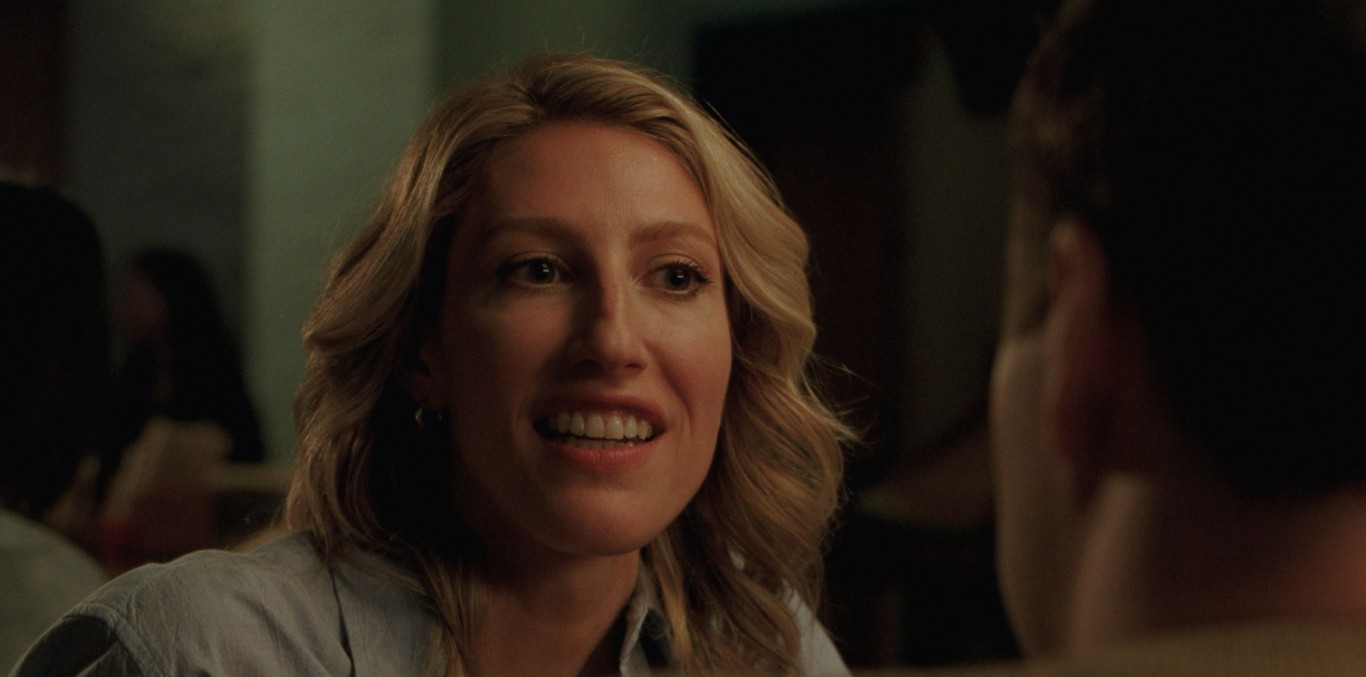
Digging deeper into Karley Sciortino’s written work–whether it’s “I Want Your Sex” or her column at Vogue–much of her public-facing work explores women’s health and sexual life. How did she join the project, and did any conversations with her—whether about her work directly or just about her philosophies, experiences, and writings—impact your approach when exploring sex and relationships in the film?
I was a fan of Karley’s writing and video work, and we became friends almost 15 years ago. I wrote an episode of my Netflix series “Easy” (the season 2 episode “Side Hustle”) for Karley to star in, and while she’s known for her writing, I always thought she was a really talented and natural performer and had a great time working with her in front of the camera.
I thought she would be a perfect match with Jake and that they would be funny together, and she would seem like a real threat to Dakota’s character. Karley is probably one of the people I talk to most about life, sex, and relationships in general, and as a friend she also knew all of the ins and outs of my real relationship and breakup that inspired the film, so it was a natural fit and her influence is definitely there. She also has a great role in my next film and proves even further what a good actor she is!
Sara says, “I feel like we’re sort of too old for this.” Has working on the film made you reflect on what it means to “age well” in relationships? At what point do certain foibles become unacceptable, or when does “still trying to figure yourself out” no longer garner sympathy?
I hope that Sara’s conversation with Jake is refreshing for audience members who are already wondering why a mid-40s guy is being so messy and dramatic. The whole film inspires a lot of reflection for me, and I think “figuring yourself out” is a lifelong process, but I do think there are certain markers that most people hit at certain ages, and Jake’s character is interesting because in some aspects of his life he is very settled and mature, and in others he’s a total mess.
For me, that’s the reality of life. We all advance, grow, and mature at different rates, in different contexts, and sometimes people are successful in one area of their life and can’t figure out another. I try to sympathize with all my characters, and Jake is such a fun, winning performer that it’s hard not to love him. But by that point I hope he’s maxed out everyone’s patience, and both Sara and Wendy tell him it’s time to grow up.
“The Sun Never Sets” is in theaters via IFC.
