

While yesterday’s dispatch also included a host of young women seeking solace in the supernatural, it’s a journey rife for exploration here at Fantasia: Witches, curses, folkloric tapestries woven through all the hormones, pain, and uncertainty of adolescence. So here we are, with another trio of tales designed to manifest the conjoined pains of lust, loss, and belonging.
First, we take a detour to the Catskills with one of Fantasia’s favorite families, the Adamses, who’ve been making quite a career out of their particular brand of family-band DIY filmmaking over the last few years. Parents John Adams and Toby Poser, along with daughter Zelda (and occasionally other daughter Lulu), write, direct, edit, score, produce, and star in their own works; and if you’ve seen “The Deeper You Dig” or “Hellbender,” you know they feel so much more vivid, layered, and terrifying than your typical homegrown horror. Their latest, “Mother of Flies,” might well be their most assured, and also their most personal.
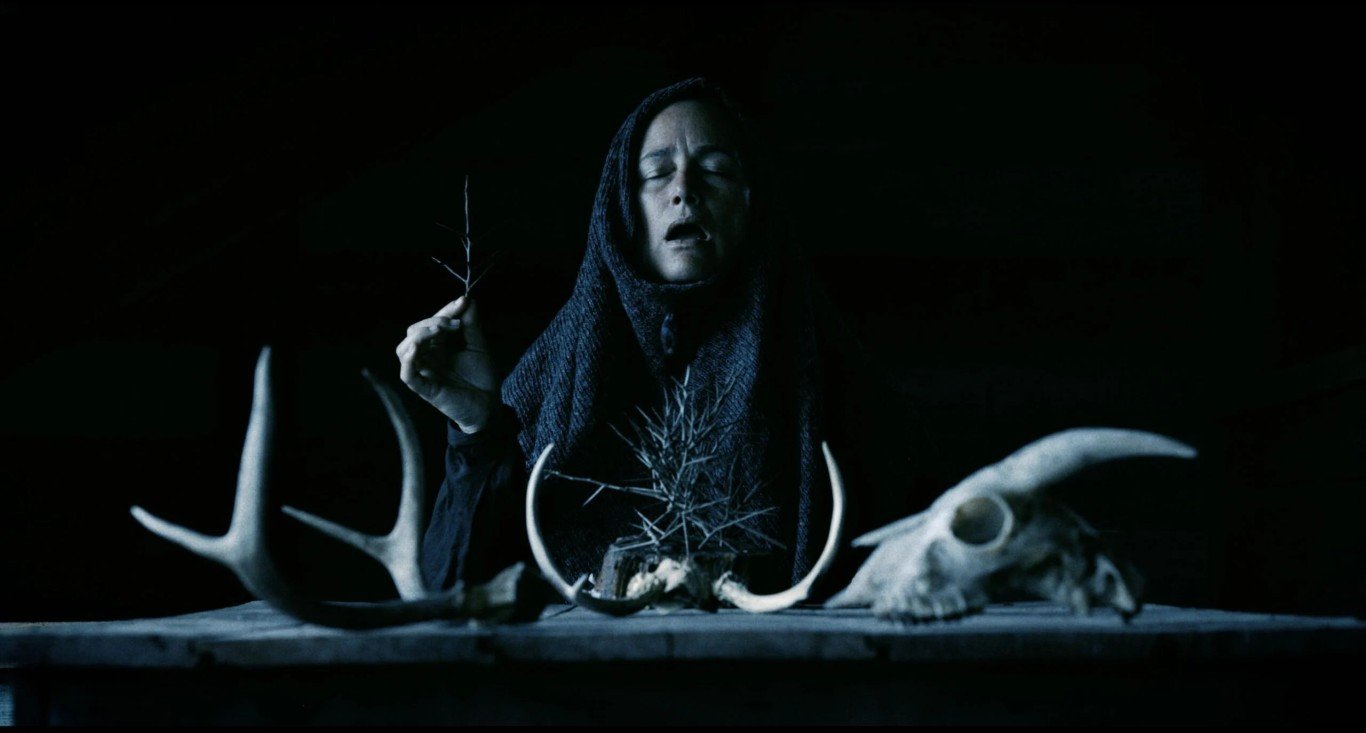
Drawing from the emotional wounds of the family’s recent real-life battle with cancer, “Flies” channels that energy into a three-day jaunt deep into the woods for a father, Jake (John Adams), and his teenage daughter, Mickey (Zelda Adams), the latter of whom is dying of unknown cancer. Chemo and radiation have done nothing, so in desperation, the pair journey to the woodland home of the local witch Solveig (Toby Poser), who promises to cure her illness free of charge. However, it’ll take three days of ritual, faith, and deep ruminations on the thin veil between life and death.
From its opening minutes, “Mother of Flies” is a somber, meditative chamber piece, albeit one soaked in wood and blood and philosophical musings on the nature of death (delivered capably by Poser in frequent voiceover, as if casting a spell on us). When we first see her, she’s coated in blood, naked, writhing on the woodland ground; it’s evocative imagery of a type the Adamses revisit often in their work but which finds particular purchase here. Like so many folkloric witches before her, Solveig is herself a spurned woman, one cursed by loss and seeking both repair and revenge in her particular ways. The manner in which this intersects with Mickey’s journey, and the helplessness with which Jake watches this unfold, provides much of “Flies”‘s true terror.
It helps, of course, that the Adams Family seems truly accomplished and deft on both sides of the camera. All three leads share directing credit, and their moody cinematography (the bloody mix of mud, blood, and ritual) seeps you in a distinct sense of dread. John acquits himself well enough as the straight-man contrast watching such occultism unfold in front of him, but it’s the cautious desperation of Zelda’s performance, and the wily regality of Poser’s work, that carry so much of the film’s sense of unease. They’re aided capably by practical FX (some of which are provided by FX maestro Trey Lindsey), as piles of rocks and tumored fetuses and piercing brambles connect flesh to devilish covenant. It’s truly one to behold, especially as it builds to its cursed climax.
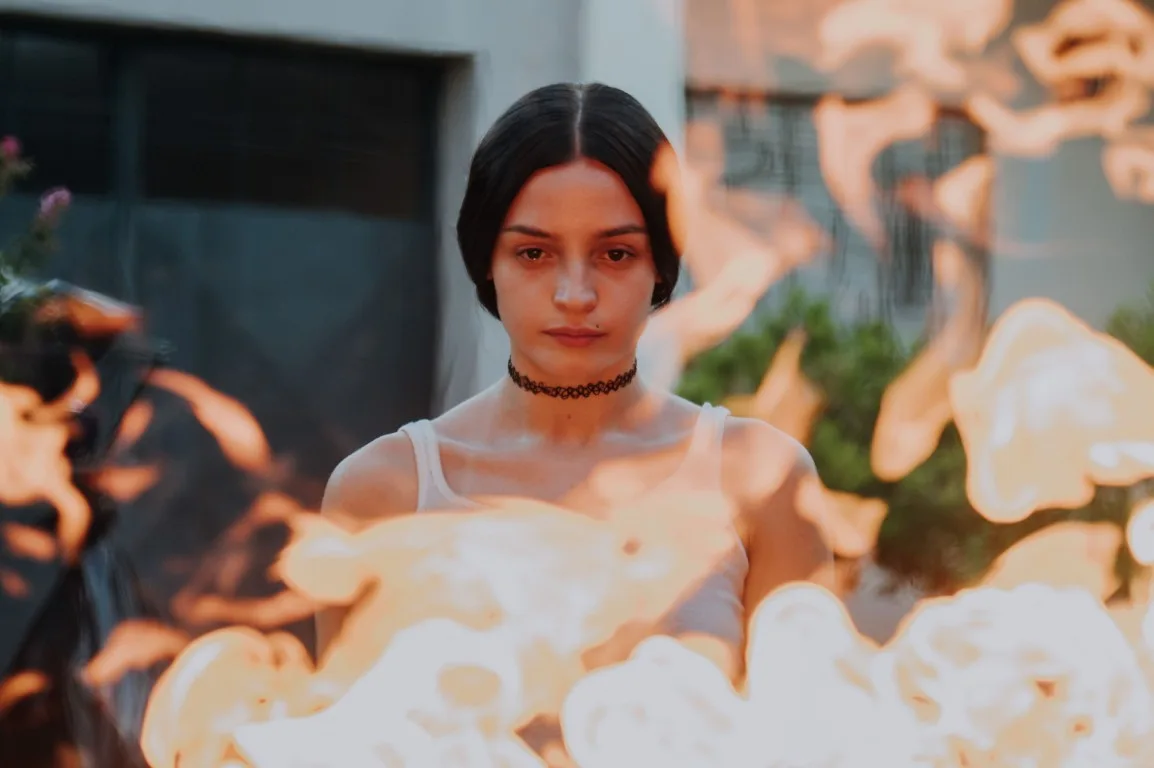
Feeling somewhat like Lucrecia Martel’s take on “Carrie,” Laura Casabé’s “The Virgin of the Quarry Lake” is a slower, but no less piquant, tale of adolescent longing and boiled-over rage. Set in Argentina in the sweaty summer of 2001 (complete with Internet cafes where people play “Quake II” or chat on ICQ), the film turns its bloody eye onto Nati (Dolores Oliviero, piercing eyes peeking out from above her ’90s-era choker), a sixteen-year-old girl whose teenage loins burn for connection with childhood friend Diego (Agustín Sosa). Her friends, Josefina (Isabel Bracamonte) and Mariela (Candela Flores), share that crush, but no one wants him more than Nati.
The problem is, he’s started spending time with twenty-year-old Silvia (Fernanda Echeverría), who self-stylizes as world-weary and effortlessly cool, with all her tall tales of debauchery from a London gap year and eclectic taste in music. Suddenly, Dani knows she cannot compete, and her jealousy burns as hot as the summer heat, much to the consternation of her world-weary abuela (Luisa Merelas). Driven to hormonal madness, Dani’s flames begin, in ways both mysterious and bloody, to manifest themselves in ways Silvia better watch out for, even as she tries to ingratiate herself with Diego’s friends by inviting them out to a nearby quarry lake with beautiful beaches and a tragic backstory.
There’s a casualness and ease to “The Virgin of the Quarry Lake” that makes it hard to firmly slam the genre label on it. Sure, Dani’s rivet-tight animus comes out in ways that feel supernatural, even teetering on magical realism (the power shorts out when she gets too horny, or a dare by a boy to kiss her to cross a bridge leads to her biting his lower lip clean off). But it’s leavened by the traditional rhythms of the coming-of-age story, of a girl trying to make sense of her emotions and manage the rise and fall of her first crush in a drought-stricken town that seems to be falling rapidly out of order itself. Olivero handles this capably, her fiery stare making manifest the female gaze; she’s short with her words, but her disappointment and frustration speak volumes. Her loudest communication comes in the crazy, bloody things that happen around her, from hit-and-runs to killer dogs summoned out of nowhere. These are things she may well be willing into reality, whether through incantation, the curses of a local bum, or her own white-hot desire.
It’s a dazzling if imperfect debut, finding some delightful notes among the queasy pacing as you get your feet under you about what genres Casabé’s playing in. But like “Flies” before it, it reaches a crimson crescendo that feels fitting for its aims.
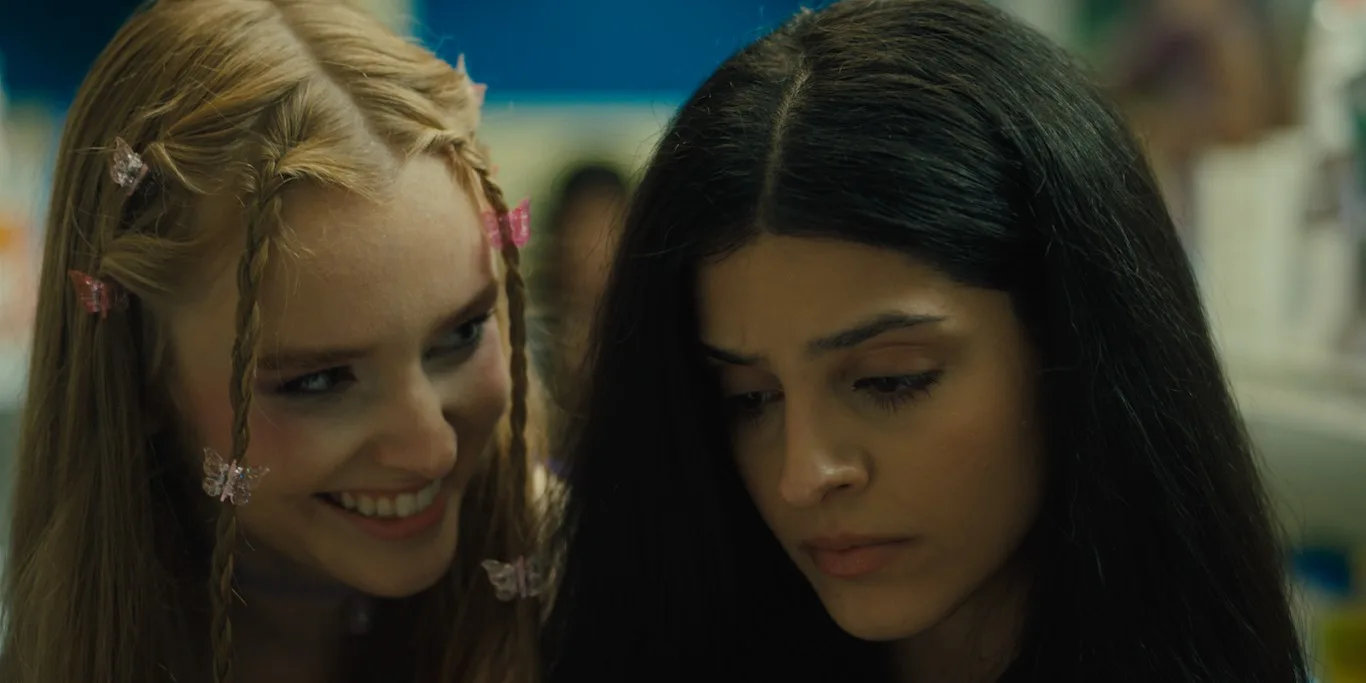
As much as teen girls desire to love, they also wish to belong, which is where Ava Maria Safai’s fleet-footed horror comedy “Foreigner” comes in, spinning a “Mean Girls”/”Heathers”-esque tale of teen ingroup politics and throwing in a hefty dose of supernatural horror and assimilation dramedy. Yasi (Rose Deghan) is an Iranian immigrant who recently moved to Vancouver with her father (Ashkan Nejati) and grandmother (Maryan Sadeghi); like so many first-gen immigrants, she’s torn between the traditions of her home and the desire to fit in with the girls at school. Especially since this school’s designated Plastics, led by mean girl Rachel (Chloë MacLeod), keep making seemingly well-meaning but ignorant remarks to her (“You just look kinda Spanish”) that keep her feeling like an outsider.
She so badly wants to fit in, right down to studying episodes of “Friends” to learn English (the film, notably, gives us uncanny scenes of a “Friends”-like sitcom, which was probably a rights thing but instead furthers the disconnect she feels between what she’s watching and absorbing). But her grandest effort to belong at school comes with the decision to dye her hair blonde so that she can be more like Rachel and her gaggle of friends. But with every new step towards erasing her Iranian identity, a new demon awakens within her, one which her family will have to stop before it swallows Yasi entirely.
Safai’s first feature is charming in its scrappiness and relatability, even as a few wooden performances and some less-than-stellar effects by the end slightly dampen the results. As comedies go, it’s no great shakes; what jokes work are helped by Deghan’s wonderfully brittle and vulnerable performance, and, of course, Sadeghi’s broadness and wisdom as Yasi’s grandmother. But there’s a sweetness to its aims that makes it hard to dislike, especially in the we-put-on-a-show conceit of its closing credits (with director’s notes in the margins, thanking each crew member for how hard they worked). A film that feels less than the sum of its parts, but which has some deep-seated intentions and visibility at the roots.
