

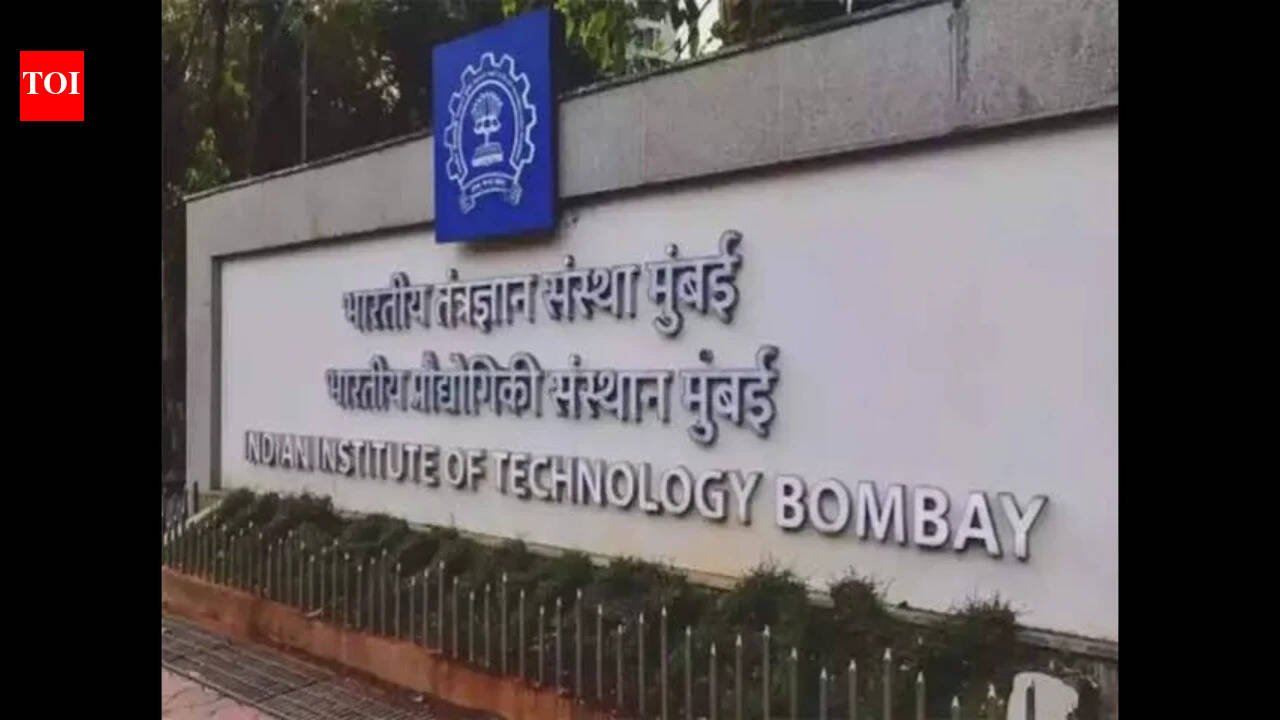
A doctorate is supposed to be a degree that tests intellectual endurance and perseverance. Sometimes, students take approximately 10 years to complete the PhD. However, most universities cap the limit to 5 to 8 years. Recently, the Indian Institute of Technology (IIT) Bombay has also limited the duration of its PhD programmes at eight years for all new registrations, following an internal review into why some doctoral projects were taking years to complete.The step is being considered important not only because it has introduced a deadline. It puts a larger question at the forefront about India’s research world: Should universities impose hard limits on doctoral study, or does a rigid clock risk undermining research that, by its very nature, cannot always be predicted? Well, the answer is not a straightforward yes or no, it is intertwined with lots of complexities.
Why IIT Bombay had to confront the PhD backlog
The institute’s review reportedly found several reasons behind prolonged doctoral timelines. Supervisors were sometimes occupied with other projects, candidates moved into other forms of employment, external candidates moved on, and the Covid-19 pandemic disrupted research schedules.But the most uncomfortable finding was the sheer duration involved. Some PhDs had remained pending for more than 10 years. It creates administrative turbulence. A doctoral programme that remains pending for over a decade ties up supervisors, aboratory resources, institutional records and academic positions. It can also leave candidates trapped in an uncertain professional limbo.The eight-year ceiling, therefore, can be viewed as an attempt to impose accountability on a system in which responsibility for delay may be distributed across the candidate, supervisor, and institution.The timing is also striking. The institute’s intervention comes alongside a record number of doctoral degrees being awarded.
A record 620 PhDs, but the number tells only half the story
At its 64th convocation, IIT Bombay is awarding 3,763 degrees to 3,442 students. These include 1,713 undergraduate, 1,430 postgraduate and 620 PhD degrees.The figure is unprecedented for the institute. IIT Bombay says it is the first time an IIT has crossed 600 PhD degrees in a single academic year.The doctoral degrees span multiple disciplines. Chemical engineering accounts for 77, electrical engineering 62, mechanical engineering 49 and the humanities department 40.At first glance, the record number suggests a thriving doctoral ecosystem. But the number also needs to be read in the context of the backlog that the institute has been working to clear.A high number of PhD graduations does not automatically mean that doctoral research has become faster or more efficient. It can also indicate that an institution has finally managed to push through a stock of long-pending cases.In other words, 620 is both a record and a reminder of the scale of the problem that preceded it.
The strongest argument in favour of an eight-year limit
The most compelling case for the cap is simple: a PhD cannot become an indefinite project.Doctoral education is expensive. It requires supervisors, research infrastructure, laboratory facilities, institutional support and, in many cases, years of public or institutional funding.An open-ended registration system can create perverse incentives. If there is no meaningful deadline, neither the candidate nor the institution faces sufficient pressure to resolve delays.An eight-year limit could therefore introduce something the doctoral system often lacks: a clear sense of urgency.It could also encourage better planning. Research proposals may need to be designed with realistic timelines. Supervisors may have to monitor progress more closely. Candidates may be compelled to confront stalled projects rather than allowing them to drift indefinitely.
There is another important consideration: Fairness
A candidate who completes a PhD in four or five years should not necessarily be treated on the same administrative footing as someone who remains registered for 10 or 12 years without sufficient academic progress.A transparent upper limit can bring consistency to the system.But a PhD is not an assembly lineThis is where the reform becomes complicated.A doctoral thesis is not a conventional academic course. A student cannot simply attend a fixed number of classes, clear examinations, and graduate on schedule.Research is unpredictable. Experiments fail. Data may prove inconclusive. A hypothesis may collapse after years of work. A field study can be interrupted. Laboratory equipment can malfunction. A research project may require a new methodology midway through. Papers may take months to review and revise.In some disciplines, particularly experimental sciences and engineering, the research itself may dictate the timeline.A hard eight-year ceiling could therefore create a dangerous incentive: finish the thesis, even if the research is not ready.That would be precisely the wrong outcome for an institution that wants to strengthen its research credentials.A PhD should not be judged by how quickly a candidate exits the system. It should be judged by the quality and originality of the research produced.
The supervisor problem cannot be ignored
Perhaps the most important question raised by IIT Bombay’s review concerns supervisors. If supervisors being occupied with other projects contributed to delays, then an eight-year deadline cannot be treated merely as a candidate-management mechanism.There has to be accountability on the supervisory side as well.A doctoral student can work diligently and still be delayed if meetings are repeatedly postponed, experiments cannot be accessed, feedback takes too long, or the research direction remains unclear.The danger is obvious. A university can introduce a deadline on paper while leaving the structural causes of delay untouched.That would shift the burden of institutional inefficiency on to the student.The better model would be one in which an eight-year ceiling is accompanied by mandatory progress reviews, supervisor accountability, early-warning mechanisms and formal intervention when a thesis begins falling behind schedule. A deadline works only when the system supporting it works.
Could the cap improve India’s research culture?
Potentially, yes. India’s higher-education system has spent years discussing the need to increase research output, improve doctoral training, and strengthen links between universities and industry.But research quality cannot be improved merely by increasing enrolment or awarding more degrees.The real challenge is to create a system in which doctoral candidates receive adequate supervision, infrastructure, and institutional support and are also expected to demonstrate measurable progress.For example, doctoral candidates could be assessed periodically on coursework, research design, experiments, publications where relevant, thesis progress, and supervisory feedback. Candidates who fall behind could receive intervention well before reaching the final year.That would turn the deadline from a punishment into a management tool.
The bigger question: Are IITs producing more PhDs or better PhDs?
The record 620 doctoral degrees should be celebrated. But the more important question is what lies behind the number.India needs more researchers. It needs stronger laboratories, deeper university-industry collaboration, and a larger pool of scientists, engineers, and scholars capable of producing original work.But a numerical race for PhD degrees could become counterproductive if institutions begin treating doctoral completion as a performance metric in itself.The objective should not be faster PhDs at any cost. It should be better research completed within a reasonable period.That distinction is critical. A deadline is useful. A rigid deadline is not.IIT Bombay’s eight-year ceiling is neither inherently good nor inherently bad. Its success will depend almost entirely on how it is implemented.The reform deserves credit for confronting a genuine problem: doctoral programs cannot be allowed to remain indefinitely pending. Candidates need clarity, supervisors need accountability and institutions need mechanisms to prevent academic stagnation.But the institute must also ensure that the deadline does not become a blunt instrument.Research needs discipline, but it also needs patience. The answer to a 12-year PhD cannot simply be an eight-year guillotine.The real reform lies somewhere between the two extremes: no indefinite doctorates, but no rushed research either.If IIT Bombay can combine its eight-year ceiling with stronger supervision, regular reviews and reasonable provisions for exceptional circumstances, the move could become a model for India’s doctoral system.If not, it risks solving an administrative backlog while creating a new academic problem, one where the clock, rather than the quality of research, becomes the ultimate measure of a PhD.
