

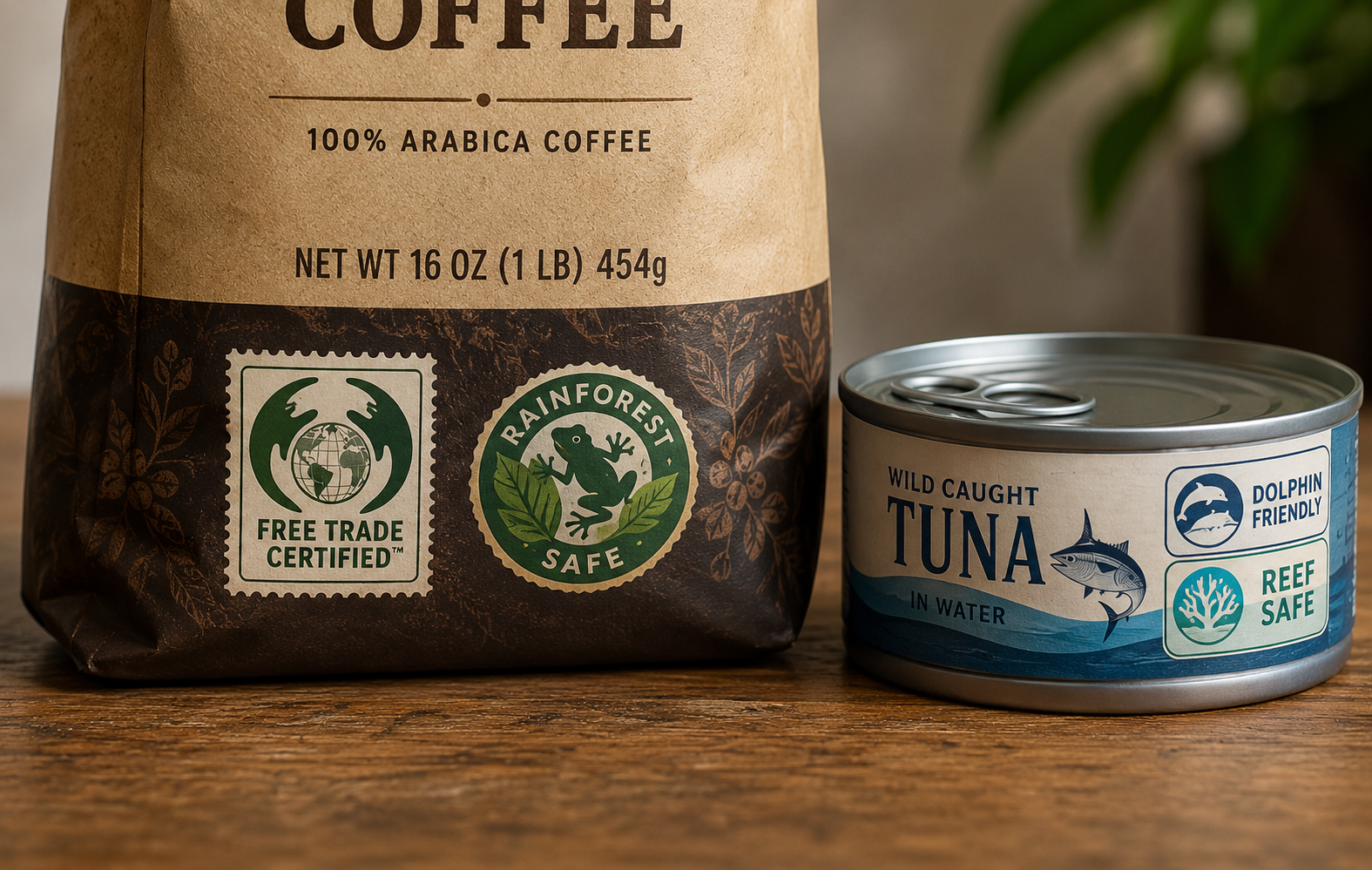
Conscious consumption has moved from niche to mainstream. According to PwC’s 2024 Voice of the Consumer Survey, shoppers reported a willingness to pay more for sustainably produced or sourced goods, signaling growing interest in aligning purchases with social and environmental values. Market behavior appears to reflect this trend: a separate report estimated that consumers paid an average 26.6 percent premium for eco-friendly products in 2024 relative to comparable conventional alternatives.
Similarly, a 2024 survey highlighted by the New York Post found that roughly two-thirds of Americans now expect sustainability to be a baseline feature of business, while 44 percent believe “unsustainable” options should not be sold at all. Millennial and Gen Z consumers appear especially values-driven, with younger shoppers reporting stronger preferences for sustainability in brand and purchasing decisions. Consumers increasingly want their purchases to reflect ethical commitments, and the market has responded accordingly with an ever-expanding ecosystem of ethical labels and sustainability certifications.
Firms now routinely signal commitments to environmental stewardship, labor protections, cruelty-free production, or responsible sourcing in an effort to satisfy both consumer and political pressures. Yet while the rise of conscious consumption may reflect admirable intentions, the systems built around it often introduce meaningful costs and complications.
Take your simple morning coffee choice. A consumer hoping to purchase “ethical” coffee is confronted with a growing array of labels: Fair Trade, Rainforest Alliance, Organic, Bird Friendly, Direct Trade, and UTZ-certified products, among others. Each certification emphasizes different priorities like farmer welfare, biodiversity, pesticide use, supply-chain transparency, or environmental sustainability. Yet these standards frequently overlap and sometimes conflict, with no universally accepted hierarchy among them. Rather than simplifying purchasing decisions, the proliferation of labels often leaves consumers to navigate competing definitions of what “ethical” actually means.
Or let’s say you’re feeling like having fish for dinner. Ethically sourced seafood presents a similar dilemma. Consumers increasingly encounter a maze of sustainability signals: the Marine Stewardship Council label for wild-caught fisheries, “dolphin safe” designations for tuna, Aquaculture Stewardship Council certification for farmed seafood, retailer-specific sustainability commitments, and NGO-generated seafood ratings. These systems emphasize different concerns, from bycatch reduction and species preservation to labor practices, fishing methods, ecosystem impacts, and carbon footprints.
And this trend isn’t confined to just food products. Take the skincare and beauty market. Products are promoted as “clean,” cruelty-free, vegan, sustainably sourced, reef-safe, dermatologist-approved, ethically harvested, or free from controversial ingredients such as parabens and sulfates. Yet, as with seafood and coffee, understanding what these claims truly stand for isn’t easy, nor is determining which standards are the best indicators that a firm is socially responsible.
Ethical labeling systems complicate decision-making, create opportunities for rent-seeking behavior that advantages certifiers more than consumers or producers, and raise the costs for both consumption and production. As certification regimes proliferate, organizations responsible for defining and auditing standards gain influence and revenue regardless of whether measurable consumer welfare improves.
Producers and retailers face difficult strategic choices regarding which labels to pursue, which standards are commercially valuable, and whether compliance aligns with operational realities. Certifications often require audits, reporting systems, chain-of-custody verification, operational adjustments, and licensing fees. Firms must also decide whether to implement standards internally or rely on an independent certifier — and at what cost. Internal assessments can be viewed as less credible given the inherent bias, but external certifications can be risky. Some certifiers have received a bad rap as pay-to-play programs while others have simply lost their appeal.
Even among widely recognized labels such as Fair Trade coffee, consumer understanding appears limited. While many shoppers recognize the label, fewer understand the underlying standards, pricing mechanisms, cooperative structures, or barriers embedded within certification systems. At the same time, Fair Trade’s growth has attracted critics who question whether some certification models constrain economic flexibility or create barriers for farmers operating outside approved networks.
Overall, certifications function as costly market signals. Fisheries and suppliers pursuing sustainability credentials absorb expenses related to audits, compliance systems, and operational changes, which then spill over into higher retail prices. Higher prices can make participation in conscious consumption more difficult for lower-income or price-sensitive households, effectively transforming morality into a premium good. In some cases, certification systems may also narrow market participation by creating compliance burdens that discourage smaller producers or entrepreneurs from entering certain industries.
As I have argued previously, this dynamic risks emboldening certification systems and rent-seeking institutions that increasingly define, monitor, and monetize what qualifies as “ethical” market participation. Firms, meanwhile, face growing pressure to compete less on quality, affordability, or innovation, and more on moral positioning and cause-related branding. While signaling virtue may resonate with values-driven consumers, it can also distract from the core function of markets: creating value.
None of this is an argument against ethical consumption. Consumers understandably want to support firms that reflect their values, and some certifications likely improve transparency or encourage better business practices. But good intentions do not eliminate tradeoffs. Markets have historically delivered broad welfare gains through affordability, accessibility, and convenience without layering moral obligations onto everyday purchases, complicating that equation.
The challenge moving forward is preserving the benefits of markets while allowing room for ethical aspirations. Capitalism functions best when firms remain focused on creating value while responding to consumer concerns, not when moral signaling overshadows economic performance. Conscious consumption may be well intentioned, but it remains an imperfect experiment that often requires more time, more money, and more uncertainty than advocates have acknowledged.
