

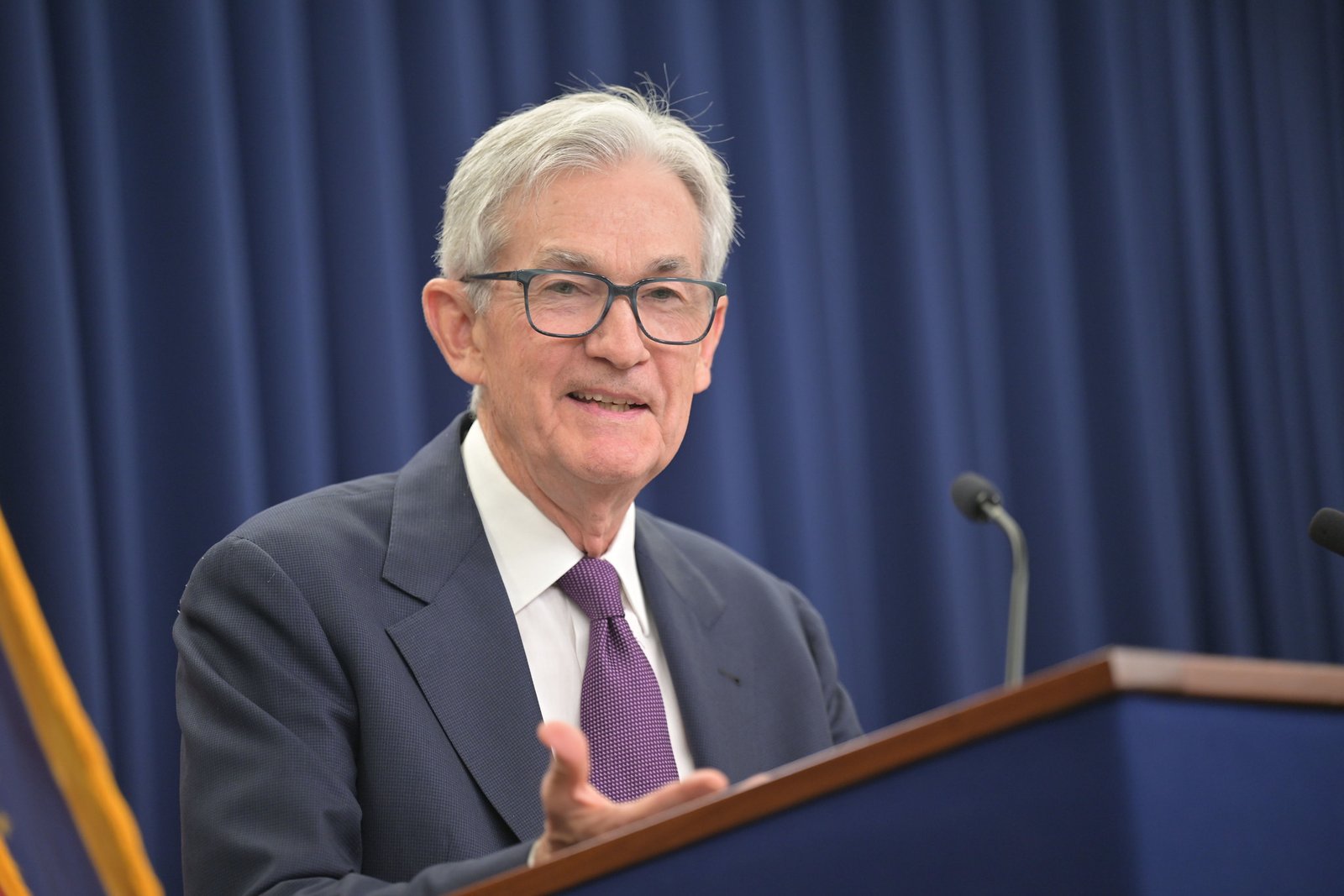
The Federal Reserve held its target range for the federal funds rate at 3.5 to 3.75 percent on Wednesday, a decision markets had fully priced in. Governor Stephen Miran dissented in favor of a cut. Cleveland Fed President Beth Hammack, Minneapolis Fed President Neel Kashkari, and Dallas Fed President Lorie Logan dissented from the easing bias preserved in the statement. The eight-to-four vote marked the most divided Federal Open Market Committee (FOMC) decision since October 1992.
At the post-meeting press conference, Chair Jerome Powell reported total PCE prices were expected to have risen 3.5 percent over the 12 months ending in March, “boosted by the significant rise in global oil prices” tied to the conflict in the Middle East. Core PCE was expected to rise 3.2 percent, which he attributed to tariffs. The increases were confirmed by today’s PCE data release.
To put these figures in context, the median committee member projected PCE inflation of 2.7 percent for 2026 at the March FOMC meeting. The annualized pace so far this year is around 4 percent, well above the median member’s projection and inconsistent with the Committee’s expected disinflationary path.
Powell described an economy “expanding at a solid pace,” a labor market little changed at 4.3 percent unemployment, and inflation that has “moved up and is elevated.” Consumer spending is resilient. Business investment is brisk. Slower job growth, Powell said, reflects lower immigration and labor-force participation, not collapsing demand. In short: this is not an economy that requires further easing.
The conflicting dissents reflect deep divisions at the FOMC. Miran’s view, that policy remains too tight, is most consistent with a model in which inflation is largely driven by transitory supply shocks. Hammack, Kashkari, and Logan, in contrast, believe that policy is too loose, and that signaling further easing risks compounding an inflation problem the data already show. Their view, by contrast, suggests inflation is largely driven not by supply shocks, but persistent excess nominal spending. FOMC members are not arguing about timing. They hold fundamentally different views about the drivers of inflation today.
Tariffs and oil shocks change relative prices. They do not, by themselves, sustain inflation. A tariff raises the price of imported goods relative to domestic ones; an oil shock raises the price of energy and energy-intensive goods and services relative to everything else. These shocks push the price level up, as output falls relative to trend. But the effect diminishes as output recovers. Supply shocks may have a permanent effect on the level of prices. But they only have a temporary effect on the rate of inflation.
Sustained inflation requires persistent growth in nominal spending. It is a monetary phenomenon. A sequence of supposedly one-time shocks cannot indefinitely explain inflation that has been above target for four years. Either past shocks should already have rolled off, or monetary policy is doing something the FOMC has yet to acknowledge.
The disagreement is understandable given the saliency of recent events. The economy has been hit by a series of supply shocks over the last year or so, with the ongoing conflict in the Middle East being the most recent. But the Fed has also failed to bring nominal spending back down to a level consistent with its longer run inflation target following the surge in inflation in 2021 and 2022.
Fed officials must determine the extent to which today’s above-target inflation is due to those supply shocks and whether demand will moderate on its own if the Fed holds rates steady. That’s no easy task, and there is plenty of scope for disagreement. For now, markets are pricing in fewer rate cuts than the median FOMC member projected back in March.
Wednesday’s press conference is almost certainly Powell’s last as chair. His term ends on May 15. Kevin Warsh, who advanced out of the Senate Banking Committee on Wednesday morning, is positioned to succeed him following confirmation from the Senate.
Tradition dictates a departing Fed chair step down rather than staying on for the remainder of his or her term as governor. But Powell announced he intends to remain on the Board, citing what he called “unprecedented” legal pressure on the Fed’s independence.
Powell’s decision to stay may pose a problem for Warsh, who wants to reform the institution. But the bigger, more-pressing problem relates to the scope of disagreement among FOMC members. Some members think the ongoing inflation is supply-driven. Other members think it is demand-driven. He will need more than a little luck to generate consensus.
