

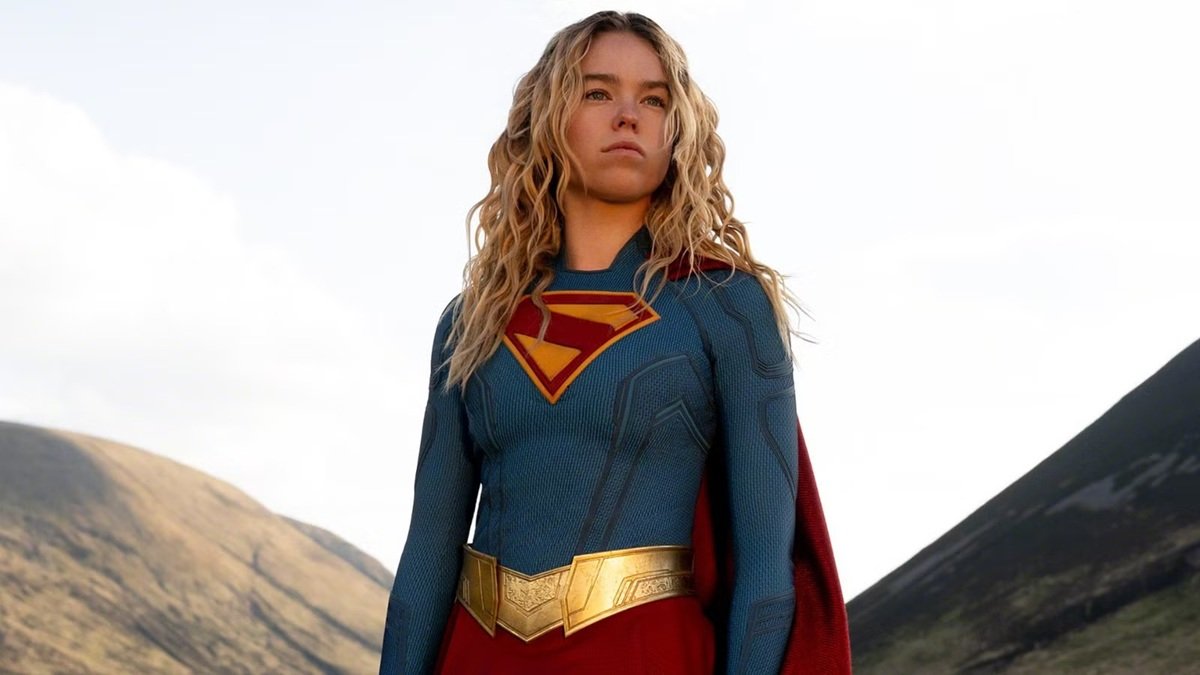
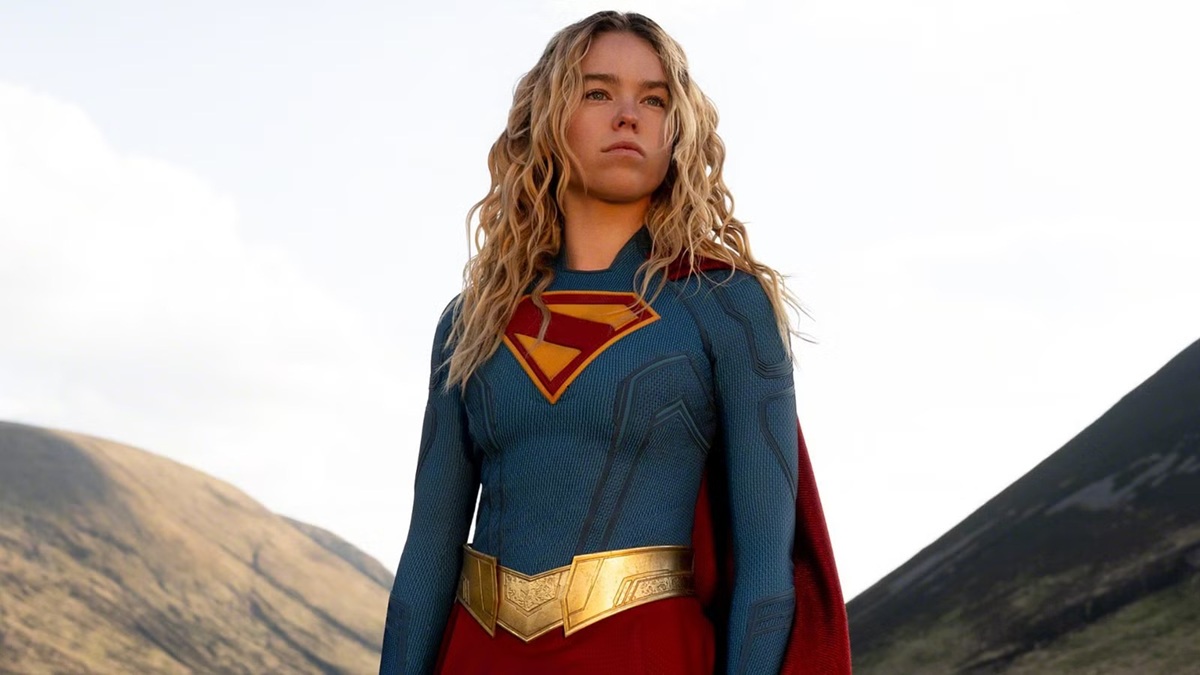
There are bad movies you resent because they never had a pulse, and there are disappointing movies you keep trying to will into shape as you’re watching them. Supergirl falls into the second category. I didn’t go in wanting to hate it. In fact, I wanted it to work for reasons that go beyond franchise obligation. After last year’s Superman, which I found messy, overstuffed, and tonally uneven but still warm enough to find the man inside the cape, DC Studios had a chance here to do something sharper. Stranger. Less earthbound, less beholden to the usual myth-making machinery.
For a while, you can see the outline of that movie. Kara Zor-El (Milly Alcock) is not Clark Kent. She wasn’t raised by kindly farmers in Kansas. She didn’t grow up with porch-light morality, small-town steadiness, or the benefit of learning goodness as an everyday habit. She watched her world die. She carries Krypton not as an origin story but as an open wound.
That difference should give Supergirl its own emotional charge. If Clark chooses hope because love shaped him, Kara’s heroism has to come from a harder place: grief, anger, exhaustion, and the terrible knowledge that survival doesn’t automatically make you whole.
It’s a compelling starting point, and more importantly, it’s exactly the sort of character Milly Alcock seems ready to play.
A Supergirl with Attitude
Alcock has the spunk. She has the charisma. She understands Kara as someone who hides pain behind sarcasm, swagger, and the occasional hangover. Her Supergirl isn’t polished into inspirational poster art. There’s a bit of bite to her, a bit of mess, a bit of the girl at the party who’s already planning her exit before anyone says hello. Even in weaker scenes, Alcock finds flashes of volatility that suggest a more interesting film trapped underneath the one we’re watching. She doesn’t play Kara as a role model waiting to be sanctified. Instead, she plays her as someone who has no real interest in becoming anyone’s symbol.
That’s good. More than good, really. It’s the one creative choice the movie keeps getting right.
Unfortunately, Alcock can only do so much with a script this pedestrian. Ana Nogueira’s screenplay has the ingredients for a rougher, more personal superhero film, but it keeps arranging them like franchise furniture: trauma here, quip there, creature design in the corner, needle drop on the wall. A showroom for brand-approved rebellion. It wants to be a space western, a revenge story, a hangout comedy, a girl-and-her-dog adventure, a cosmic road movie, a punk-lite coming-of-age tale, and a backdoor introduction for future DC projects.
None of those directions is automatically wrong. Genre-blending can be thrilling when the mixture has rhythm and purpose. Earlier this year, Project Hail Mary pulled from several science-fiction traditions and made the combination feel generous, funny, and alive. You could see the seams, but the seams had personality.
Supergirl has seams, too. It just keeps tugging at them until the whole thing starts to fray.
A Star Fighting the Script Around Her
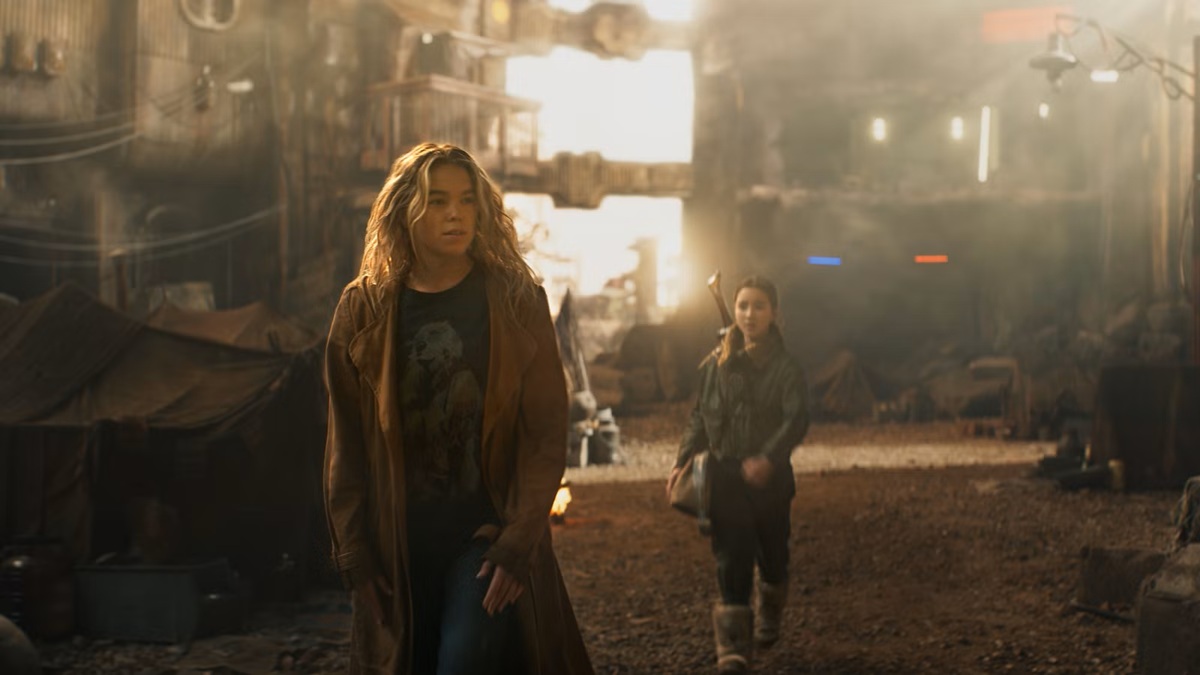
The story sends Kara across the galaxy with Ruthye Marye Knoll (Eve Ridley), a young girl seeking revenge against Krem of the Yellow Hills (Matthias Schoenaerts), a brutal intergalactic trafficker whose crimes place him somewhere between space pirate and bargain-bin Mad Max villain. Krypto, Kara’s loyal superdog, is pulled into the conflict, giving the movie an obvious emotional hook. You can never really go wrong with the dog. Or at least, you have to work pretty hard to make the dog feel underused.
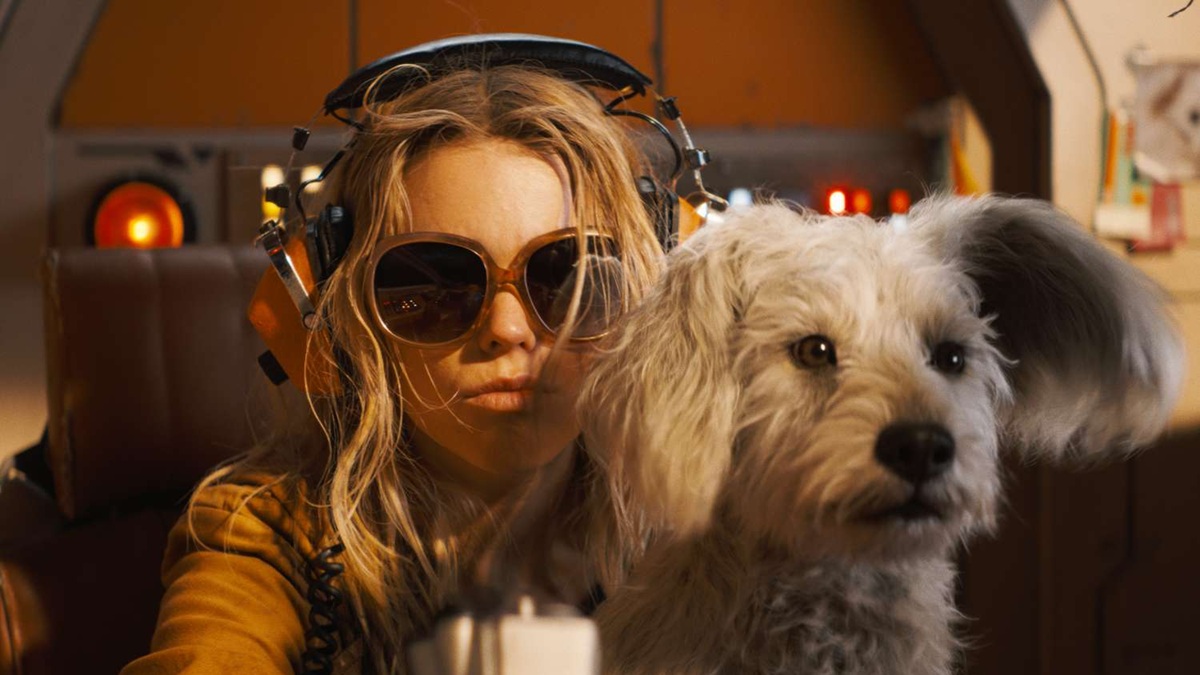
Somehow, Supergirl gets close. Krypto remains one of the film’s easiest pleasures, partly because the character doesn’t require much explanation. A dog loves, follows, and gets into trouble. A dog can turn even cosmic nonsense into something immediately understandable.
In Superman, James Gunn used Krypto not merely as a joke machine, but as an emotional anchor. He was chaos with a heartbeat, a furry testament that love doesn’t need a speech to make itself felt. Here, he should matter even more because Kara’s isolation is more severe than Clark’s. For someone this wounded, a loyal companion shouldn’t just be cute. He should be essential.
The movie knows that in theory, but it doesn’t always know how to dramatize it.
Krypto is adorable, yes, and he gives the film warmth whenever the script remembers to bring him forward. Too often, however, he feels like an emotional shortcut instead of an emotional presence. The film depends on our built-in affection for him without giving that bond enough texture of its own. We understand why Kara loves him because, well, look at him. Good boi. Perfect boi. But the relationship should have hurt more, mattered more, and shaped Kara’s choices with greater force.
Lobo (Jason Momoa) runs into a similar problem, though in his case, the frustration comes from how much energy he brings and how quickly the movie starts rationing it. He enters with the sort of reckless, cigar-chomping energy that makes you wish the film would loosen up around him. Momoa is magnetic, as always. He has a gift for making chaos look casual, and Lobo fits him almost too obviously: loud, rude, overbuilt, and permanently seconds away from turning any room into a demolition site. He steals scenes because he knows exactly what temperature this movie should probably be running at.
And then the film shelves him for long stretches.
Maybe that’s strategic. DC Studios might be saving Momoa for a standalone Lobo film down the line, so his role here functions more as introduction than full character development. Fair enough. Shared universes are always planting seeds, even when the garden already looks overcrowded. Onscreen, though, the effect is still frustrating. Lobo doesn’t feel integrated into Kara’s story so much as dropped into it for a quick jolt of personality. He’s less a supporting character than a glorified cameo with better hair and louder boots.
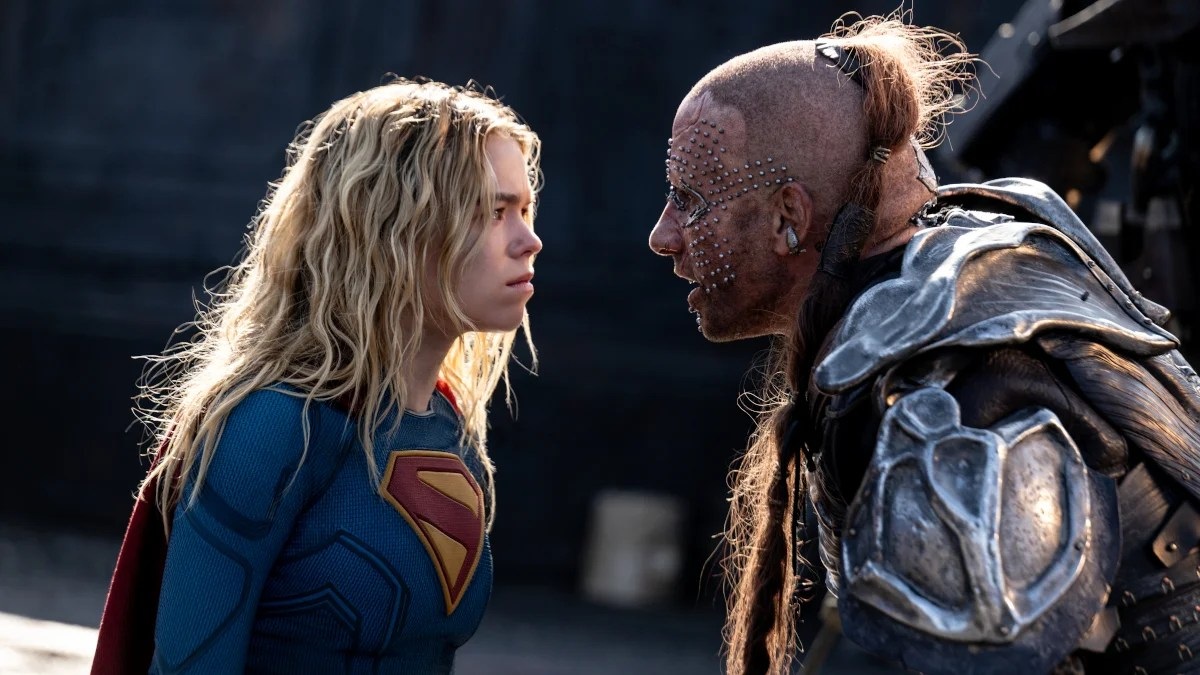
Still, I’d rather have too little of Momoa than too much of Krem. Schoenaerts does what he can with the part, but the villain is more grotesque concept than memorable threat. He’s there to give Kara and Ruthye something to chase, something to hate, something to defeat. That’s function, not characterization. The film gestures at uglier corners of the galaxy—trafficking, violence, frontier lawlessness—but the darkness rarely cuts as deeply as it should. Heavy subject matter gets filtered through blockbuster shorthand.
Apropos the Mishmash Thing
That’s where the genre pileup becomes more than a cosmetic issue. Supergirl keeps borrowing attitudes from better, stranger, or more forceful movies without building a personality of its own. There’s a bit of Guardians of the Galaxy in the cosmic irreverence, a bit of Star Wars in the interplanetary hopping, a bit of True Grit in the revenge-road structure, a bit of Mad Max in the scuzzy wasteland textures, and a bit of John Wick in the revenge-as-forward-motion plotting. Influence, of course, isn’t the problem. All movies borrow. The issue is digestion. Supergirl eats from every plate and never develops a taste.
Craig Gillespie has directed messy, lively films before, and on paper, he seems like a smart choice for a version of Kara who’s pricklier than the standard cape-and-symbol figure. Yet too much of Supergirl feels oddly managed. For a movie selling itself on attitude, it’s rarely dangerous. For a story about rage, it’s rarely raw. And for a galaxy-spanning adventure, it’s surprisingly cramped in imagination.
Sure, the production design has some grit. The costumes have some texture. There are surfaces you can point to and say, yes, someone wanted this to look less clean than the usual superhero product. But grime isn’t the same as personality. Punk isn’t a jacket. Rebellion isn’t a font choice.
The action doesn’t help much, either. It’s serviceable in the way too many modern blockbuster action scenes are serviceable: clear enough to follow, loud enough to register, and gone from memory almost before the next scene arrives. Kara’s powers should give the film a chance to rethink motion, impact, and scale. Instead, the set pieces feel like obligations. Punches happen. Bodies fly. Structures break. Somewhere, a visual effects team meets a deadline.
And yet Alcock keeps pulling the film back from total collapse. There are moments when she narrows her eyes, drops a line, or lets Kara’s anger flicker into something closer to fear, and the movie briefly sharpens. She has a face that can look both bored and wounded, which is harder to pull off than it sounds. Her best scenes don’t beg us to like Kara. They dare us to sit with her sourness.
That’s exactly why the movie around her feels so inadequate. Alcock is ready to play volatility, grief, arrogance, tenderness, and self-loathing. Unfortunately, the script keeps handing her attitude and calling it interiority.

The Wrong Fight Around the Right Performance
It’s impossible to discuss Supergirl without acknowledging the noise around Alcock’s casting. Not because the noise deserves oxygen, but because it tells us something ugly about how some audiences now approach female-led blockbusters. Before a movie can even be judged as a movie, certain corners of the internet have already decided whether an actress is acceptable based on whether she fits their preferred template of feminine beauty, submissiveness, whiteness, youth, glamour, or some rancid combination of all five.
We’ve seen this before. Rachel Zegler went through it with Snow White, where bad-faith complaints about her casting, ethnicity, politics, and general refusal to behave like a grateful porcelain doll became louder than any honest discussion of the film itself. That movie had plenty of problems, but Zegler wasn’t one of them. Blaming her was lazy then, and blaming Alcock now would be lazy in exactly the same way.
The looming discourse around Christopher Nolan’s The Odyssey suggests this problem won’t go away soon. Casting choices involving Lupita Nyong’o and Elliot Page have already stirred predictable outrage from racist, misogynist, and hard-right spectators who seem less interested in cinema than in guarding mythology like it’s private property. The movie isn’t even here yet, and people are already reviewing their own prejudices.
So let’s be clear: Alcock is not the problem with Supergirl. Not her face. Not her body. Not her haircut. Not the fact that she doesn’t appear designed to satisfy whatever Eurocentric, male-gaze algorithm some fans keep mistaking for canon.
The problem is the movie.
That distinction matters because dismissing Supergirl for the wrong reasons gives the film too much cover. Bad-faith backlash can make any negative review sound suspect, and that’s a trap. A movie can be unfairly targeted and still be mediocre. An actress can be attacked for sexist reasons and still star in a film that doesn’t work. Defending Alcock from trolls doesn’t require pretending the script serves her well. In fact, the opposite is true: the fairest defense of her performance is admitting how much better she is than the material.
When Does a Movie Become a Beautiful Mess?
This is where Supergirl suffers most in comparison to Superman. Gunn’s film was hardly clean. It had too many characters, too many tones, too many ideas jostling for room. But it had a pulse. It believed in Clark’s decency, in Lois’ intelligence, in Krypto’s loyalty, in the almost embarrassing idea that kindness can still be dramatic. Its mess came from excess. It wanted to say too much.
Supergirl has the opposite problem: It wants to seem complicated without doing the work of complication. Kara is traumatized, but the film treats trauma as a posture more than a lived condition. She drinks, snaps, wanders, and resists responsibility, though the screenplay rarely digs beneath those behaviors. Ruthye’s revenge arc should force Kara to confront the limits of anger, the seduction of violence, and the terrifying ease with which grief can disguise itself as justice. Instead, the film moves from beat to beat with a confidence it hasn’t earned.
Craig Gillespie’s DCU follow-up sees Milly Alcock bring the spunk, charisma, and jagged edges. But even she can’t save a movie that keeps sanding them down.
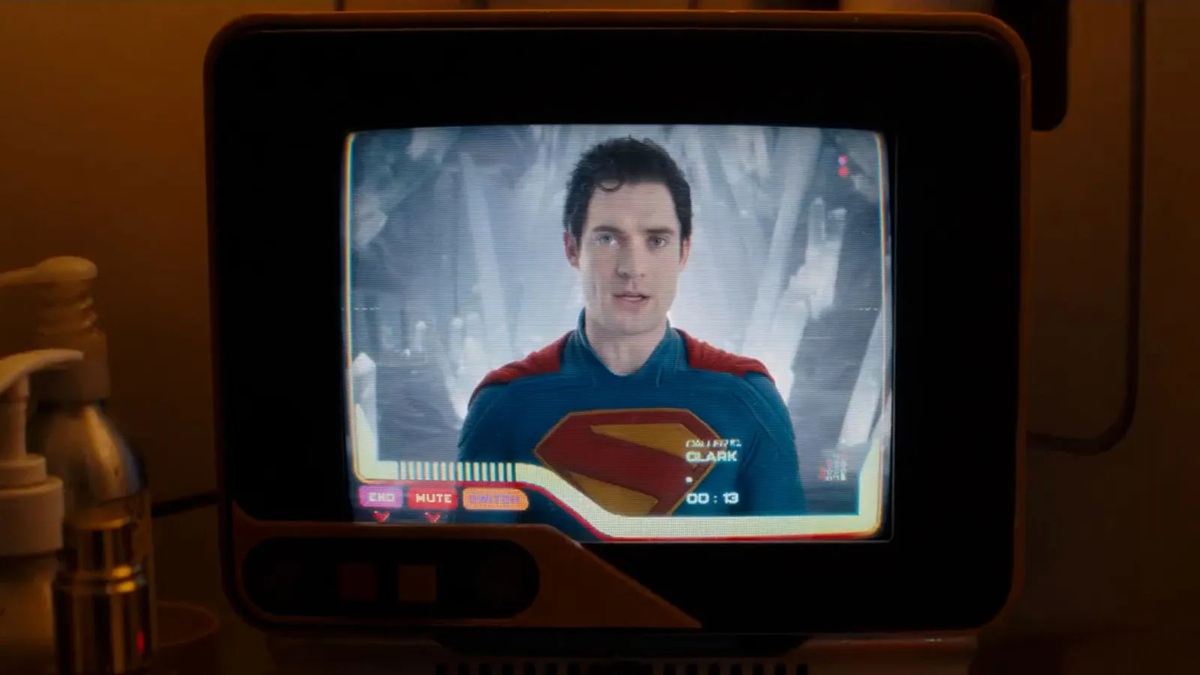
Even the quieter moments, the ones that should give the film its soul, come in uneven bursts. Some of them work. Kara’s interactions with Clark/Kal-El (David Corenswet) briefly suggest a richer cousin dynamic: his hope against her bitterness, his settled life against her drifting one, his Earthbound morality against her cosmic grief. But while it’s a smart contrast, the movie doesn’t stay with it long enough. Corenswet’s presence also has the unfortunate side effect of reminding us how much more emotionally grounded Superman felt, even when that film was busy tripping over its own world-building.
I strongly feel that Ruthye should have served as Kara’s mirror, but the relationship doesn’t gather enough force. Ridley gives the character determination, while the writing leans too heavily on the outline of a bond without letting it breathe. The girl seeking vengeance and the woman pretending not to care should make for a bruising pair. Here, they often feel like pieces being moved through a plot.
At Least We Can Still Ask: “Who’s a Good Boi?”
By the end, Supergirl has assembled a collection of things I like in theory: a jaded heroine, a cosmic quest, a revenge story, a loyal dog, a loud-mouthed bounty hunter, a darker corner of the DCU, and a lead performance with real bite. That should be enough for something good. Maybe not great, but good. Instead, the film keeps proving that ingredients are not the same as cooking. You can throw everything into the pot and still end up with something bland.
That’s the real disappointment. Not that Supergirl is disastrous. It isn’t. It has enough movement, charm, and stray pleasures to avoid feeling like a total misfire. Alcock gives it a center it doesn’t deserve. Momoa barges in and briefly makes the room fun. Krypto remains a good boi, because of course he does. A few quiet moments hint at the more wounded, stranger, more emotionally serrated movie this could have been. Hints, however, are not enough.
Craig Gillespie’s Supergirl wants Kara Zor-El to be the anti-Clark: harder, messier, angrier, less willing to see goodness in everyone. That’s a worthwhile idea for this new DCU, especially after a Superman film built around radical earnestness. But the movie mistakes contrast for character. It keeps telling us Kara is damaged without making that damage feel specific. It dresses the galaxy in grit without making the story feel dangerous. Worst of all, it keeps giving Alcock attitude to play when she’s clearly capable of playing the pain and hurt underneath it.
There’s a better Supergirl movie inside this one. You can see it every time Alcock looks ready to tear through the script and find the character herself. Unfortunately, the film keeps pulling her back into a familiar franchise machine, where rebellion has been pre-approved, trauma has been focus-grouped, and even the weird parts arrive neatly packaged.
Kara deserved a movie with sharper edges. Alcock deserved a script with more nerve.
Finally, the dog deserved more screen time. But then again, don’t they always?


A self-described cinephile who can’t stop talking—and writing—about films. Paul also moonlights as ghostwriter and editor for a few memoirs. He currently resides in the Philippines.
