

The median household in Miami earns about $62,000 annually; homeowners with a mortgage have monthly housing costs pushing $2,900. Annualized, this equals more than half the median household income. In Los Angeles, the numbers come in at $82,000 and $3,500 for 51 percent. New Yorkers are paying 49 percent, and New Orleanians are paying 47 percent of their annual income on housing.
Different coasts, different housing markets, different incomes, regulations, and supply constraints. And all of these cities illustrate a national reality that seems beyond dispute: housing has become extraordinarily expensive.
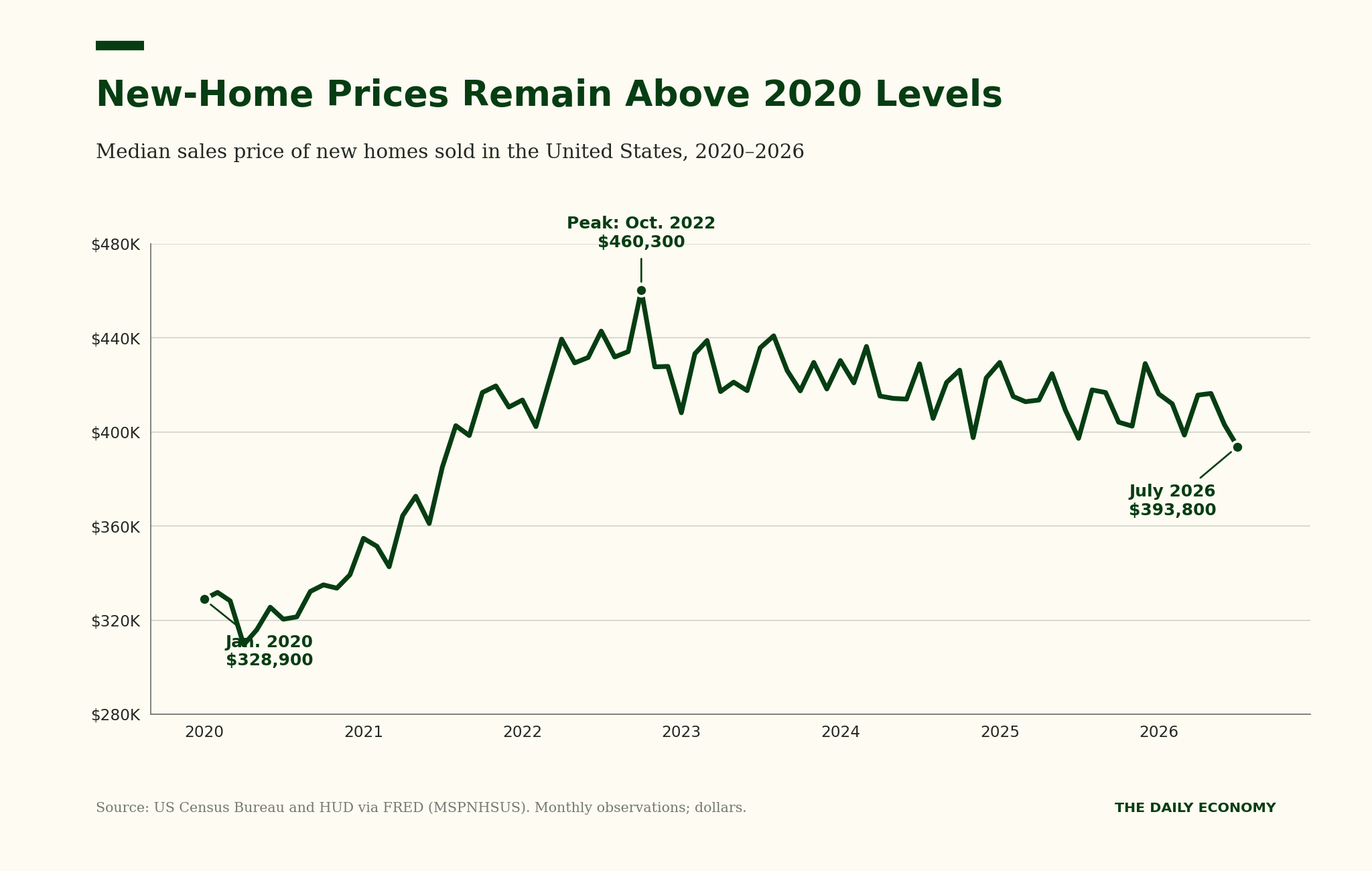
Lest these cities appear cherry-picked, let us consider Harvard’s 2026 State of the Nation’s Housing report. Existing-home sales are at a three-decade low. Meanwhile, median new and existing home prices exceed $400,000. Prices for the latter are now 54 percent higher than in 2020, nearly five times median household income.
Financially, mortgage rates sit above 6 percent. By late 2025, the monthly cost of the median-priced home reached roughly $3,100, requiring an annual income above $120,000 to afford it, compared with about $1,700 and $66,000, respectively, in early 2020.
This bleak picture is obviously the product of many factors. One, however, was the Federal Reserve’s intervention in the housing market. During the COVID lockdown era, the Fed entered the mortgage market on a massive scale, helping push borrowing costs to historic lows. But its intervention did more than simply lower mortgage rates. It also affected households differently, creating benefits for those already in the housing market while making entry more difficult for those who were not.
The Fed’s mortgage-backed-security (MBS) purchases helped capitalize cheap credit into higher home prices, which enriched current homeowners, all the while increasing the costs of entry for prospective buyers. Then, when the Fed raised rates to fight inflation, those same outsiders faced both higher prices and higher financing costs.
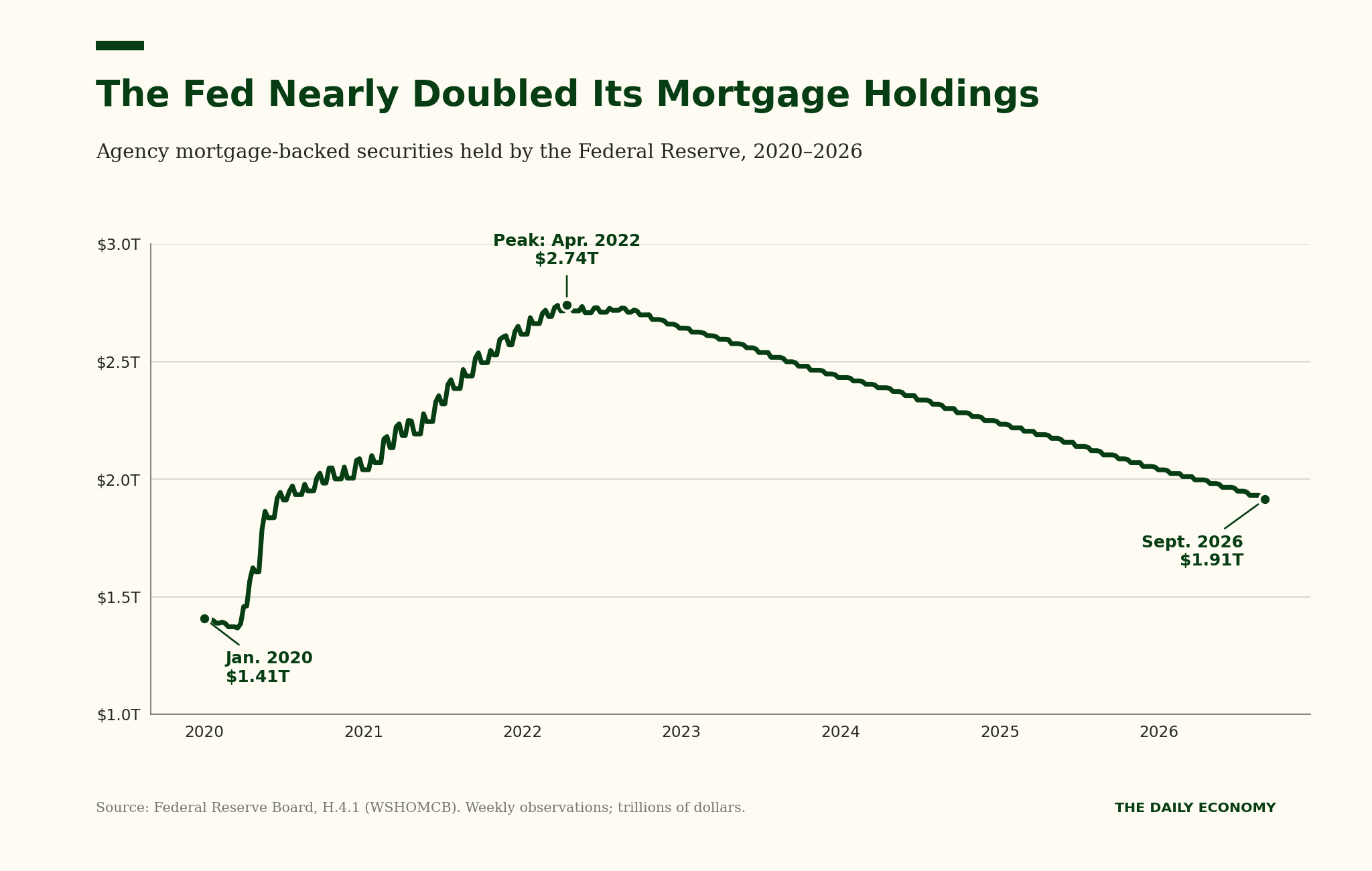
Beginning in March 2020, the Fed purchased trillions of MBSs, with Agency MBS holdings rising 93 percent in about two years, reaching $2.7 trillion by mid-2022. The Fed’s immediate objective was seemingly achieved. Mortgage rates fell to historic lows, which the Dallas Fed explicitly laid at the feet of the Fed’s MBS purchases.
Economic consequences, however, as Bastiat and Hazlitt showed for decades, extend beyond the short-run and the targeted groups. Cheaper mortgages increased households’ purchasing power and contributed to greater housing demand, placing upward pressure on prices in a market where supply could not quickly adjust. Once inflation arrived, the Fed raised rates, causing this double whammy for would-be buyers. This had important distributional consequences.
At its peak, the Fed owned 32 percent of the entire agency MBS market. These purchases resulted in MBS prices rising and their yields falling, causing mortgage spreads to tighten. This tightening pushed mortgage rates down, allowing buyers to finance larger principal balances. Expanded borrowing opened up possibilities for buyers, further fueling housing demand. With the housing supply unable to sufficiently catch up to the new demand, the financial benefits were met with higher prices on the existing housing supply.
These results were not uniform, however. As with other exercises of monetary policy, where money enters matters.
The Cantillon Effect Comes Home
As Nicolás Cachanosky explains, new money does not enter an economy everywhere, and certainly not simultaneously. Fed actions consist of particular injections at particular points, then following particular paths. It is punctiliar by nature, and this results in changing relative prices, which benefit earlier recipients before prices have adjusted to the intervention. In this context, the relevant “early recipients” do not necessarily receive literal new money, but the injection in question occurs in financial markets closely connected to mortgage credit.
Households can be divided into at least two groups: incumbent owners and prospective buyers, both of whom experience the Fed policy differently. Incumbent owners already possess an appreciating asset, with the potential to refinance at the initial lower rate, seeing their home equity rise. Prospective buyers, by contrast, possess no appreciating asset; therefore, they see their desired homes become more expensive. The same appreciation that increases an incumbent homeowner’s net worth increases the price of entry for everyone still trying to buy.
Beginning in 2022, the Fed changed direction. But tightening does not just unwind the past. Homeowners who had purchased or refinanced at historically low rates could keep those mortgages, while new buyers faced even higher rates. The Fed noticed this “lock-in” effect. By June 2024, more than 90 percent of its MBS holdings had coupons below 4 percent.
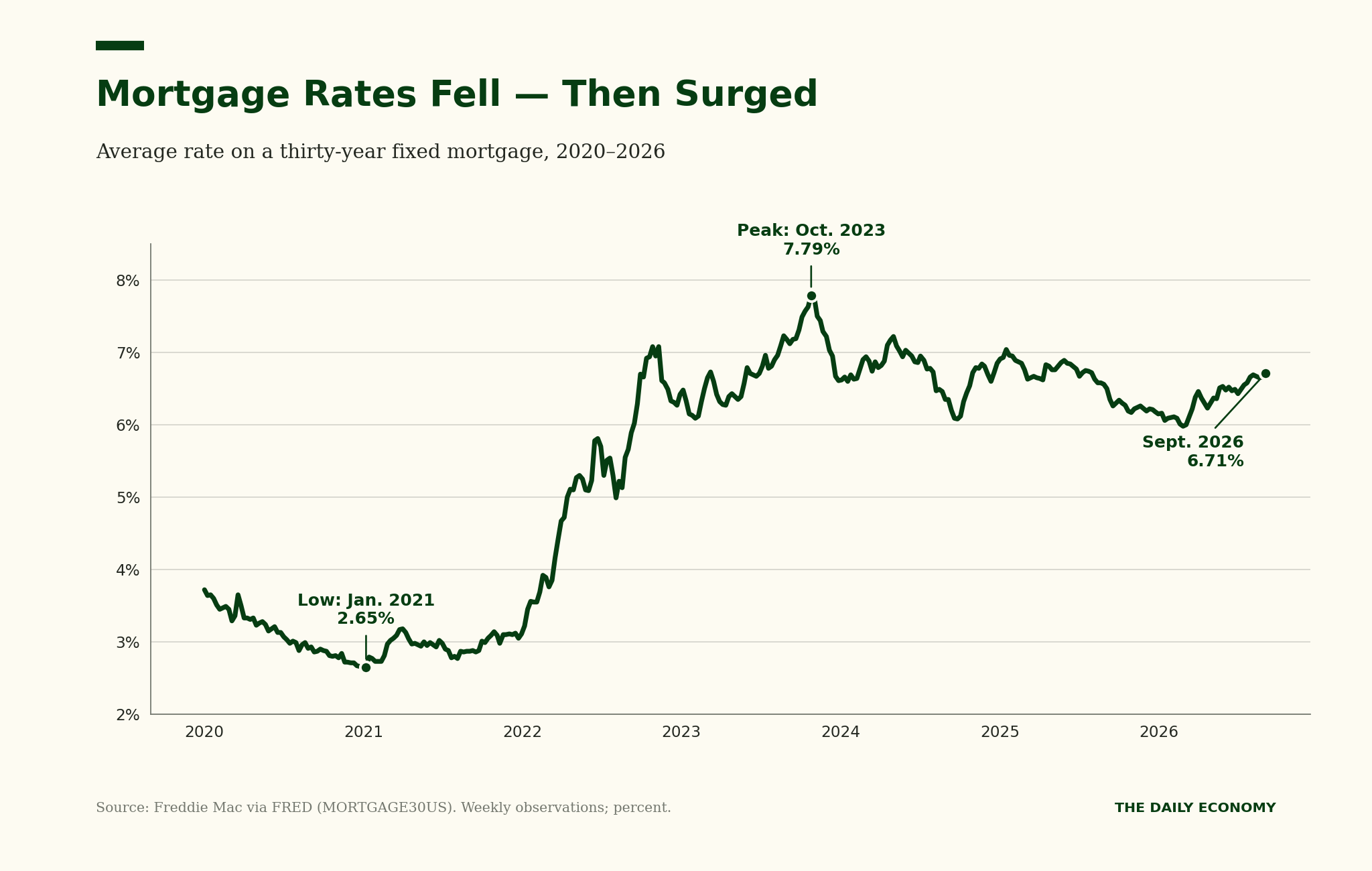
The Fed’s policy can be broken down into two segments, then. During the easing period, low rates and rising prices fed equity gains for homeowning incumbents. Then, the tightening led to a lock-in of those owners at the previously lower rates, as outsiders saw higher rates. And, of course, first-time buyers typically possess neither asset: the equity nor the existing low-rate mortgage to offset these higher financing costs.
A Federal Reserve study from 2023 documented this phenomenon. A one-percentage-point increase in mortgage rates reduced the share of low- and moderate-income homebuyers by about 7.5 percent, with low-income buyers falling by 16 percent. These effects were even larger for first-time buyers. There was also little evidence of larger down payments to counteract the rising rates, suggesting that many could not substitute savings for the higher monthly payment. Evidence also suggests that loose monetary policy passing through to mortgage rates negatively affects family formation and fertility rates.
In total, then, we see the following. Lower rates create unequal access to cheap credit, and the subsequent higher rates affected buyers disparately. The Fed changed not only the cost of financing a house, but the composition of participants in the market. Interest rate policy altered who could buy.
America now has expensive housing, huge mortgages, fewer purchases, declining homeownership, and a growing segment of the population crowded out. At the very least, the Fed exacerbated this from 2020-2022. The broader lesson here is that monetary policy does not change interest rates or prices in isolation. Money always enters particular markets, changes particular relative prices, and creates particular winners and losers. In this instance, the Fed inflated the price of a scarce asset (appreciation for current homeowners). Once the subsidy was removed, the wealth redistribution it caused did not reverse. The consequence is our current state — not just housing inflation, but a higher price of entry.
