

Content Warning: The following piece discusses issues of sexual assault. If you need help and support, please contact RAINN‘s National Sexual Assault Hotline at 1-800-656-4673.
The first time it happened, I didn’t tell anybody. At home, I looked at my face in the bathroom mirror. My lips were swollen, as if bee-stung, and my eyes were red, as if all the veins had burst. I’d been choked so hard I almost passed out. I didn’t see it for what it was—sexual assault—until years later, when something similar happened again and I had begun talking, had begun forging meaningful friendships. In talking to friends, I was able to put what happened into context, to understand it. When you make friends, you need to talk. You need to feel okay about talking.
The first time it happened, I didn’t tell anybody, not only because I didn’t know there was something to tell, but also (crucially), because I didn’t have anybody to tell. “We cannot really risk emotionality in relationships where we do not feel safe,” writes bell hooks in Communion: The Female Search for Love. I had people I could call acquaintances, but didn’t have relationships with them that were deep enough, grounded in intimacy or love enough, to call friendships. Unable to make sense of my own self and life, I was lonely and yearning for connection, and looking for it in all the wrong places—exclusively in romantic relationships.
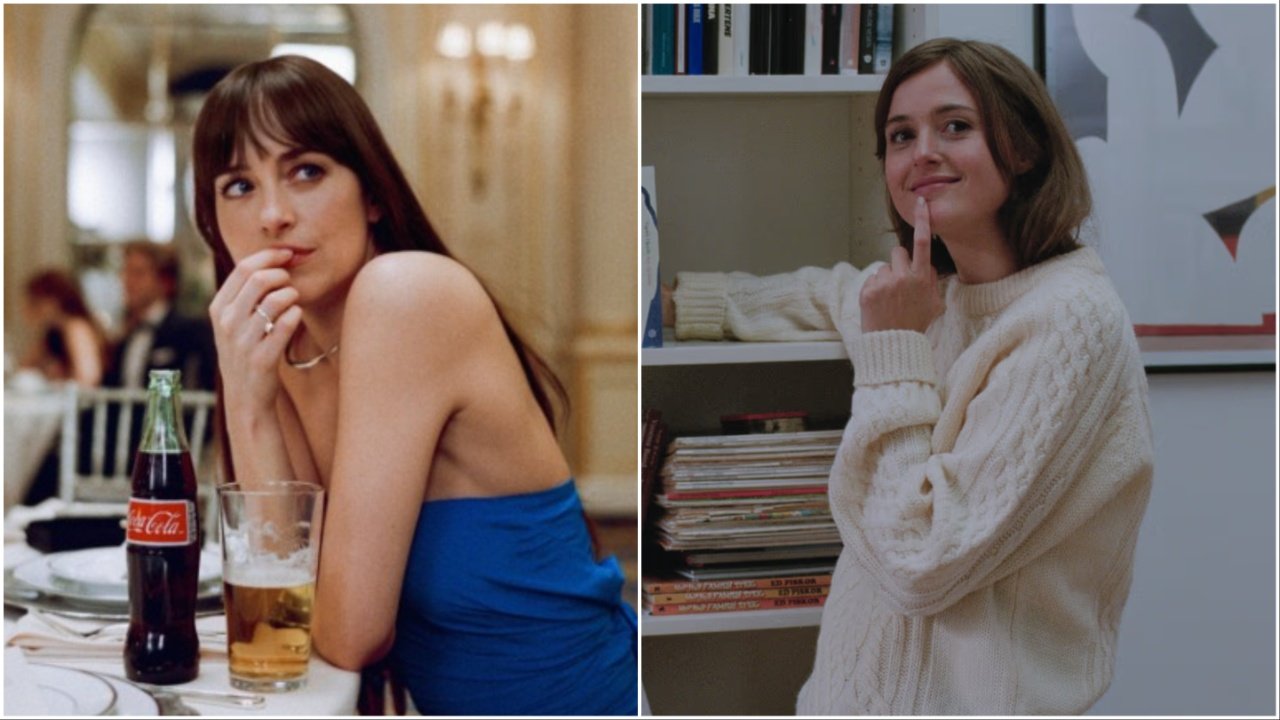
My erstwhile loneliness and desire for connection were reflected back at me recently with disorientingly intricate detail by Celine Song’s sophomore feature, “Materialists.” A romantic drama about professional matchmaker Lucy (Dakota Johnson), who finds herself needing to make for herself the choices she thrusts upon her clients daily, “Materialists” believes that true love is out there for everybody. This love, though, is uniquely qualified: it is only romantic love.
In this belief, “Materialists” is much like its spiritual predecessor, “The Worst Person in the World.” At their core, both films believe that the only meaningful union two people can forge is a sexual, romantic one. The films not only discourage friendships, they seem not to believe in them as a viable source of happiness, leaving us with characters—for the most part women—who live atomized, lonely lives, apart from and against other women.

This is not to say that friendship is completely absent in “Materialists.” (Indeed, it would be unfair to judge a film for something that is entirely out of its purview.) Rather, it is something that, though characters crave it, is denied. “I almost felt like we were friends,” Sophie (Zoe Winters) says to Lucy at one point with disdain. Sophie is one of Lucy’s long-standing clients—nearing her 40s, she feels immense shame about not having found a partner yet, for having hired an “expert” to help her. Lucy sets Sophie up with a man named Mark, who sexually assaults Sophie on their first date. Sophie holds Lucy responsible and feels betrayed and embarrassed. Mistaking the closeness necessitated by the professional relationship between a matchmaker and her client for genuine intimacy and friendship, Sophie is heartbroken by the fact that Lucy would set her up with someone who could hurt her so violently.
“He was a strong match,” Lucy says helplessly to Sophie during a confrontation. She was just doing her job, in other words. Sophie expresses her sadness, anger, and pain in so many words to Lucy; with sobs hiccupping in her throat, she explains what happened the night of the attack. “I’m a person and I know I deserve love,” she says finally in one of the film’s most affecting scenes. It’s an opening up, a show of vulnerability on her part that Johnson’s Lucy is incapable of returning. Instead, Lucy retorts with silent reiterations of the axioms she has learned on her job. “I know you do, I believe it,” Lucy says, something she says often to her clients: she will believe for them that they deserve love, even if they don’t. Lucy maintains a professional attitude toward Sophie even as the latter melts before her from the heat of her sadness, yearning for closeness and affection. It’s as if a rejection of her plea for a bond, for a human connection.
The assault is meant to serve as a reality check within the film, as a means by which to express the real danger women come up against every time they go out on a date. Though carried with grace and empathy by Winters, the event mostly reveals the protagonist Lucy’s priorities—it facilitates her professional growth. If anything, it causes Lucy to take pause and consider whether she wants to continue being a matchmaker in a world where people are talked about as though they are commodities. By the end of the film, we learn that she does want to continue, but not before another desperate plea for closeness from Sophie.
One night, when Lucy is away with John (Chris Evans), her poor theatre-actor ex, she receives a frantic call from Sophie. Mark has shown up outside her apartment and won’t leave. Sophie is terrified and alone and doesn’t know what to do. She has called the police, but they can’t do anything because he hasn’t done anything measurably terrible, not yet. John rushes Lucy to Sophie’s apartment and waits on the stoop outside. When Sophie lets Lucy in, she is obviously exhausted and laughs nervously as if to let out the fear that has been trapped within her all night. Lucy talks to Sophie steadily, telling her that there is legal action she can take. Sophie nods, her eyes glassy. And when Lucy asks her if she would like a hug, it’s as if all remaining energy leaves Sophie; she collapses into the embrace and weeps.
“You know what I’ve been thinking about?” Sophie says after a while. “I really need to get a boyfriend so I have someone to call that’s not my fucking matchmaker.” She jokes about dying alone, smiling a sad smile. “I promise you you’re going to marry the love of your life,” Lucy says before going on to reiterate, “You don’t have to believe it. I believe it.” Sophie says she’s not asking for a miracle, she just wants someone “who can’t help but love me back.” Lucy stays with Sophie for the duration of the night, leaving for a moment when the sun comes up to tell John, still on the stoop, that she will help Sophie file a restraining order. We never see Sophie again.

It’s an incredibly disappointing scene, an interaction between two women that Song absolutely bungles. Palpable in Winters’ Sophie is an intense desire for reciprocal love and tenderness, but Song never manages to realize or offer that what Sophie is looking for can be found in friendship. It’s as if Song senses through Sophie that friendship can soothe—through the character’s belief that she and Lucy are friends, through her turning to Lucy in a moment of crisis—but the writer/director falls short of seeing friendship as a relationship worthwhile in itself.
It’s heartbreaking that Sophie repeatedly feels the need to apologize for or take back her feelings of friendship toward Lucy. It’s heartbreaking to hear her say that she should get a boyfriend so she wouldn’t have to turn to Lucy with her pain. The film doesn’t seem to realize that Sophie is turning to Lucy for things people often turn to their friends for. That Sophie misreads her relationship with Lucy initially is totally understandable, because she has put in emotional work in laying herself bare to Lucy; she, as hooks says, has come to feel safe with the woman. We want our friends to see us, to understand us, to comfort us when we need it. Lucy functions as a friend in Sophie’s mind, and the film’s ultimate tragedy is that it does not have Lucy, in turn, see Sophie as a friend; rather, it has her turn away or maintain a professional distance from the other woman. This scene, Sophie’s final scene, doesn’t end with Lucy comforting Sophie as a friend, but as a client, evident in Lucy’s reiteration of her axiom, in a return to terms of her trade.
It is evident that Song has Sophie turn to Lucy in order that she may learn persistence. It is not because she wants the two characters to become friends, least of all because she wants to telegraph how friendship can allow healing after the kind of trauma Sophie has experienced. This refusal to privilege friendship is evident in what the two women end up discussing: boyfriends. Song doesn’t even seem to want to consider how lonely dating in the modern age has left us; she doesn’t say much about loneliness at all, even as she depicts deeply lonely characters. Rather, she seems to want to make the underwhelming point that we should not give up in our search for romantic love, because it will find us.

In the film’s final moments, Lucy is on the phone with her boss, who tells her that Sophie has hit it off with her latest date. It is suggested that the woman, who has seemed so incredibly lonely throughout the film, has finally found a boyfriend she can call. It’s not suggested that Lucy will talk to or has talked to Sophie again in any capacity other than as a client. The women remain separated by a wall of professionalism, with any friendship they might have had left unnurtured. They don’t talk to each other immediately, Sophie is rather talked about, because they don’t need to anymore, because Lucy’s work is done. The women have found their men and no longer have any use for each other.
In “Materialists”’ world, friendship feels like a mistake; it is something apologized for, or something that is only momentary, a placeholder until a romantic partner is found. No matter that couples break up all the time, Sophie could easily, later on, become as alone and without a person to call as she is during the film. What is important is that she has found a romantic partner, has achieved the goal toward which Sophie’s and Lucy’s energies have been focused. Any friendship that blooms is accidental and left to fizzle. Lucy is just as alone as Sophie, but while the latter craves friendship, Lucy seems to genuinely not want it: at home, she sits alone, and when something terrible happens to her in her career, she calls a man she’s seeing in a romantic capacity. In the way that the opening scene depicts a cave woman moving out and away from her mother and younger sister and toward a man, this film moves away from community and toward heterosexual love.
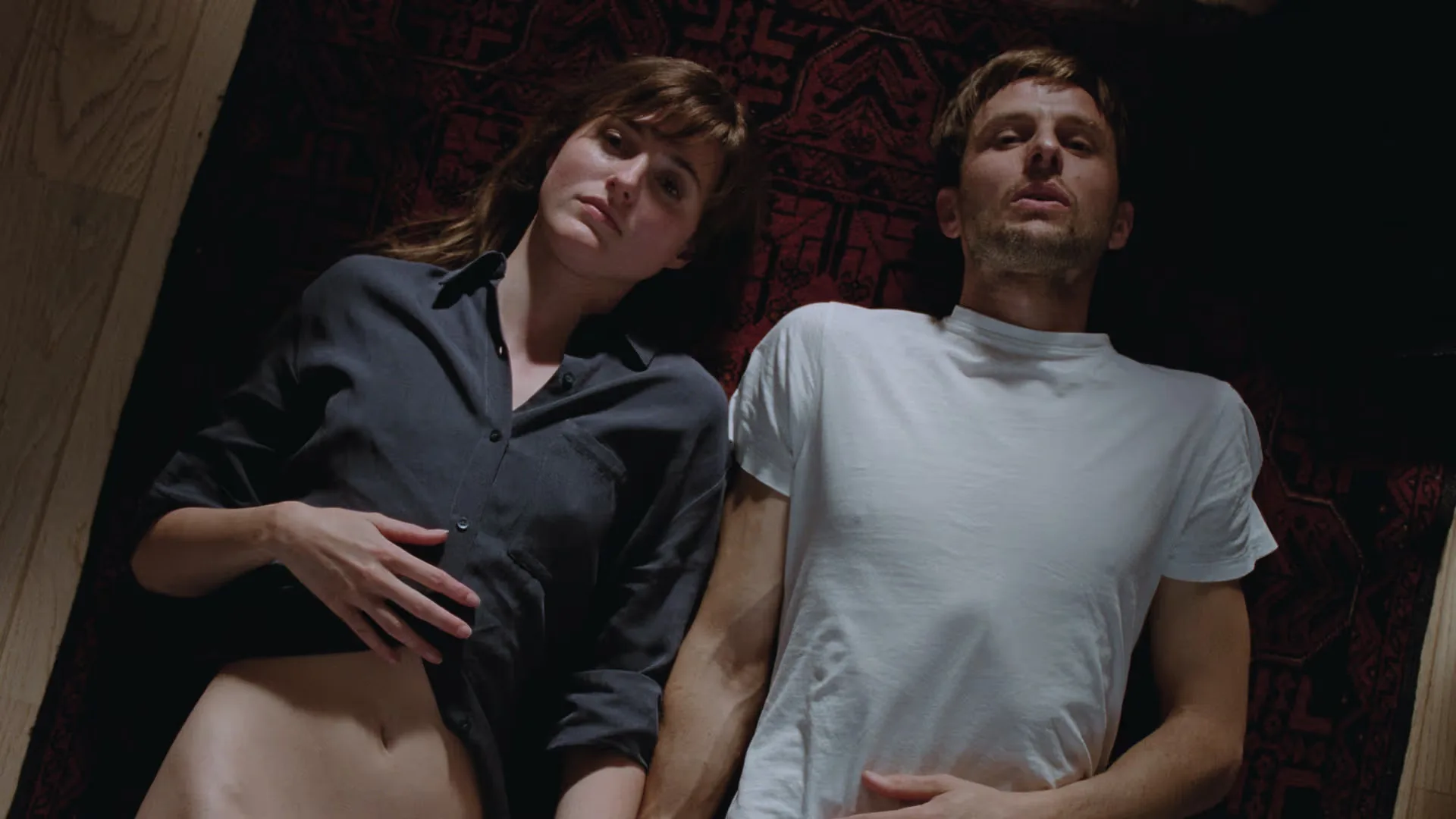
Joachim Trier’s critically acclaimed and apparently universally beloved film “The Worst Person in the World,” too, is a film that doesn’t seem to feel that community and friendship are worthwhile pursuits in life. In line with Song’s compartmentalization in “Materialists”—which seems stylistically indebted to Trier’s film—here a person is and can be either alone or in a romantic partnership. The film focuses on four years in Julie’s (Renate Reinsve) life as she tries to figure out who she is, with the four years depicted solely on her romantic and professional pursuits.
While in “Materialists,” friendship is considered to be deprioritized and then overcome, in “Worst Person,” friendship is impossible. I understand that the film follows a woman who feels inadequate, who feels that she is failing at living a good life; nonetheless, it doesn’t feel part of Julie’s terribleness, or her “worst”-ness, in how she considers other women. Julie is solitary from the moment the film begins. As she moves from one discipline of study to another, she embarks on numerous romantic relationships, but no lasting friendships. “She observed her fellow students,” the narrator says at the film’s beginning as Julie looks over her shoulder at a group of female students talking to each other, being friendly with each other. Julie is sitting markedly apart from them. “Norway’s future spiritual advisors,” the narrator says, intercepting Julie’s thoughts. “Mostly girls with borderline eating disorders.” The next instant, she has an affair with her professor.
It’s completely unwarranted what is said about the other girls having an eating disorder. Notwithstanding the fact that they have the exact same build as Julie herself, it doesn’t feel as though this is a comment about women’s body images and pressures to conform, so sharply and tersely lodged into the moment as it is. It just feels cruel. It’s as if to say, Julie doesn’t concern herself with her self-image like these other girls, she’s not like them, she’s too busy having sex with her instructor. From the film’s first beats, other women are defined as decidedly apart from Julie; they’re a group with uniform concerns while Julie thinks against the grain, and is troubled by more meaningful problems. Other women aren’t there to be friends with, but there to define oneself against.
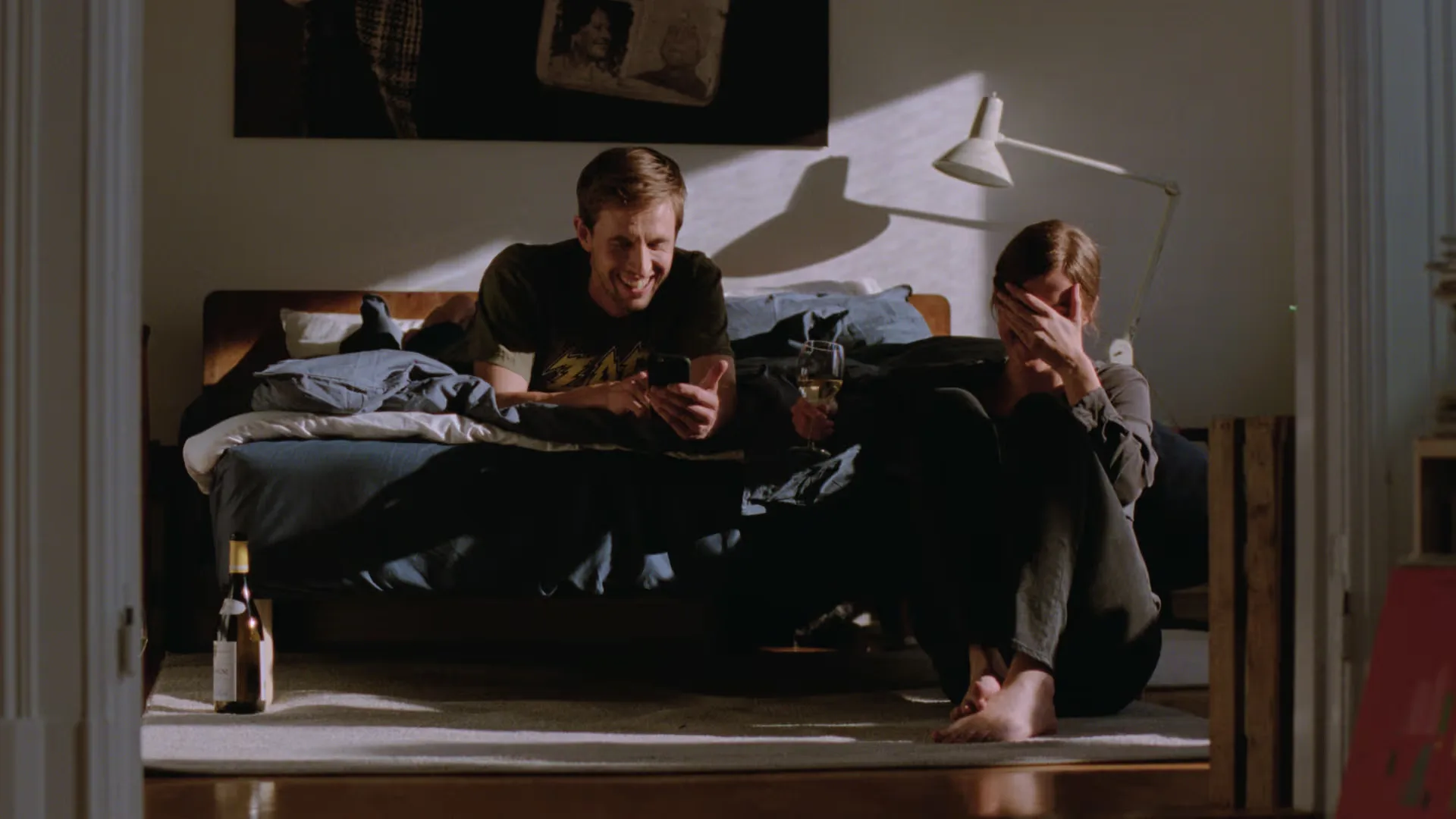
Women other than Julie hardly have a voice in this film, are never shown in a positive light, and are never seen to be living happy lives worthy of being entered into or being curious about. Instead, they live lives a modern woman ought to avoid replicating or fraternizing with. A few moments later in the film, Julie goes on a trip with her current boyfriend Aksel (Anders Danielsen Lie) to his parents’ home, hosted by his sister, her husband, and their kids. Julie feels that Aksel’s sister doesn’t like her, and Aksel tells her that she’s just shy. “That’s what you say about boring people,” Julie retorts. Later in the evening, one of the kids throws a tantrum at bedtime, and her mother chases her around the lawn as the girl screams.
“Don’t make a scene,” the mother pleads with her child, tripping over herself as she tries to get hold of her daughter. Everybody, including the child’s father, just watches them; nobody helps the mother put the kids to bed. A scene is made, and the mother emerges from it looking like the loser. “Kids can be intense,” Aksel says with chagrin, and that seems to be the moment’s message. Not that mothers bear the burden of disciplining their children, nor that the father didn’t do anything to help his wife put his own kid to bed. Just that kids are intense. The lesson Julie gleans about herself from the scene is that she does not want kids; she and Aksel have a fight about this that night.
It’s bitterly ironic that the next night, over dinner, Julie makes a feminist observation. Society knows everything about men’s problems, she says, but people are too shy to talk about period blood. What angers me about this scene is that Julie doesn’t look to the other women at the table for confirmation of her observation, which is certainly correct; she doesn’t look to them for camaraderie or recognition, and she doesn’t make eye contact with them at all. She only looks to Aksel and his brother-in-law, as if considering only these men as worthy of conversation. “If men had periods, that’s all we’d hear about,” she says before going on to make a point about mansplaining.
Later yet in the night, they’re all dancing, and Julie tries to get the woman who, the previous day, made a scene with her daughter to dance, but it ends terribly when she hits her head on a lamp and injures herself. The night ends with Julie and Aksel overhearing that same woman fighting with her husband. “Shall we make a baby?” Julie whispers to Aksel with a sly smile. It’s meant to be a knowing jab at the idea that many couples commit to fighting after they have kids, but it feels mean in the way that the earlier remark about eating disorders feels mean. The woman who gets injured has spent what is meant to be a holiday working, taking care of her children, and she’s been hurt when all she wanted was to have fun; instead of making an effort to understand her, to allow her to express her frustration, the film mocks her through Julie.
This woman, with her children and her traditional concerns, tries to enter into dialogue with Julie, but Julie moves away from her. When she asks Julie if she has any friends with kids, Julie says only one, though we never meet them. Julie sees this woman, tired, hurt, and angry, and strives to avoid a fate like hers; it’s a life she can never want nor associate with. For Julie, people with children aren’t meant to be friends with at all; all she’s seen them do is fight and care for kids. Accordingly, she runs away from her long-term relationship. Single women, too, aren’t meant to be friends with; they have eating disorders. The only kind of relationship valued in Julie’s life, as we see it, is a romantic one, and when that becomes an untenable option, she chooses to be alone.
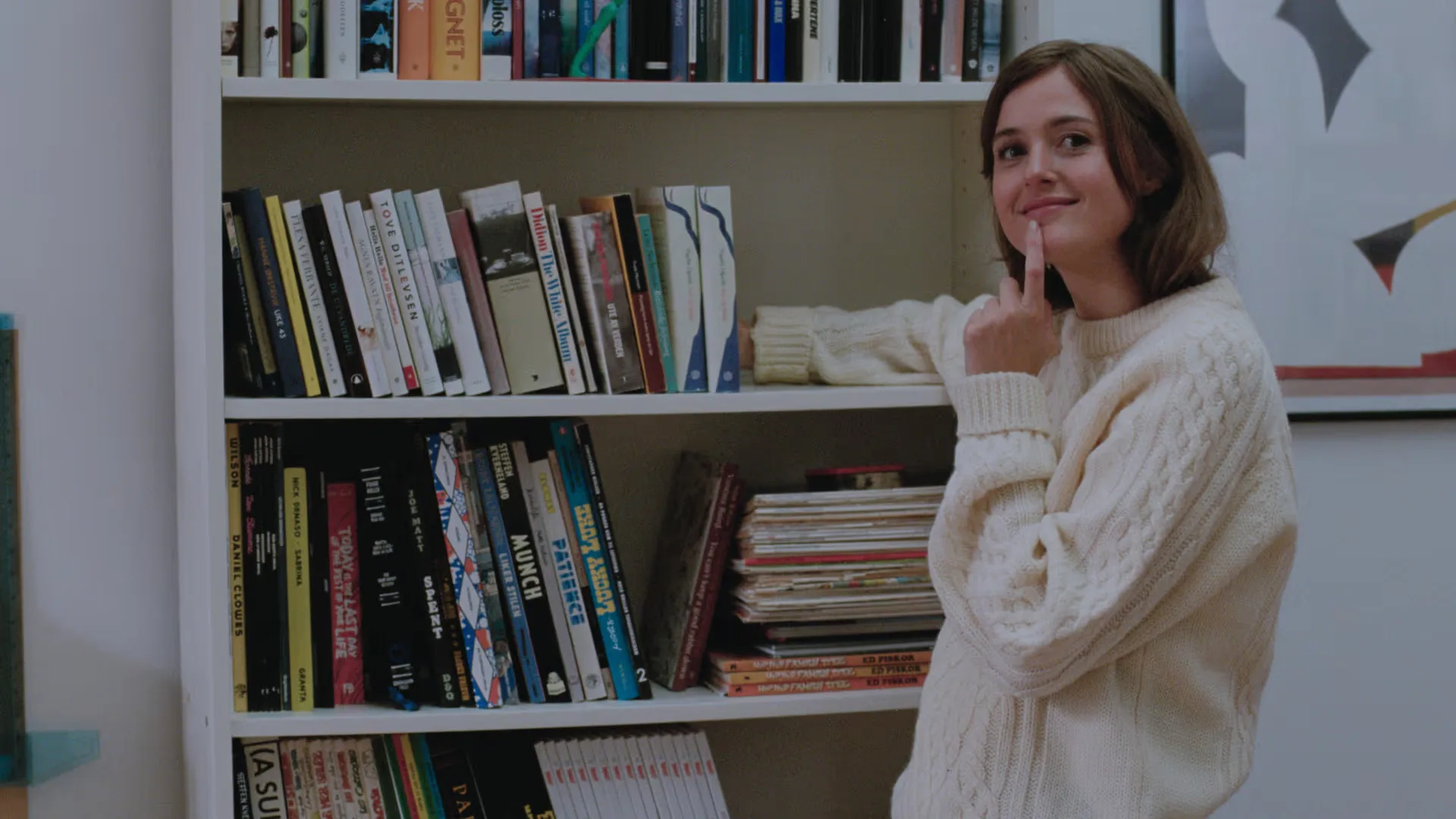
The film’s final moments depict Julie in her small apartment, working on editing her photographs. The lesson Julie has learned is that she needs to choose herself, to work on herself, if she wants to be happy. The film ends with Julie having found self-esteem, and rightfully so. “Given our early obsessions with seducing and pleasing others to affirm our worth, we lose ourselves in the search to be accepted, included, desired,” hooks writes in Communion. And so at film’s end, Julie discovers herself, but this self-discovery is only conceived of in a professional sense, and comes at the cost of isolation. Julie does not forge community, does not make new friends. According to hooks, the feminist movement “told us that we were better off if we stopped thinking about love, if we could live our lives as though love did not matter, because if we did not do so we were in the danger of becoming a member of a truly despised female category: ‘the woman who loves too much.’”
Julie becomes a good woman according to patriarchal understanding: self-sufficient and self-reliant, she is not a burden on anyone; her desires snuffed, she is focused on making money. While she loved men earlier, by the film’s end, she has gotten it out of her system. She becomes a girlboss, a productive member of society, atomized like Aksel, a traditionally masculine man. Meanwhile, femininity (and all that it carries with it ideologically, things like friendship and community and messy desires) is meant to be absolutely avoided and unwanted; it is the bad life. It’s always haunted me how this film ends, so confined and clean, without desire, without love.
On the face of it, these films centre a woman’s desires and feelings and internal landscapes. They seem progressive. But the lives they have their women live are endlessly lonely and individualistic, capitalistic in how they leave their protagonists as an atomized unit apart from a lively community. These films don’t seem to consider love as possible within community, in platonic settings, in friendships; it’s as if they are discouraging collectivization, and leaving unchallenged the current systems of oppression. As hooks writes, “female allegiance to males upholds heterosexism,” and in their focus on heterosexual romantic pairings as the only or most important site of socialization, as the sole bond worthy of effort or care or attention, these films implicitly uphold patriarchy.
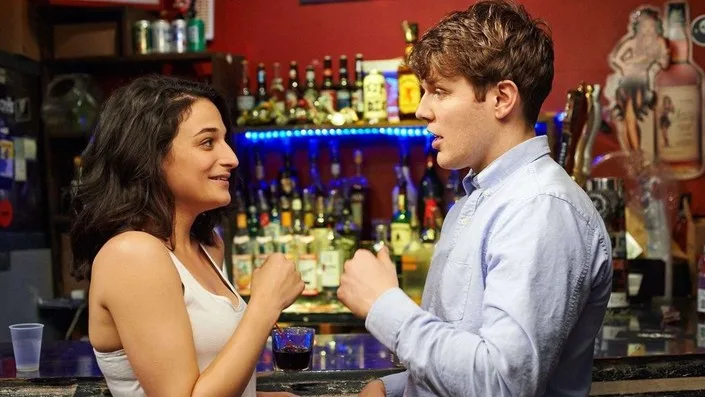
This is not to say that romantic comedies or romantic dramas are ill-equipped to depict platonic love alongside romantic love, because it absolutely is possible to hold space for both. As “Materialists” and “Worst Person” seem to run away from female friendship and platonic love, Gillian Robespierre’s “Obvious Child” celebrates and honours friendship in the same breath as it depicts a striving for romantic love. The film follows Jenny Slate’s Donna as she deals with the aftermath of a one-night stand and decides to get an abortion, and also nurtures a sweet relationship after the fact with her one-night stand, Max (Jake Lacy). And as it reckons with the idea of abortion without also glamorizing it or sensationalizing it, the film also allows Donna a little community where she can access healing and care.
Donna has friends: Nellie (Gaby Hoffmann) and Joey (Gabe Liedman). And they come together to just hang out, to talk over what Donna has experienced, to gossip, to make jokes, and to share confessions, advice, happinesses, and sadnesses. “Does having an abortion hurt?” Donna asks Nellie one night when the three of them are getting wine drunk. It’s a candid and free question, asked easily and answered easily. Donna is nervous. It doesn’t hurt, Nellie says, but there are cramps afterwards. The procedure only takes a few minutes, and it isn’t scary.
“How often do you think about it?” Donna asks Nellie. “I think about it sometimes,” Nellie says. “Once in a while. And then I get really sad for my little teenage self.” But she never regrets it. It’s the kind of conversation friend groups have all the time, but it’s depicted in the movie with such ease and calmness, such inevitability and warmth, which is absolutely stunning. Of course, Donna talks to her friends about her feelings, and of cours,e Nellie shares her experience with Donna in an effort to make her feel less alone. It’s the kind of sharing of information that women have been partaking of for ages, the kind that saves lives, literally and figuratively, and it’s rooted in the safety that hooks talks about, that Sophie craves.
And so even as the film ends on Donna and Max coming together in a romantic union, we know that Donna still has Nellie and Joey. They are, the three of them, still there for each other; they can still stay up all night drinking wine and sharing experiences and being silly, all the while holding each other, all the while loving each other in the way that only best friends can.
I have been as lonely and starved of connection as Sophie, and like Julie, like any other girl coming of age under patriarchy, I have thought less of other women and of myself as special in an effort to gain patriarchy’s approval. But survival, happiness itself, isn’t dependent on eradicating desires for certain kinds of love, on privileging one thing over another—this is the kind of competitive thinking fostered by capitalism.
My friendships have saved my life again and again. Making friends allows us to make sense of the world and ourselves, to grow. “Commitment is the ground of our being that lets us make mistakes, be forgiven, and try again,” hooks writes. Such a commitment would have allowed Sophie to feel less guilty about calling Lucy, and might have allowed Julie’s life to still contain love. My friends allow me to move into the world with confidence, and I, like Donna, know that I can return to them at any time and in any state, and they will embrace me. They will show me love when nobody else can. Because of my friends, I don’t have to be the only one carrying the knowledge of my life anymore; I can share pain, stories, and fun. Because of my friends, I don’t have to look at myself alone in the mirror. I can see myself reflected in their gaze, and they reflected in mine.
