

The most credible exception to the case for free trade policy is rooted in concerns about national security. If complete freedom of trade jeopardizes our national security, some protectionism arguably is justified because, as even Adam Smith insisted, although free trade is enriching and important, “defence … is of much more importance than opulence.”
As Smith’s statement implies, protectionism pursued for purposes of national defense will reduce the country’s material well-being, but this cost is worth paying if the protectionist measures result in a large enough enhancement of national security. (Caleb Petitt argues, not implausibly, that Smith really didn’t believe that national-security concerns justify a retreat from free trade. But that’s a topic for another time.)
While most free traders today admit the national-security exception, they also warn that it’s very easy to abuse, as shouts of “national security!” are given enormous deference by the public and politicians. Free traders also warn that, even when the national-security exception isn’t intentionally abused, extraordinary care is required to prevent its application from undermining its goal of promoting national security. The surprising practical difficulty of identifying trade-policy measures that are most likely to adequately protect national security is revealed by two recent developments regarding US trade with China.
Semiconductors
The Trump administration lifted controls that restricted Nvidia’s exports of its H200 chips to China. (The administration made this move in exchange for the US government getting 25 percent of Nvidia’s revenues from these sales — an unjustifiable condition, but also a topic for another time.) The Editorial Board of the Wall Street Journal worries that China’s access to these chips will boost that country’s prospects of surpassing the US in AI technology. The reason, as described by the Journal’s Editors, is that advanced chips such as the H200s “are needed to train advanced AI models.” Unable so far to develop their own advanced chips, the Chinese will now use Nvidia’s chips to further “Beijing’s ambitions to dominate biotech, quantum computing and military power.”
Quite possibly, the Trump administration’s lifting of these controls will indeed undermine US national security. But also, quite possibly not. By supplying the bigger market opened to it by access to China, Nvidia can perhaps take advantage of larger economies of scale that will further improve its chip-making efficiency. And more-efficient advanced microchip production by a company such as Nvidia will, in turn, strengthen US national security.
In addition, Nvidia officials and the White House argue that Chinese dependence on non-Chinese advanced chips diminishes China’s prospects of developing its own advanced chips — an effect that also plausibly promotes US national security by retarding Chinese chip technology. Although acknowledging that this argument has some merit, the Journal believes that it doesn’t carry the day. The Journal worries that the improved computing power that China gains as a result of its access to the H200 chips will further, rather than frustrate, Beijing’s quest for AI dominance.
I have no idea which of these two arguments — to not restrict Nvidia’s sales of H200 chips to China or to restrict these sales — is correct. Not only do both have merit, neither argument seems strong enough to clearly defeat the other. And that’s the point.
Economic arrangements and interdependence today are so enormously complex that the apparent, indisputable validity of simple statements about the need to impose import or export restrictions in the name of national defense often dissolves upon inspection.
Critical Minerals
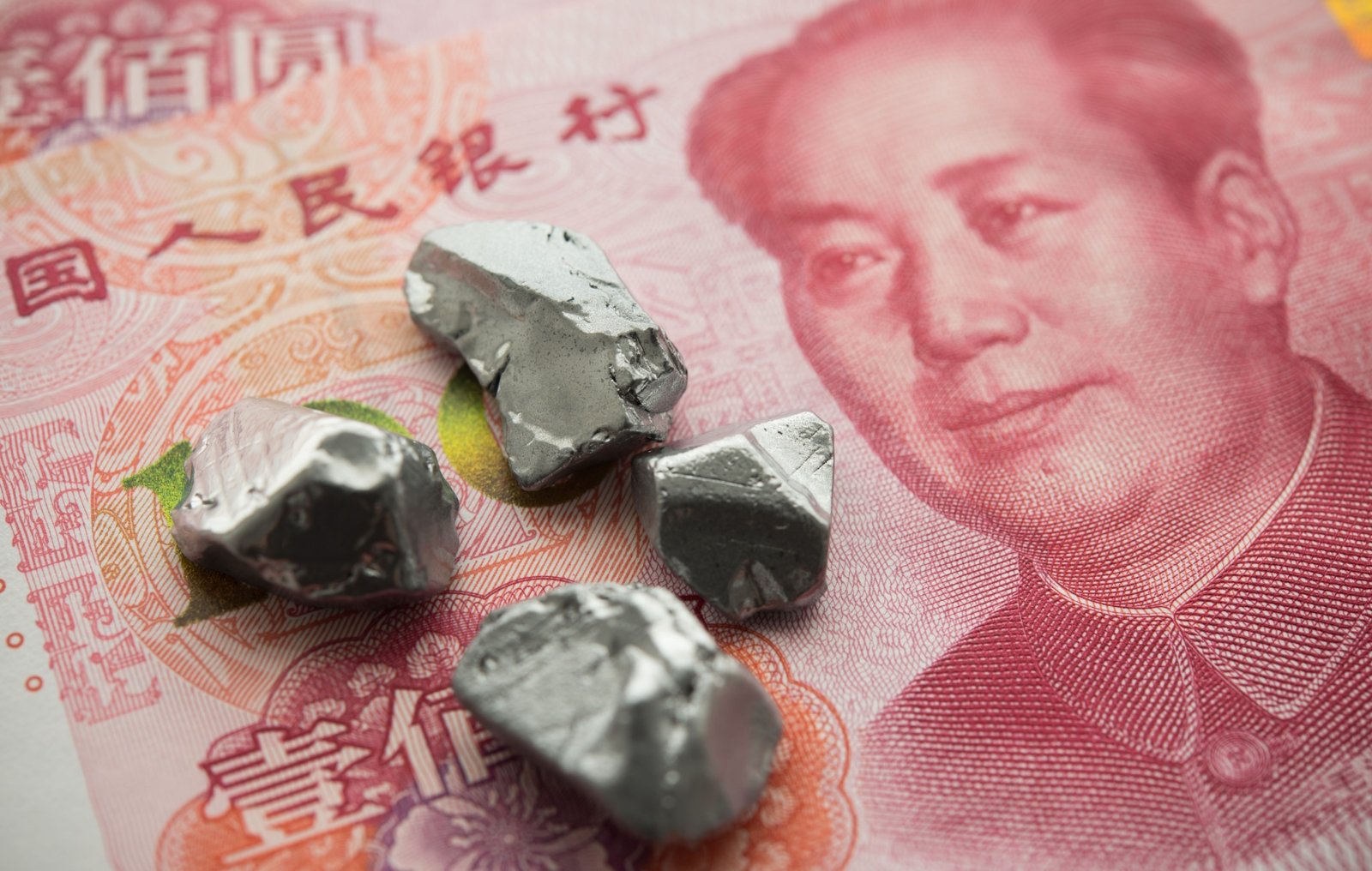
So-called “rare-earth” minerals present another such conundrum. Rare-earth minerals aren’t rare; they exist all over the globe, including in the United States, where new deposits of such minerals continue to be discovered. China, however, has become the world’s leading producer of these minerals, many of which have military significance. But guess which country is the world’s second-leading producer: the United States.
So why is the White House boasting of its recent deal with the Chinese government, committing China to avoid restricting its exports of rare earths? The conventional national-security exception to the case for free trade would have the US government impose restrictions on US imports of rare earths in order to stimulate more domestic production of these critical minerals. Therefore, when the Chinese government imposed restrictions on that country’s exports of rare earths, it did for the US economy precisely what conventional national-security trade policy would have the US government do: protect the US market from foreign supplies of these critical minerals as a means of encouraging more US production.
And yet, even on narrow national-security grounds, the White House might here be correct.
The most obvious defense of the White House’s position is that ramping up US production of rare earths would take too long. Perhaps restricted access now to Chinese-supplied rare earths would weaken US national security in the short run so severely as to outweigh any long-run benefits. This possibility is both real and not remote, yet it is typically ignored by most people who invoke the national-security exception to the case for free trade. Tariff-induced expansion of any industry takes time. This reality surely means that, even for resources and outputs that are indisputably vital for national defense, national security sometimes is better served by continuing, without tariffs, our reliance on foreigners.
There’s a second reason why the White House might be justified in bragging of its rare-earths deal with Beijing (although this reason is unlikely actually to have occurred to today’s White House officials). Were China to continue to severely restrict its exports of rare earths to the US, the resulting expansion of the US rare-earths industry would necessarily entail a shrinkage of some other US industries. Even if this expansion in rare-earths production were fully achieved overnight, if the US industries that, as a result, shrink are industries that produce militarily significant outputs, the net effect on US national defense might well be neutral or negative.
This possibility is also one that’s not remote. The specialized knowledge and labor skills that are best used to mine and process rare-earth minerals are likely to be found in disproportionately large numbers in related industries, such as petroleum and ore production, rather than in economically distant industries such as leisure and entertainment. A tariff-induced expansion of US rare-earths production, therefore, might well come at too high a price in terms of the contraction of other militarily important US industries.
I write “might” attentively. This ambiguity is real and has relevance for policy-making. It should always be taken into account. No one knows if the national-security benefits of increased domestic production of rare earths will exceed, or be exceeded by, the national-security detriments of reduced domestic production of other outputs.
Even if in any particular case the trade-policy decision proves to weaken rather than strengthen national security, greater recognition of such ambiguity would, over time, result not only in improved trade policy but also a stronger national defense.
Security Requires Humility
The above observations are offered not to render the national-security exception to the case for free trade null, but to caution against its overuse. The Trump administration’s recent treatment of the exportation of American-made advanced microchips, along with its actions regarding rare-earth minerals, each in its own way demonstrates (if unintentionally) the shallowness of the conventional advice to protect any and all industries that produce outputs judged to be important for national security.
