

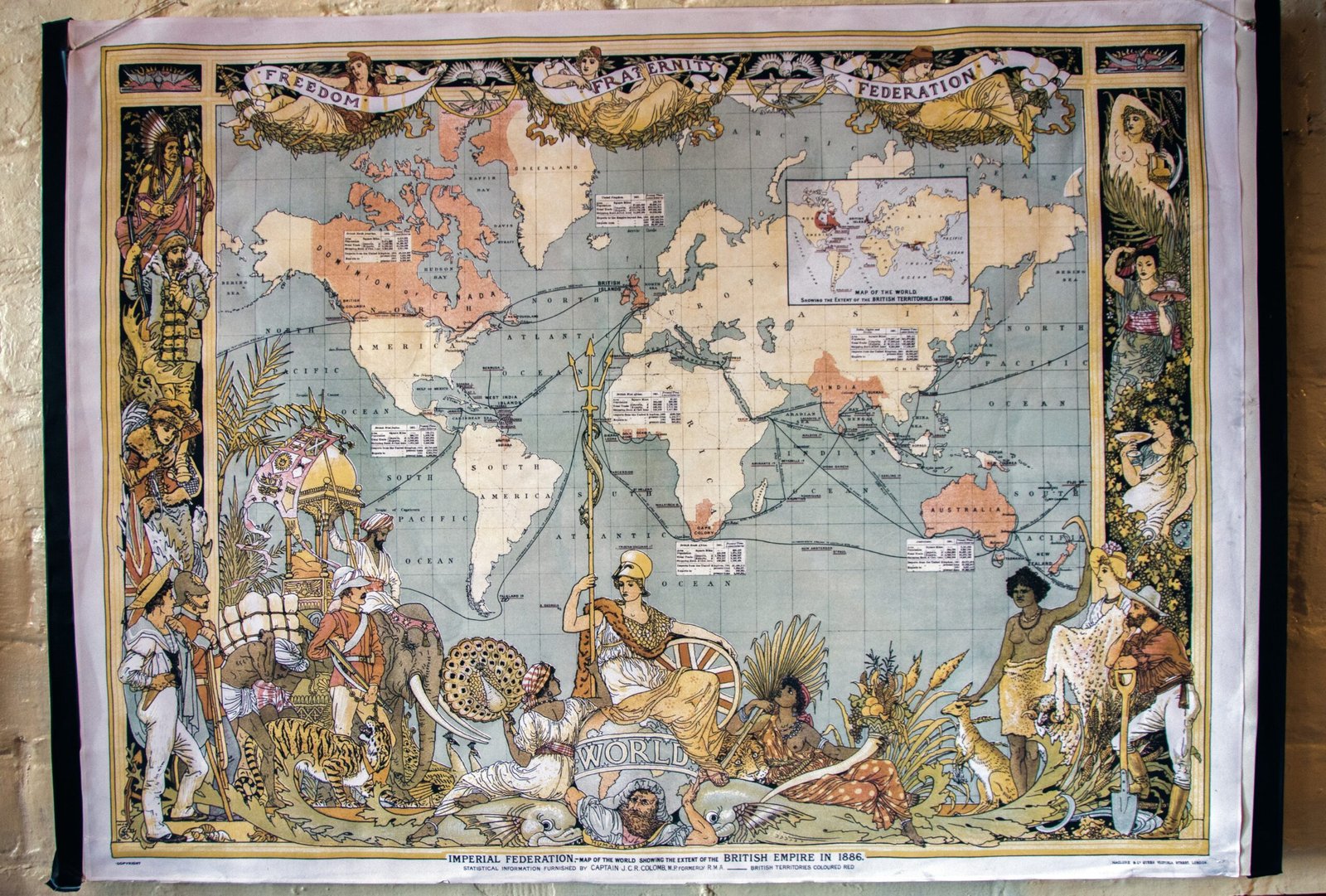
While framed as a book about economic development theory and the history of colonialism, William Easterly’s latest tome is actually something grander and more ambitious: a deeply researched 300-year chronicle of political and moral theory in the Western world. The questions that colonizers, settlers, natives, and revolutionaries wrestle with in Easterly’s 448-page history aren’t just about plantations and trading posts – they’re the most important questions we have about morality and justice. They’re particularly timely in an era when classical liberal values are under greater challenge than at any time since the Cold War.
We begin in the eighteenth century with a grounding in the work of Adam Smith, a justly legendary intellectual figure getting even more attention than usual this year because his most famous work, The Wealth of Nations, is celebrating its 250th anniversary alongside the United States. Smith is, for Easterly, a kind of godfather of the liberal tradition of individual rights that the rest of the figures in the book are measured against. Smith stood for trade as a civilized and civilizing force and emphasized the need for voluntary, mutually beneficial relationships. He was not in favor of the takeover of the rest of the world (or just “the Rest” in Easterly’s styling) by white men in the supposedly enlightened West.
The first section contrasts Smith with the French aristocrat Nicolas de Condorcet, who — despite his modern reputation as a champion of free trade and individual rights — endorsed what Easterly calls the Development Right of Conquest. Under this view, a civilized nation or race may rule another’s land if it claims it can put it to a higher and more productive use.
This might mean ruling a newly discovered tribe to advance its development toward a higher civilization. If the tribe resisted — as was often the case — the more “developed” people could kill or displace the “savages” and seize the land themselves. Either way, the supposedly superior group — typically Western European — decided which path was best for both.
This is the great divide that defined the next few centuries of global territorial expansion and settlement. European thinkers who believed in peaceful coexistence and voluntary trade relations were the inheritors of Smith, and those who believed their superior wisdom entitled them to plan the moral and economic advance of foreign peoples were the intellectual descendants of Condorcet. Easterly, a professor of economics at New York University, emphasizes many times how lopsided this family tree was on the latter’s side.
Both sides, of course, believed they were in the right. Few, if any, colonizers – no matter how rapacious in action – admit to plundering new lands and people solely for their own benefit. Even those who were literal enslavers of their fellow man created elaborate theories about how they were actually acting in the interests of the non-white people they encountered.
The essential difference that Easterly emphasizes is that some were willing to let others decide their own interests, while most overrode foreign preferences with cultural chauvinism and civilizational theory. The classical liberals in his account were hardly “woke” by modern standards, but they replaced the question “Are these non-European people worthy of self-government?” with the more searching one: “Are we fit to rule them by force?”
The advance of liberal ideas was fitful and slow. Just like the progress toward representative democracy and constitutional government within Europe itself, the recognition that non-white people might want and be entitled to the same rights as their white counterparts faced many disappointing setbacks. Easterly does a great job, however, of setting the scene for the greatest victory of them all – the abolition of slavery in the modern world. First, peacefully, in the British Empire under the political leadership of men like William Wilberforce, and then, amid catastrophic bloodshed, in the United States.
Many histories of the world after 1865 have treated the end of slavery (in most countries, at least) as the beginning of a new enlightened age. Whatever came later in the various colonial empires, however imperfect, was certainly vastly superior to an era in which kidnapping and intergenerational forced labor were a major commercial enterprise.
While the line between enslavement and mere colonial paternalism might seem bright and obvious, Easterly doesn’t let the triumph of slavery ending in the nineteenth century get the West off the hook for continuing oppression and injustice around the world. The policies of Caribbean sugar planters before emancipation had more in common with, for example, twentieth-century colonial administrators in sub-Saharan Africa than most historians care to admit. Underlying both is the same, only marginally reformed, assumption that white skin and technological advancement entitle one to treat other races as children and supplicants for their supposed long-term benefit. In the post-slavery colonies, even when plans for advancement were undertaken for ostensibly beneficial purposes, the opinions of the people supposedly benefiting were neither solicited nor heeded.
Violent Saviors tries to remedy some of that historic injustice in telling their story, but also in citing some of the rare first-person sources that were recorded from those subjected to “civilization” via musket barrels and bayonets. Many students of US history will be familiar with some of the figures Easterly quotes at length, like the formerly enslaved abolitionist who became one of the most famous people in nineteenth-century America, Frederick Douglass. Far fewer will have read anything about Mohegan Indian and Christian convert Samson Occam (1723–1792), once a student at the missionary school that eventually became Dartmouth College, or the British ex-slave Quobna Ottobah Cugoano (1757–1791), who was at first an advocate for, and later an opponent of, a quixotic eighteenth-century plan to re-settle the free black residents of London in a kind of proto-Liberia colony in Sierra Leone.
The author also gets a historian’s revenge on multiple generations of supposedly well-intentioned military, political, religious, and philanthropic leaders whose high status contrasted embarrassingly with their inability to successfully implement any of their grand plans for the advancement of the “dusky races.”
Easterly has famously written at length about the contradictions and failures of modern economic development policy in books like The White Man’s Burden and The Tyranny of Experts. He now reaches back multiple centuries to deliver withering takedowns of figures ranging from French aristocrats Pierre Samuel du Pont de Nemours (1739–1817) and Pierre-Paul Lemercier de La Rivière (1719–1801) to Treaty of Versailles architect Woodrow Wilson (1856–1924) and Lyndon B. Johnson–era National Security Advisor Walt Whitman Rostow (1916–2003).
He offers a more inspiring, if much shorter, list of theorists and experts who pointed the way in the right direction. Beginning with Adam Smith (1723–1790), we also encounter (mostly) good actors like the anti-slavery Anglican Bishop William Warburton (1698–1779) and Swiss political theorist Benjamin Constant (1767–1830). Easterly devotes significant attention to better-known writers such as John Stuart Mill (1806–1873) and Isaiah Berlin (1909–1997), while also crediting the beloved figures of twentieth-century free-market economics: Ludwig von Mises, Friedrich Hayek, and Milton and Rose Friedman, among others.
In recent years, the so-called neoliberal view of economics and the rules-based international order has been significantly challenged by a resurgence of populist economic thought emphasizing national solidarity — as defined by a handful of executive policymakers — over the equality of all individuals and positive-sum economic exchange.
President Donald Trump’s use of tariff authority — for purposes ranging from explicit industrial protectionism to the attempted conquest of Greenland — has dramatically set back decades of post–World War II progress in free trade. Violent Saviors, with its inspiring narrative of mercantilist authoritarianism giving way to a world where equality and cooperation are the norm, reminds us why so many fought so hard for these ideals in the first place.
