

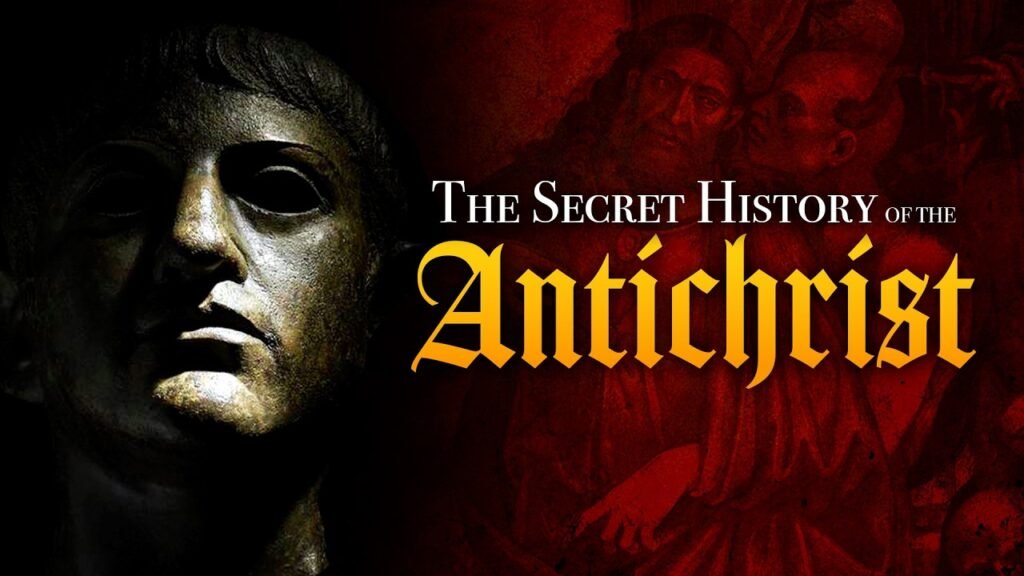
PayPal co-founder Peter Thiel has spoken publicly on a variety of issues from contrarian entrepreneurship to technical stagnation to geopolitical struggle. Lately, he’s drawn more attention with extended remarks on what would seem an unexpected subject: the Antichrist, a seemingly enlightened but deceptively malevolent figure or movement bent on putting the world under innovation-stifling unified control. The term itself may sound familiar, though many of us haven’t seen it referenced much in popular culture since the heyday of the Left Behind novel series that sold so well around the turn of the millennium. Whether or not it’s to your literary taste, that apocalypse narrative’s villain does adhere to the Antichrist archetype laid out in the Bible.
In the new Hochelaga video above, Tommie Trelawny goes back to the biblical texts to determine the origins of the Antichrist, whom humanity has portrayed as “a great deceiver who charms the world through false miracles, and with it, demands to be worshiped as god himself.” However large he looms in modern Christian storytelling, he’s referenced in only four passages of the Bible. The word Antichrist appears nowhere but in one of John’s epistles, which also warns that “even now many antichrists have come,” indicating, as Trelawny puts it, those who reject “that Jesus is the Christ, or Messiah.” As John saw it, some such individuals — including members of new sects like Gnosticism — were also dangerously charismatic, which aided the spread of their false doctrines.
The apostle Paul or one of his disciples, in a letter to the Thessalonians, foresees the rise of “a mysterious figure known only as ‘the lawless one,’ who will gain power by deceiving people through false miracles, and once in power, he will commit his greatest crime of all: ‘He will oppose and exalt himself over everything that is called God or worshiped, so that he sets himself up in God’s temple, proclaiming himself to be God.” For its part, the Book of Revelation adds “the arrival of a monstrous seven-headed beast,” and later, a companion with “the horns of a lamb but the voice of a dragon.” Thereafter comes the “mark of the beast,” 666 — or perhaps 616, Trelawny adds, given that either could be seen as code for Neron Kaisar in Greek or Nero Caesar in Latin, better known as the ancient Roman Emperor Nero. Some suspected him of being the Antichrist, especially if he orchestrated Rome’s great fire in order to consolidate his power and scapegoat the Christians.
Trelawny also gets into detail about the twice-excommunicated Holy Roman Emperor Frederick II, whom Pope Gregory IX saw as the prophesied “lawless one,” and even into the accusations of being the Antichrist flung back and forth during the Protestant Reformation and the flurry of printed pamphlets that drove its surrounding controversy. The latter story “shows a subtle change taking place in how people could understand the Antichrist. It was no longer just a single person; it could be an entire system or institution.” Throughout history, as underscored today by anonymous online debates as well as lectures delivered by Peter Thiel in Rome, “it seems that whatever people fear the most, from communism to globalism to regulation, the Antichrist can become.” If so, we’ll keep hearing about his imminent (or already accomplished) rise until humanity can get over its fears — and what a miracle that would be.
Related Content:
A Survival Guide to the Biblical Apocalypse
A Rare, Early Version of the King Arthur Legend Found & Translated
Paradise Lost Explained: How John Milton Wrote His Epic Religious Poem from Satan’s Perspective
Based in Seoul, Colin Marshall writes and broadcasts on cities, language, and culture. He’s the author of the newsletter Books on Cities as well as the books 한국 요약 금지 (No Summarizing Korea) and Korean Newtro. Follow him on the social network formerly known as Twitter at @colinmarshall.
