

Around 8 pm on Friday, December 29, 1967, Milton Friedman stood to address the annual meeting of the American Economic Association. The space was cavernous; the Sheraton Park Hotel billed it as the largest hotel ballroom in the world. On this night it was filled with some 3,000 economists.
Outside, the United States was in the throes of the sexual revolution. Only months earlier, young people from across the country had held their own gathering — the Summer of Love — in San Francisco’s Haight-Ashbury neighborhood. They had danced to rock music, taken drugs, and signaled an intent to deconstruct the social and political consensus that ruled the nation.
Standing before the AEA meeting, Friedman could hardly have been mistaken for a hippie. He generally wore a business suit. What little hair he had formed a concave fringe around a bald scalp. And at 55, he was well past the age (30) when countercultural types were told to stop trusting people.
Yet Friedman’s speech, titled “The Role of Monetary Policy,” kicked off its own revolution.
A Vibrant Campus Scene
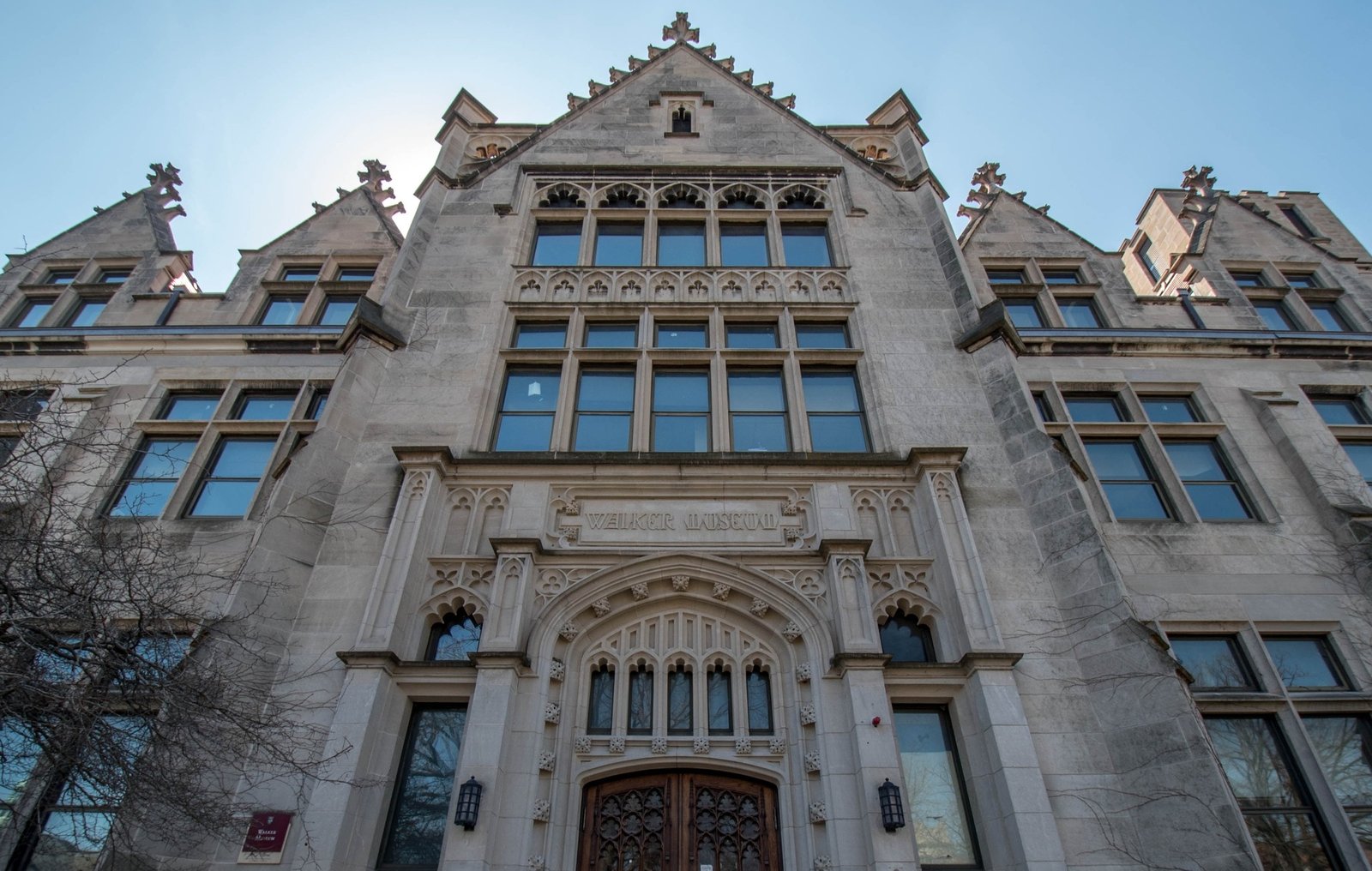
Writing in 2018, economists N. Gregory Mankiw and Ricardo Reis called the speech “a turning point in the history of macroeconomic research.” But it wasn’t the work of Friedman alone. He represented a vibrant economics scene at the University of Chicago, where Friedman taught from 1946 to 1977. Its members rethought the relationship between government and the economy, spoke truth to power, and won multiple Nobel prizes. Because of them, economics would never the same.
But when Friedman made his speech, the “Keynesian consensus” still held. It was born in the crucible of the Great Depression, which John Maynard Keynes believed showcased the failure of markets. Due to their “animal spirits” of greed and fear, the argument went, unconstrained individuals would always derail economic progress. Government management was required.
This was not communism, certainly. But it was an authoritarian approach to capitalism. Freely acting individuals were the problem; cool-headed experts the solution. The latter used complex econometric models to determine when the former needed to be either juiced or tamped down with government policy.
A key aspect of this approach was the Phillips Curve, a menu of unemployment and inflation from which policymakers could supposedly make selections as if ordering a combo meal. Lower unemployment rates came with higher inflation rates, and vice versa.
Friedman had studied the Great Depression as closely as any Keynesian. But he took a different lesson from it, one embodied in his book with Anna Schwartz, A Monetary History of the United States.
A mathematically proficient academic with the ability to communicate in plain language, Friedman blamed the Depression not on animal spirits but on poor monetary management by the Federal Reserve. Markets were not the problem.
Friedman viewed markets as both an essential outgrowth of liberty and the most powerful wealth creation engine available. Attempts to manage them should begin with humility and skepticism, things the Keynesian consensus lacked.
More specifically, in his AEA speech Friedman argued that attempts to exploit a tradeoff between inflation and unemployment using monetary policy were doomed to fail. Over time, as people realized what policymakers were doing, they would adjust their behavior and undo the intended effect. Once expectations had adjusted, money was a nominal quantity and therefore neutral, as classical economists had claimed.
History would soon bear out this central insight. In the 1970s, stagflation, a combination of high inflation and high unemployment, which Keynesianism said could not happen, took hold and baffled policymakers.
This helped Friedman win the Nobel Prize in 1976. It was not the last for a group that came to be known as “Chicago School” economists. Like Friedman, they believed in the power of markets and viewed regulation through a skeptical lens.
George Stigler, an economic historian and close friend of Friedman, taught at the University of Chicago’s business school from 1958 to 1991. He won the Nobel in 1982 for work on why industry regulation often fails to accomplish its objectives.
Ronald Coase, an economist and professor at Chicago’s law school from 1964 to 2013, extended the analysis of property rights and markets into the legal sphere as the founder of the “law and economics” movement. He won the Nobel in 1991.
Gary Becker, an economics professor at Chicago from 1954 to 1957 and 1970 to 2014, expanded the markets-based view into sociological issues such as marriage and crime. He won the Nobel in 1992.
Robert Lucas, a student at Chicago in the 1960s (and a professor from 1975 to 2015), extended Friedman’s idea of behavioral feedback into rational expectations theory (arguably farther than Friedman would have liked) and won the Nobel in 1995.
Finally, Eugene Fama, an economist and professor at Chicago’s business school from 1963 to present, won in 2013 for work touting the efficiency of financial markets.
As of this writing, Friedman’s AEA speech has been cited 13,982 times, with over 6,000 coming since 2018. Today no serious economist ignores the connection between policy expectations and individual behavior.
Falling Out of Fashion
Despite its history of success, Chicago-School economics is out of fashion today, both academically and politically. It is often negatively associated with “neoliberalism” and the Great Recession. But more than a billion people around the world escaped extreme poverty between 1990 and 2014, thanks to policies of free markets and trade that the Chicago School advocated.
And since the Great Recession ended, higher levels of regulation in the US, especially financial regulation, have happened alongside a slowing of economic growth. This is essentially what the Chicago School would have predicted.
The power of freer markets, however, is always waiting to be tapped. This would be a good time for a new band of dissident economists, ones unafraid to challenge the orthodoxy as Friedman did, to stand up and speak.
