

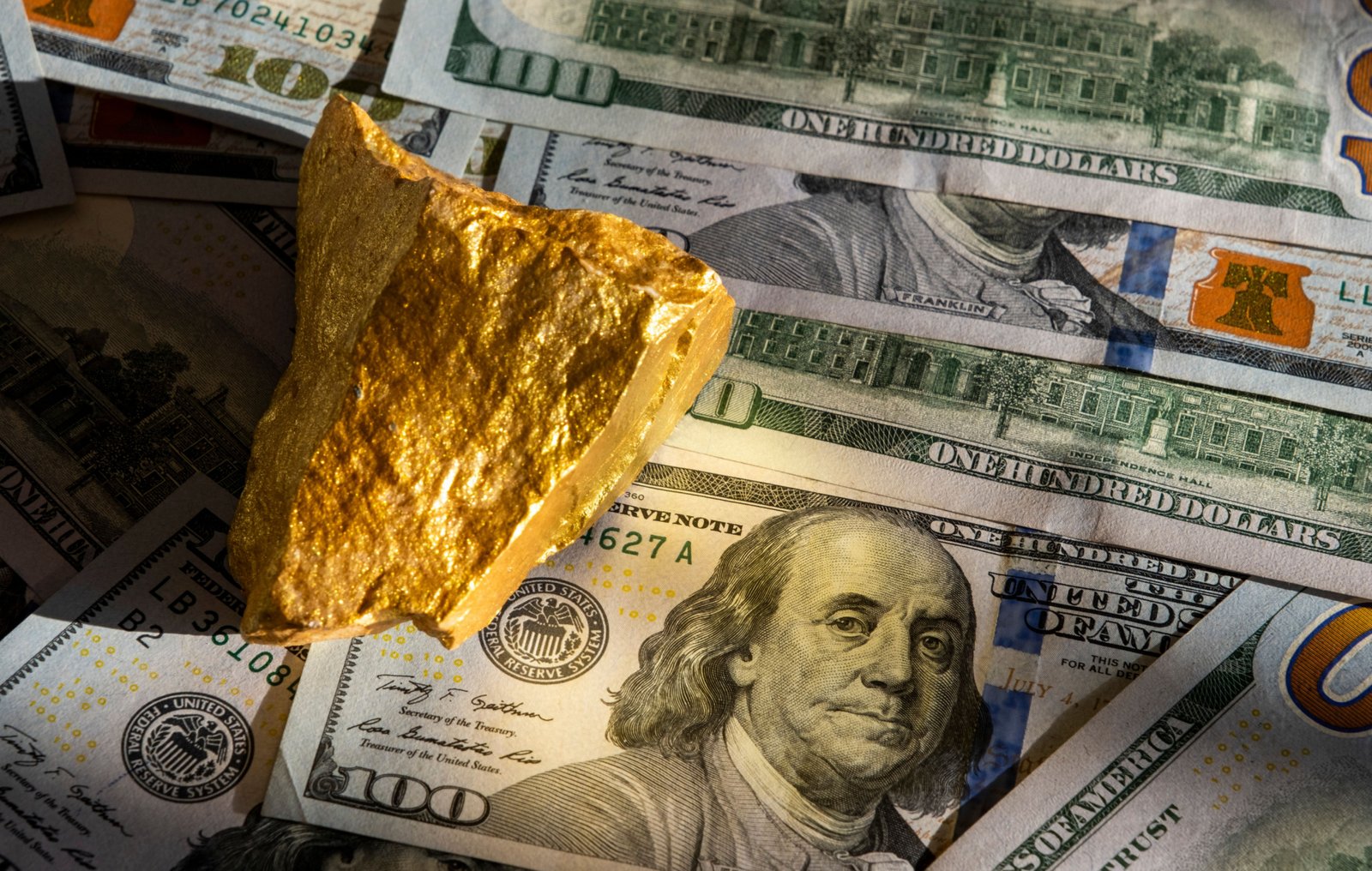
In the early hours of trading on Friday, August 8, 2025, global markets were shaken by the announcement of a 39 percent tariff on imported gold bars weighing 100 ounces or more by the Trump administration. US December gold futures reached an all-time high price of $3,534.10 per ounce shortly after the declaration was made. This sudden move injected uncertainty into the bullion market, unsettling dealers, refiners, and institutional investors trading in larger “exchange delivery” formats. While gold is rarely targeted by protectionist measures — unlike base metals, agriculture, or manufactured goods — this decision warrants close attention, both for its immediate market impact and potential implications for future monetary policy.
Likely Purposes
From an economic perspective, there are several plausible motivations (several of which may hold true simultaneously) for such a steep and sudden measure.
- Raising Revenue
The simplest explanation is fiscal. A 39 percent levy on high-value imports is a substantial revenue generator, particularly if the target is a commodity with significant daily transaction volume.
- Targeting Switzerland
The tariff could also be intended to primarily target Switzerland, a key player in global gold refining and bar creation. Switzerland is central to the gold supply chain, as it refines and standardizes much of the world’s gold before it’s distributed. By imposing a tariff on large gold imports, the US could limit Switzerland’s ability to sell refined gold at favorable prices, disrupting its dominance. This move would reduce reliance on Swiss refining and could be a response to recent tensions between Switzerland and the US over trade and tariff disputes. It signals the US aiming to punish Switzerland for its perceived intransigence in tariff discussions, as well attempting to wrest some control away from foreign gold pricing.
- Restricting Supply and Controlling Markets
A more strategic interpretation is that the administration may be attempting to restrict the flow of foreign gold into the US market. By making imports of 100-ounce bars prohibitively expensive, policymakers could reduce inflows, tightening domestic supply and potentially influencing prices. This approach mirrors past episodes where governments have sought to control the domestic availability of gold ahead of significant policy changes.
- Countering Money Laundering and Imposing Compliance Costs
Gold is often used in international transactions, particularly among institutional investors or high-net-worth individuals, as a way to move value across borders with fewer restrictions. By imposing a tariff, the US could be making it more expensive for these large transactions to occur within its borders, thereby reducing the attractiveness of using gold for these purposes. While it wouldn’t directly address outflow-related money laundering, the tariff could serve to discourage the use of gold bars in cross-border wealth transfers into the US, which could be seen as a measure to limit some money-laundering opportunities.
- Positioning Ahead of a Major Policy Shift
A 39 percent tariff on gold bars over 100 ounces could be a preparatory measure for the US to revalue its gold reserves, which are currently undervalued at $42 per ounce. The tariff could prevent arbitrage by limiting the ability of speculators to buy gold at lower international prices and sell it domestically at a higher future price, particularly if the US plans to revalue its gold to market prices around $3,200 per ounce. It would also help accumulate gold within the US, ensuring that domestic supply is maintained for a potential gold-backed or partially gold-backed dollar. Additionally, the tariff could stabilize domestic gold prices, mitigate speculation, and prepare the market for revaluation, signaling an intention to shift away from the dollar’s exclusive backing. This would reduce external manipulation and maintain US control over its gold supply, easing the transition to a new monetary framework while strengthening the dollar’s global position.
The Arbitrage Dimension
Ironically, if the tariff leads to a sustained domestic price premium for 100-ounce bars — either because of higher import costs or restricted supply — it could create exactly the kind of large-scale arbitrage the measure may have been intended to suppress.
Arbitrage occurs when price discrepancies for the same asset exist in different markets, allowing traders to buy low in one venue and sell high in another. In this case, if US gold prices rise sharply relative to London, Zurich, or Hong Kong due to the tariff, there will be a strong incentive for market participants to find ways to bypass the tariff or repackage gold into non-tariffed forms (such as smaller bars or coins) to import at lower cost.
At the institutional level, this could take the form of shipping gold to jurisdictions without the tariff, refining it into untaxed units, and then legally reintroducing it into the US market. On the futures side, arbitrageurs might use COMEX delivery mechanisms, swaps, or other derivative structures to capture the spread between the artificially elevated domestic price and the world market price. While such activity would eventually narrow the gap, it could generate windfall profits in the interim — ironically undermining the tariff’s supply-restriction intent and adding volatility to the very market it seeks to control.
Historical Precedents
Although the United States today operates under a fiat monetary system, the federal government has a long history of direct and indirect intervention in the gold market — often under the banner of “monetary stability” or “national interest.”
The most famous episode came in 1933–34, when the Roosevelt administration, facing a banking crisis and deep deflation, first prohibited the private ownership of most gold coins and bullion, then revalued gold from $20.67 per ounce to $35 per ounce. This represented a devaluation of the dollar’s gold content by nearly 41 percent and transferred substantial wealth from private holders to the government’s balance sheet. Importantly, the sequence began with restrictions on ownership and movement of gold — control first, revaluation second.
In the early 1970s, as the Bretton Woods system frayed, President Nixon “closed the gold window,” ending the dollar’s convertibility into gold for foreign central banks. While framed as a temporary suspension, it effectively severed the last formal link between the dollar and gold, freeing the Federal Reserve to pursue more accommodative monetary policies without the discipline of a fixed parity.
Even after the dollar floated freely, interventions persisted. In the late 1970s, as inflation accelerated and gold prices surged, the Treasury engaged in large-scale gold sales and swaps — sometimes in coordination with other central banks — to temper upward price movements. These efforts were often more symbolic than decisive, but they reinforced the notion that US authorities considered gold prices a matter of policy concern.
The 39 percent tariff on gold imports highlights the core concern that led EC Harwood to found the American Institute for Economic Research — the ongoing threat posed by governmental interventions in personal freedom and sound money. While the gold market should reflect private demand, mining supply, and global investment flows, it is often distorted by policies that serve short-term political goals. This tariff, with its abrupt implementation and targeted impact, risks distorting market pricing and suppressing economic freedom. It underscores the truth that, in times of fiscal strain or geopolitical risk, governments often turn to gold as a convenient target for intervention.
The immediate effects will likely be felt most by large bullion traders and institutional investors, with wider price differentials and reduced liquidity in the US market. History shows such measures rarely occur in isolation, and this could signal a broader shift in US monetary policy — whether revenue-driven or something more substantial. What’s clear is that AIER’s mission, focusing on defending financial freedom and sound money, remains as relevant as ever. The risks to market integrity that inspired our founding persist, and defending open markets and sound money continues to be an urgent, vital necessity.
