


What Is A Learning Organization?
A learning organization is a company that keeps getting better by helping employees learn, share what they know, and adjust to change. This idea is more than just regular workplace training. Learning organizations make growth, teamwork, and new ideas part of daily life. In a learning organization, employees are encouraged to solve problems, share ideas, and use new skills with different teams.
This idea is closely linked to learning organization theory and the work of Peter Senge. In his book “The Fifth Discipline”, Senge said that organizations grow stronger when they use systems thinking, keep improving, and learn together. His ideas helped shape what a learning organization means and why learning is important for long-term success.
Today, learning organizations matter more than ever because businesses deal with constant changes from AI, automation, hybrid work, and the need to learn new skills quickly. Companies that learn fast can adapt, come up with new ideas, and keep talented people in a tough market.
Learning organizations excel at:
- Adapting to change.
- Sharing institutional knowledge.
- Supporting continuous upskilling.
- Improving collaboration.
- Driving innovation.
In the future, the most successful organizations will not always be those with the most resources, but those that can learn, adapt, and evolve quickly. Creating a learning organization is now essential. It is a smart investment in resilience, innovation, and long-term business success.
-Christopher Pappas, CEO of eLearning Industry
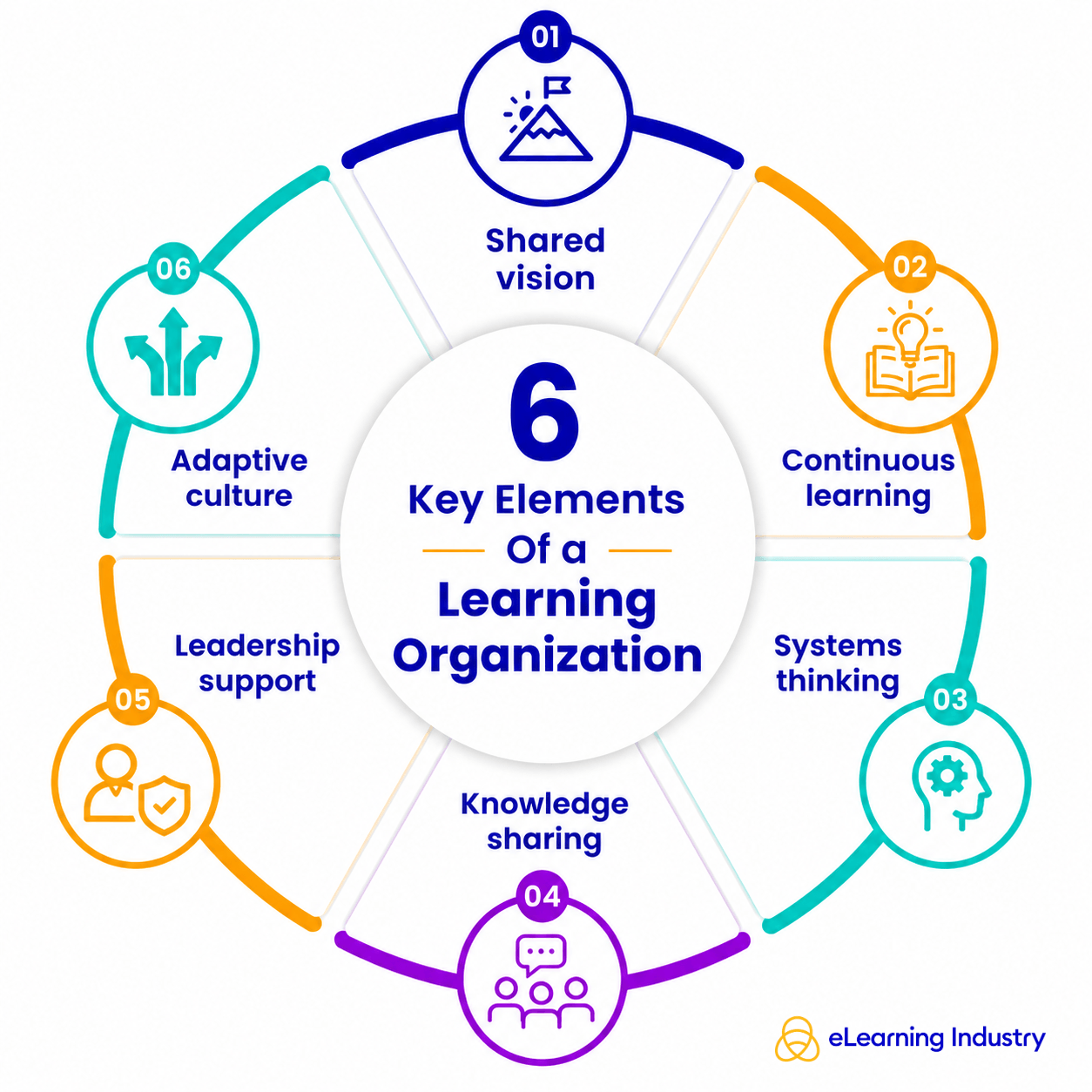
5 Characteristics Of A Learning Organization
A learning organization is shaped by both its values and its daily actions. You can see its qualities in how people work together, lead, communicate, and make decisions. Rather than making learning just an HR project, these organizations weave ongoing development into everyday work.
1. Continuous Learning Culture
One of the most important learning organization characteristics is a culture of continuous learning. Employees are encouraged to build new skills often, not just during official training. Learning happens every day through mentoring, teamwork, digital tools, and regular feedback.
Today’s organizations build learning into daily work. People pick up new skills as they solve problems, join team talks, or use new technology. Coaching and feedback are important, and managers help employees think about their work, spot ways to grow, and use what they learn right away.
This way, employees keep building their skills all the time, which helps the organization stay flexible and ready for change.
2. Knowledge Sharing And Collaboration
Another defining characteristic of learning organizations is their ability to share knowledge across teams and departments. They break down barriers and encourage people from different areas and levels to work together. This cross-functional learning helps employees understand how different parts of the organization operate together. Peer learning also becomes a valuable source of development, especially in fast-changing industries where employees often learn best from real-world experiences shared by colleagues.
Organizations support knowledge sharing with things like communities of practice, knowledge hubs, mentoring, and digital tools for working together. These systems make it easier for everyone to find information and prevent it from getting stuck in one team.
3. Systems Thinking And Strategic Alignment
Systems thinking is another core element in the definition of a learning organization. Rather than looking at departments or problems in isolation, these organizations see how every decision affects the whole business.
This connected way of thinking helps leaders match learning efforts with long-term goals. Instead of just aiming for quick results, organizations build skills that support growth, innovation, and a strong workforce for the future. For example, if a company starts using AI tools, it might also update its learning plans so employees can build the analytical, technical, and flexible skills they need to succeed over time.
4. Psychological Safety And Experimentation
What are the characteristics of a learning organization that truly support innovation? One big factor is psychological safety. Employees need to feel safe to ask questions, share ideas, and talk about mistakes without worrying about being punished.
Learning organizations encourage trying new things and learning from experience. They see failure as a chance to learn, not just a setback. Teams often look at what went well, what didn’t, and how they can do better next time. This mindset supports innovation because employees are more willing to test new ideas, challenge assumptions, and adapt to changing conditions.
5. Data-Driven Learning Decisions
Modern learning organizations also rely on data to improve learning effectiveness. Skills analytics, learning metrics, and performance insights help leaders identify capability gaps and measure business impact.
Instead of guessing what employees need, organizations use data to tailor learning and match it with their main goals. This makes workforce development more focused and easier to measure.
Benefits Of A Learning Organization
A learning organization helps businesses adapt quickly, develop talent on an ongoing basis, and perform better over time in changing markets. As industries deal with constant changes from AI, automation, and shifting customer needs, companies that focus on continuous learning are more likely to stay competitive.
Faster Adaptability To Change
Learning organizations help employees build new skills as business needs change. Rather than reacting slowly, they set up systems for ongoing skill development and knowledge sharing. This approach makes it easier to adopt new technology and helps teams adjust to new processes, tools, and customer needs. Employees are encouraged to keep learning all the time, not just during formal training.
Stronger Employee Engagement And Retention
Another important benefit of a learning organization is improved employee engagement. People are more likely to stay with companies that invest in their growth and offer chances to move up in their careers. Ongoing learning, mentoring, and development programs help employees feel satisfied and help companies grow talent from within. Building a learning culture also creates stronger leaders and supports a stable workforce over time.
Improved Innovation And Problem Solving
Learning organizations focus on collaboration, trying new things, and sharing knowledge. Teams work together to share ideas, solve problems, and improve as a group. This kind of teamwork encourages innovation because employees feel safe to try new approaches and learn from what happens. When knowledge is shared openly, the whole company benefits and gains an edge over competitors.
Better Business Performance
The benefits of a learning organization go beyond just helping employees grow. Companies that focus on learning often become more productive, flexible, and responsive to customers. They can handle uncertainty better and keep up strong performance over time.
Learning Organization Vs. Traditional Organization
A learning organization stands apart from a traditional one in how it handles knowledge, employee growth, and change. In traditional organizations, information often moves from leaders to employees through set routines and formal training. Learning organizations, on the other hand, support ongoing learning, teamwork, and flexibility at every level.
The difference between a learning organization and a traditional organization becomes especially important in fast-changing industries, where organizations must respond quickly to new technologies, market demands, and workforce skill gaps.
Traditional Organization |
Learning Organization |
| Top-down knowledge flow | Collaborative knowledge sharing |
| Reactive change management | Continuous adaptation |
| Training as events | Learning embedded into work |
| Fixed roles | Skills mobility |
| Siloed departments | Cross-functional collaboration |
Hierarchy Differences
In traditional organizations, hierarchy usually shapes how decisions are made and who gets learning opportunities. Employees are expected to stick to set processes, and training often focuses on compliance or happens only when necessary. This setup can hold back innovation and make it harder for the organization to adapt quickly.
Difference In Skill-Building
A learning organization takes a more flexible approach to building skills. Teams share knowledge freely, employees are always learning new things, and leaders encourage trying new ideas and making improvements. Here, training is seen as an ongoing part of the business, not just a one-time event.
Flexibility Approach
Workforce flexibility is another key difference. Traditional organizations usually stick to fixed job roles and separate departments. In contrast, learning organizations focus on moving skills around and working across teams. This helps employees adjust more easily when business needs change.
How To Create A Learning Organization
A learning organization grows through ongoing change, not just one-off training sessions. Companies that keep up with fast technology shifts, changing employee needs, and widening skill gaps make learning a core part of their daily work. To build this kind of organization, leaders need to bring together culture, leadership, technology, and workforce development to support long-term adaptability.
Align Learning With Business Strategy
To build a learning organization, start by matching learning goals with business priorities. Rather than running separate training programs, companies should figure out what skills employees need for future growth. This involves mapping out needed capabilities, planning the workforce, and analyzing future skill needs.
For instance, if a company is moving toward AI or digital transformation, its learning plans should help employees build data skills, think critically, and work well with digital tools. In a learning organization, learning directly ties to performance, innovation, and adaptability.
Build Leadership Support
Leaders are key to building a learning organization. When executives support learning, it becomes a business priority, not just an HR task. Senior leaders should back ongoing learning by investing in development and encouraging a culture of growth.
Managers matter just as much. They need the right tools and enough time to coach employees, help them build skills, and support sharing knowledge across teams. Leaders should also be held accountable for learning in their performance reviews.
Create Continuous Learning Pathways
Today’s learning organizations go beyond single workshops or required training. They set up ongoing learning paths that fit smoothly into employees’ daily work.
This may include:
- Personalized learning journeys based on roles and skill gaps.
- Microlearning modules that support learning in the flow of work.
- Social learning experiences that encourage collaboration.
- Mentoring and coaching programs that support long-term development.
A learning organization understands that people learn in different ways and need flexible, ongoing chances to build new skills.
Encourage Knowledge Sharing
Sharing knowledge is another key part of a learning organization. Employees should be encouraged to share ideas, work with other departments, and offer their expertise openly.
Companies can help by using collaboration tools, peer learning programs, and networks for sharing expertise. These systems break down knowledge barriers and make the organization more flexible.
Measure Learning Impact
Companies should also check if their learning programs lead to real business results. This means tracking key business numbers, skill growth, employee performance, and how ready the workforce is. The best learning organizations keep improving their strategies by using data and feedback.
Expert Insight
Creating a learning organization is really about leadership and culture, not just technology. Learning platforms can help, but real change needs the right culture, strong leadership, and a long-term plan. Companies that make learning part of their business transformation are more likely to adapt, innovate, and stay competitive.
Learning Organization Examples
Learning organization examples show how companies build systems that support continuous learning, adaptability, and long-term workforce development. Many modern learning organizations focus less on one-time training and more on creating environments where employees continuously build new skills, share knowledge, and improve performance.
Microsoft
For example, Microsoft puts a lot of effort into helping employees move between roles and learn from different teams. People are encouraged to pick up new technical and leadership skills as the company’s needs change. This helps build a culture where people can adapt and come up with new ideas.
Google is another example of a learning organization that promotes experimentation and collaborative knowledge sharing. Teams often work together across departments, which helps people learn from different viewpoints and use new ideas faster.
Amazon
At Amazon, helping employees keep learning is an important part of how the company changes and grows. Amazon has added more ways for people to learn digital skills, improve how things run, and become better leaders so they are ready for new challenges at work.
IBM
Similarly, IBM uses knowledge systems, skills frameworks, and personalized learning programs to support ongoing professional growth. These organizational learning examples demonstrate that learning organizations are built through culture, leadership support, and continuous capability development.
Conclusion
Learning organizations are no longer just a workplace trend. They are now a key part of business infrastructure. As AI, automation, and changing market demands reshape industries, organizations need to build cultures that support ongoing learning, adaptability, and resilience. Companies that invest in learning are better able to close skills gaps, keep talented employees, and respond quickly to change. They also create workplaces where innovation and teamwork can develop more easily. In the future, competitive advantage will depend less on what organizations already know and more on how quickly they can learn, adapt, and use new knowledge throughout the business.
