


Ever been in a meeting where someone used an acronym you pretended to understand?
Maybe you’re nodding along while frantically Googling under the table.
Now, imagine that feeling of being slightly out-of-sync, multiplied across your entire workforce.
Not a specific project failure, but a slow, creeping sense of skills drift.
It is a silent productivity and growth killer. On top of that, roles are changing, and if skill sets aren’t updated, it ends up widening the gap between what your business needs to thrive and the skills they have.
In the end, it’ll leave employees feeling undervalued, and managers frustrated.
Skills training is the bridge across that widening gap.
What is skills training?
Skills training is developing specific skills (hard skill or soft skills) for work or any activity through dedicated programs.
In the workplace, skills training is a structured approach to improving specific employee capabilities, directly tied to business objectives. It’s a deliberate investment in your human capital’s most valued abilities.
The specific job skills often trained come from the evolving demands of the workplace. These can range from highly specialized technical skills, like proficiency in a specific AI-powered data analysis tool, to broader competencies like advanced project management methodologies. You may think that skills training applies to hard skills. But a soft skills training program can be equally important.
The goals of skills training are often tangible and measurable. It could be about closing a specific, identified gap—for example, improving the sales team’s closing rate by 10% through targeted negotiation training. Or training managers on leadership skills to help them manage their team and craft a path to organizational success.

What are the benefits of skills training?
Skills training is a strategic lever. Pull it, and you’ll see measurable improvements across your entire organization.
Increased productivity and efficiency
Well-trained employees simply get more done, and they do it better.
A customer service team equipped with advanced communication and problem-solving techniques can quickly resolve issues, leading to shorter call times and happier customers. Or a manufacturing team trained on lean principles, can cut down on wasteful processes.
Improved employee engagement and retention
Investing in your employees’ development sends a powerful message that screams we value you, which is a powerful driver for retention. In fact, a LinkedIn survey shows staff are 94% more likely to stay when training is provided.
Instead of searching on external job boards, top talent stays put, reducing costly turnover and preserving institutional knowledge.
Enhanced adaptability and skills relevance
The only constant is change, and a skilled workforce is your best defense against disruption. Skills training in areas like data analysis, digital literacy, and agile methodologies equips your team to not just react to change, but to anticipate it, that too proactively.
Another point to keep in mind is that a lot of modern technology is making employees feel irrelevant. According to the TalentLMS L&D Annual Benchmark Report, 4 in 10 employees (41%) think that work skills are losing relevance faster due to technological advancements.
With a skills training program in place, your team will thrive instead of feeling stuck.
Stronger competitive advantage
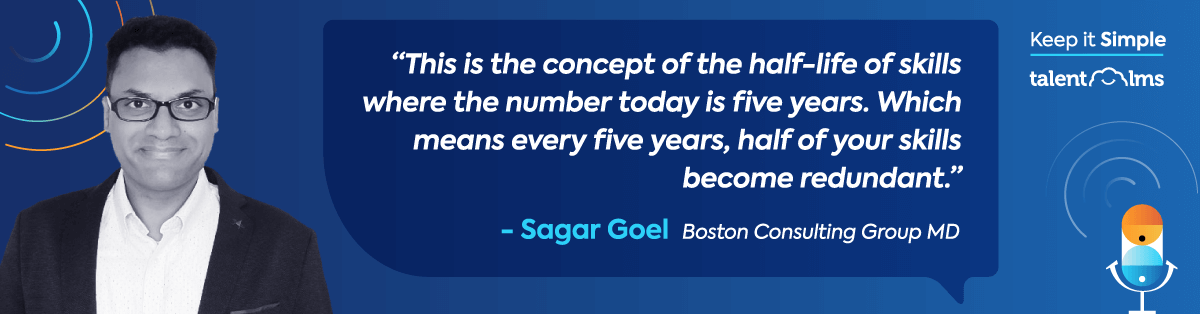
Attracting top talent is a piece of the puzzle, but a comprehensive skills training program is the whole jigsaw. Yes, it draws in ambitious individuals, but more importantly, it continuously elevates the capabilities of your existing team. And with the “half-life of skills widening by five years”, as stated in our podcast with Sagar Goel, this is more important than ever.
It is the difference between having a team that does the job vs one that goes above and beyond.
Reduced risks and improved compliance
Think of compliance training not as a chore, but as building a company-wide “Spidey-Sense” for potential problems. It’s creating awareness. It’s about empowering every employee to spot risks, speak up, and make ethical decisions.
This helps protect the longevity of a business.
A culture of continuous improvement
Skills training benefits many due to a mindset it can cultivate.
When you invest in your people’s growth, they start seeing learning as a habit, not a chore.
Suddenly, you’ve got teams sharing insights across departments, mentoring each other, and proactively seeking out new skills. It’s the ripple effect of a well-placed investment in human potential.
That’s not just an “improvement.” That’s a fundamental shift in how people approach their work.
Research from Bersin by Deloitte indicates that organizations with a strong learning culture are 92% more likely to develop new products and services.
Better succession planning and internal mobility
We all know hiring externally can be a bit of a lottery.
A well-oiled skills training program is like having your own in-house talent pool. You identify those hidden gems, the employees with that spark, and you nurture their potential.
Targeted skills training—leadership workshops, specialized certifications, maybe even a rotation through different departments—prepares them to step up when the time comes.
Internal hires also reach full productivity faster.
Improved customer satisfaction
Happy employees, create happy customers. It’s a simple equation.
When your team feels confident and capable, that translates directly into a better customer experience. In fact, research from Gallup has shown that companies with engaged employees see a 10% increase in customer ratings.
And in today’s world, those relationships are gold dust.
Skills training methods
There’s no best training method. What works for you will depend on the specific skills, the learners, and the desired outcomes.
It is best practice to pick and choose options that work for your staff and business. But, here are some important methods to keep in mind regardless of your training needs.
Bite-sized courses
The half-life of skills isn’t the only thing shrinking, attention spans are too.
Bite-sized learning counters low attention spans by delivering information in short, focused bursts. Think 5–10 minute video tutorials, interactive quizzes, or quick-read articles.
This approach is highly effective for reinforcing key concepts, delivering just-in-time knowledge, and keeping learners engaged.
Platforms like TalentLMS offer TalentLibrary—a collection of ready-made, bite-sized courses covering a wide range of business-critical skills, making it a resource to rely on.
Hands-on training and application
Learning by doing is often the most effective approach. This could include games, role-playing, or work projects that let employees use new skills right away in a real-world (or real) situation.
For example, a sales team might practice negotiation techniques through mock customer interactions, or a software development team might collaborate on a mini-project using a newly learned coding language.
The practical approach is super effective.
Shadowing
Job shadowing isn’t just “following someone around.” It’s a carefully structured period of observation and guided learning, where an employee gains firsthand insight into a specific role or process.
The real magic happens when the “shadower” actively participates—asking questions, taking notes, and even assisting with tasks under supervision.
It’s like an apprenticeship-lite, providing invaluable context and accelerating the learning curve in a way that no manual or lecture ever could.
Role-playing
Forget the awkward, forced scenarios of the past. Effective role-playing is a powerful tool for developing top soft skills and building confidence in challenging situations.
The key is creating realistic scenarios, providing clear objectives, and offering constructive feedback. This helps employees learn how to respond to difficult customers, give good feedback, or handle a difficult negotiation.
The best role-playing experiences feel less like a soft skills training exercise and more like a dress rehearsal for real-world success.
Mentoring
Mentoring is a sustained, supportive relationship focused on long-term career development. A good mentor acts as a sounding board, a guide, a source of institutional wisdom, and sometimes leadership skills.
The real value is in the connection’s personal nature. The mentee gets personalized advice, honest feedback, and access to a network of contacts they might not have otherwise. It’s a powerful investment in both the employees and the organization’s future.
How to develop an effective skills training program
Creating an effective training program is a strategic, needs-based approach.
Identify skills gaps
The foundation of any effective skills training program is a clear understanding of what skills are missing. Conduct a thorough needs assessment, using tools like performance reviews, employee surveys, and industry benchmarks.
This will pinpoint the specific areas where skills training can have the greatest impact.
This can also be done using our skills gap analysis template.
Deliver training
Once you’ve identified the gaps, it’s time to deliver the skills training.
Choose methods that align with the learning objectives and the preferences of your employees which could include online courses, workshops, mentoring, and on-the-job experiences.
Focus on creating engaging, interactive content that spurs active participation and reinforces learning through practical application.
Analyze results and improve training programs
The work doesn’t end when the skills training is delivered.
What typically happens after a training session is done, is that there are reviews of the training materials, the employee growth and whether they improve job performance wise.
It’s crucial to track key metrics like course completion rates, assessment scores, and, most importantly, on-the-job performance changes.
When you gather feedback like this from participants and managers you can identify what worked well and what could be improved.
You can then use this data to continuously refine your skills training programs, ensuring they remain relevant, engaging, and effective.
Bonus tip: Invest in skills-based training software
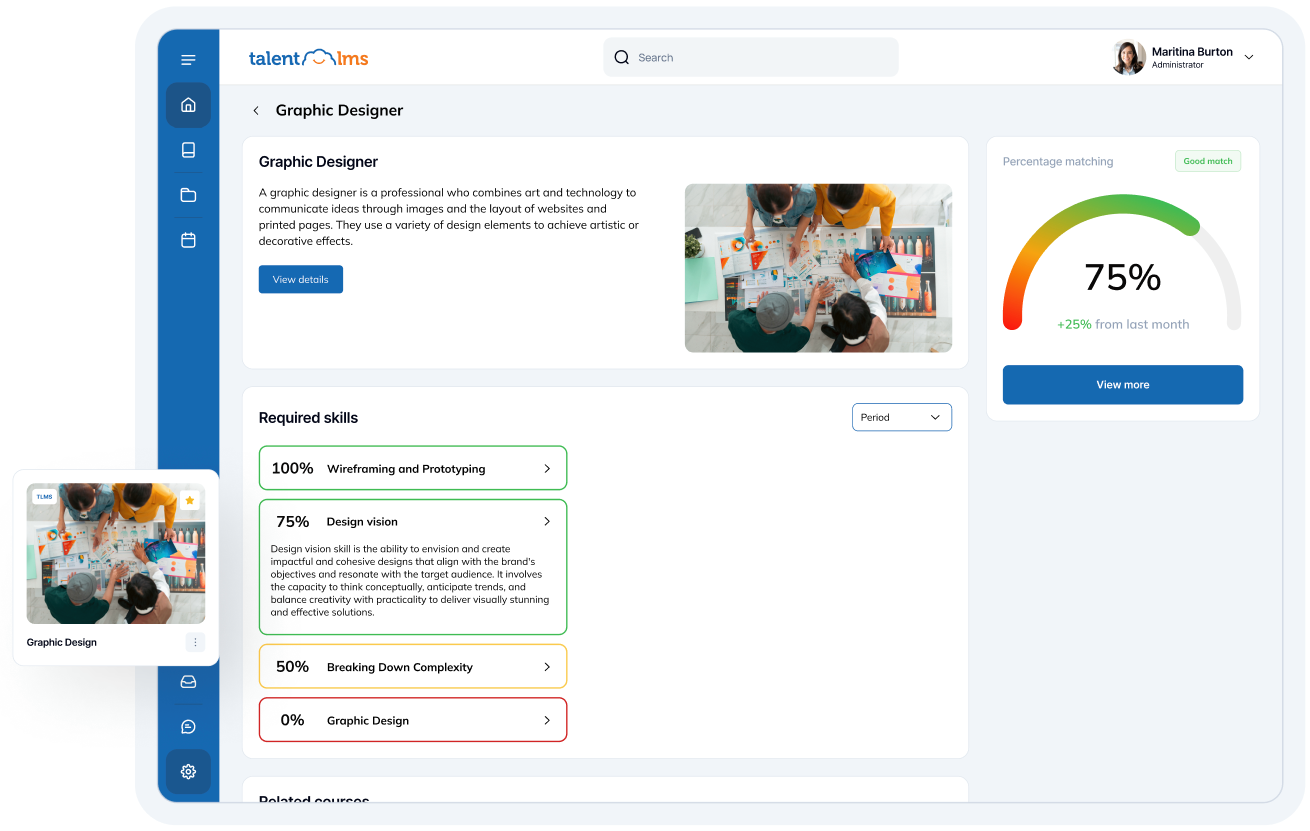
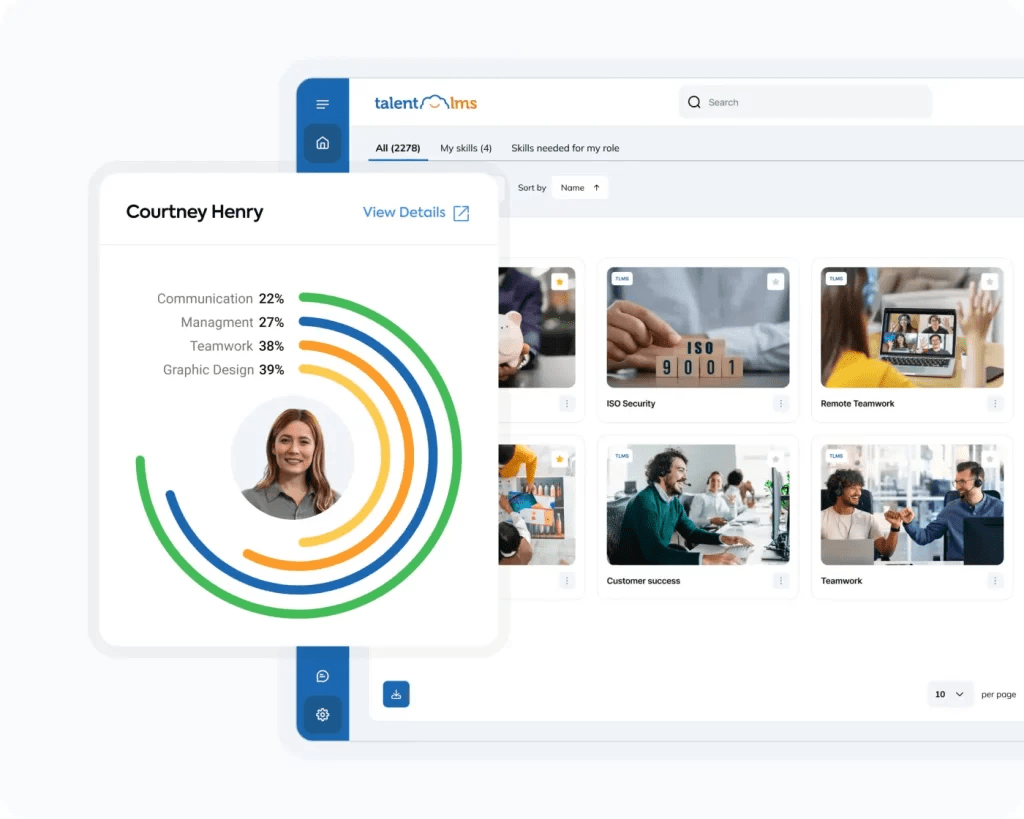
Transform your entire skills training process with employee training software like TalentLMS. TalentLMS has special skills-management features that let you do everything from finding skills gaps and giving training that fits your needs to tracking progress, and measuring results.
Even better, go beyond basic skills training. Map your organization’s entire skills landscape, create personalized learning paths, and use that data to fuel internal mobility, succession planning, and career development.
Skills training helps your business grow
Skills training is simple: it makes your team better. Better at their jobs, better at solving problems, and better at driving your company forward.
It’s the fuels that drives productivity, engagement, innovation, and ultimately, sustainable growth.
In a world that’s constantly changing, a company that’s prioritizing continuous learning is one that’s winning.
Investing in skills shows your employees you value them, and that investment pays off in loyalty, innovation, and a stronger bottom line.
