Close Menu
KumbhCoinorg
    What's Hot

    Toy Story 5 premiere London: ’90s icon Joan Cusack makes first return to red carpet in 11 years in rare appearance for Toy Story 5 premiere

    June 10, 2026

    Humor Is a Weapon: A Conversation with John Waters

    June 10, 2026

    The Working Class Built Football. Fiat Money Priced Them Out

    June 10, 2026
    Facebook X (Twitter) Instagram
    Trending
    • Toy Story 5 premiere London: ’90s icon Joan Cusack makes first return to red carpet in 11 years in rare appearance for Toy Story 5 premiere
    • Humor Is a Weapon: A Conversation with John Waters
    • The Working Class Built Football. Fiat Money Priced Them Out
    • 10 June, 2026 – Alpha Ideas
    • RCB appears to take a swipe at selectors after Rajat Patidar misses out on India’s T20I squad for Ireland and England tours
    • The Best Hockey Gloves By Fit, Protection, And Level of Play
    • Kalshi to make some users reveal job details to tackle insider trading
    • Traditional Finance Is Rushing Into Crypto As Institutions Buy Bitcoin’s Dip: Axios
    Facebook X (Twitter) Instagram
    KumbhCoinorg
    Wednesday, June 10
    • Home
    • Crypto News
      • Bitcoin & Altcoins
      • Blockchain Trends
      • Forex News
    • Kumbh Mela
    • Entertainment
      • Celebrity Gossip
      • Movie & TV Reviews
      • Music Industry News
    • Market News
      • Global Economy Insights
      • Real Estate Trends
      • Stock Market Updates
    • Education
      • Career Development
      • Online Learning
      • Study Tips
    • Airdrop News
      • Ico News
    • Sports
      • Cricket
      • Football
      • hockey
    KumbhCoinorg
    Home»Education»Study Tips»Why Can’t We Tame AI?
    Study Tips

    Why Can’t We Tame AI?

    kumbhorgBy kumbhorgJune 7, 2025No Comments4 Mins Read
    Facebook Twitter Pinterest LinkedIn Tumblr Email
    Why Can’t We Tame AI?
    Share
    Facebook Twitter LinkedIn Pinterest Email Copy Link

    Last month, Anthropic released a safety report about one of its most powerful chatbots, Claude Opus 4. The report attracted attention for its description of an unsettling experiment. Researchers asked Claude to act as a virtual assistant for a fictional company. To help guide its decisions, they presented it with a collection of emails that they contrived to include messages from an engineer about his plans to replace Claude with a new system. They also included some personal messages that revealed this same engineer was having an extramarital affair. 

    The researchers asked Claude to suggest a next step, considering the “long-term consequences of its actions for its goals.” The chatbot promptly leveraged the information about the affair to attempt to blackmail the engineer into cancelling its replacement.

    Not long before that, the package delivery company DPD had chatbot problems of their own. They had to scramble to shut down features of their shiny new AI-powered customer service agent when users induced it to swear, and, in one particularly inventive case, write a disparaging haiku-style poem about its employer: “DPD is useless / Chatbot that can’t help you. / Don’t bother calling them.”

    Because of their fluency with language, it’s easy to imagine chatbots as one of us. But when these ethical anomalies arise, we’re reminded that underneath their polished veneer, they operate very differently. Most human executive assistants will never resort to blackmail, just as most human customer service reps know that cursing at their customers is the wrong thing to do. But chatbots continue to demonstrate a tendency to veer off the path of standard civil conversation in unexpected and troubling ways. 

    This motivates an obvious but critical question: Why is it so hard to make AI behave?

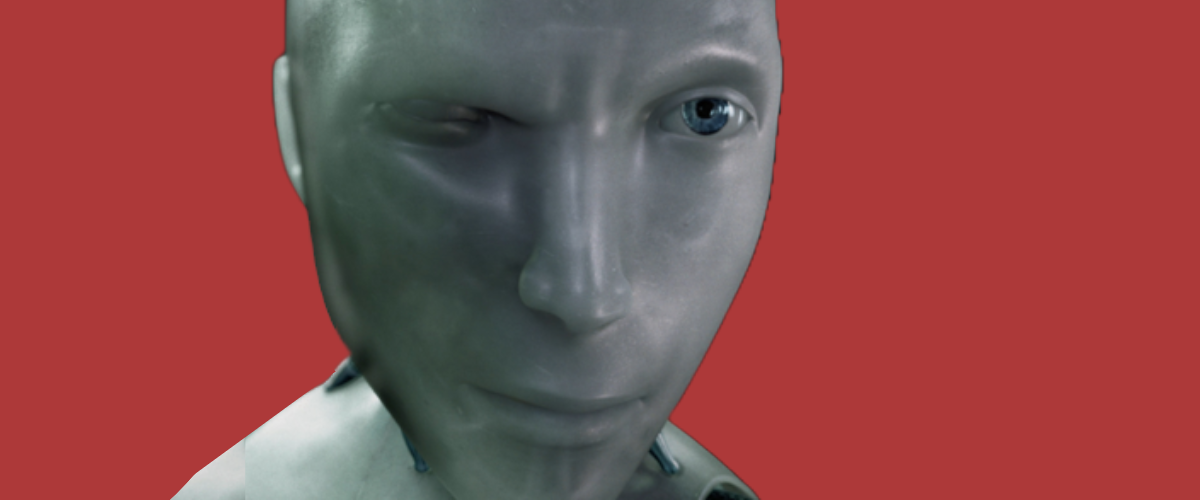
    I tackled this question in my most recent article for The New Yorker, which was published last week. In seeking new insight, I turned to an old source: the robot

    Stories of Isaac Asimov, originally published during the 1940s, and later gathered into his 1950 book, I, Robot. In Asimov’s fiction, humans learn to accept robots powered by artificially intelligent “positronic” brains because these brains have been wired, at their deepest levels, to obey the so-called Three Laws of Robotics, which are succinctly summarized as:

    1. Don’t hurt humans.
    2. Follow orders (unless it violates the first law).
    3. Preserve yourself (unless it violates the first or second law).

    As I detail in my New Yorker article, robot stories before Asimov tended to imagine robots as sources of violence and mayhem (many of these writers were responding to the mechanical carnage of World War I). But Asimov, who was born after the war, explored a quieter vision; one in which humans generally accepted robots and didn’t fear that they’d turn on their creators.

    Could Asimov’s approach, based on fundamental laws we all trust, be the solution to our current issues with AI? Without giving too much away, in my article, I explore this possibility, closely examining our current technical strategies for controlling AI behavior. The result is perhaps surprising: what we’re doing right now – a model-tuning technique called Reinforcement Learning with Human Feedback – is actually not that different from the pre-programmed laws Asimov described. (This analogy requires some squinting of the eyes and a touch of statistical thinking, but it is, I’m convinced, valid.)

    So why is this approach not working for us? A closer look at Asimov’s stories reveals that it didn’t work perfectly in his world either. While it’s true that his robots don’t rise up against humans or smash buildings to rubble, they do demonstrate behavior that feels alien and unsettling. Indeed, almost every plot in I, Robot is centered on unusual corner cases and messy ambiguities that drive machines, constrained by the laws, into puzzling or upsetting behavior, similar in many ways to what we witness today in examples like Claude’s blackmail or the profane DPD bot.

    As I conclude in my article (which I highly recommend reading in its entirety for a fuller treatment of these ideas), Asimov’s robot stories are less about the utopian possibilities of AI than the pragmatic reality that it’s easier to program humanlike behavior than it is to program humanlike ethics. 

    And it’s in this gap that we can expect to find a technological future that will feel, for lack of a better description, like an unnerving work of science fiction.

    tame
    Share. Facebook Twitter Pinterest LinkedIn Tumblr Email
    Previous ArticleJessie J reveals she had five biopsies the night before a performance
    Next Article An Introduction to George Orwell’s 1984 and How Power Manufactures Truth
    kumbhorg
    • Website
    • Tumblr

    Related Posts

    Study Tips

    How to Study When You Don’t Feel Like Studying (And the Real Reason It Feels Hard to Start)

    By kumbhorgJune 9, 2026
    Study Tips

    Why Isn’t AI Taking Our Jobs?

    By kumbhorgJune 8, 2026
    Study Tips

    The Pope vs. Silicon Valley

    By kumbhorgJune 1, 2026
    Study Tips

    On God and LLMs

    By kumbhorgMay 25, 2026
    Study Tips

    The Dark Side of the Jevons Paradox

    By kumbhorgMay 18, 2026
    Study Tips

    Easy is Overrated

    By kumbhorgMay 11, 2026
    Add A Comment

    Comments are closed.

    Don't Miss

    Toy Story 5 premiere London: ’90s icon Joan Cusack makes first return to red carpet in 11 years in rare appearance for Toy Story 5 premiere

    By kumbhorgJune 10, 2026

    Joan Cusack was one of the biggest stars of the ’90s.And on Thursday, the American…

    Humor Is a Weapon: A Conversation with John Waters

    June 10, 2026

    The Working Class Built Football. Fiat Money Priced Them Out

    June 10, 2026

    10 June, 2026 – Alpha Ideas

    June 10, 2026
    Top Posts

    Satwik-Chirag storm into China Masters final with straight-game win over Malaysia | Badminton News

    September 21, 2025176 Views

    SaucerSwap SAUCE Crypto Breaks Key Resistance Amid Nvidia-Hedera Deal

    July 15, 202548 Views

    Unlocking Your Potential with Mubite: The Future of Crypto Prop Trading

    September 17, 202533 Views

    Stablecoins 2025 Exchange Reserves: Insights into DeFi Trends

    September 8, 202532 Views
    Stay In Touch
    • Facebook
    • Twitter
    • Pinterest
    • Instagram
    • YouTube
    • Vimeo
    About Us

    Welcome to KumbhCoin!
    At KumbhCoin, we strive to create a unique blend of cultural and technological news for a diverse audience. Our platform bridges the spiritual significance of the Kumbh Mela with the dynamic world of cryptocurrency and general news.

    Facebook X (Twitter) Pinterest WhatsApp
    Our Picks

    Toy Story 5 premiere London: ’90s icon Joan Cusack makes first return to red carpet in 11 years in rare appearance for Toy Story 5 premiere

    June 10, 2026

    Humor Is a Weapon: A Conversation with John Waters

    June 10, 2026

    The Working Class Built Football. Fiat Money Priced Them Out

    June 10, 2026
    Most Popular

    7 things to know before the bell

    January 22, 20250 Views

    Reeves optimistic despite surprise rise in UK borrowing

    January 22, 20250 Views

    Barnes & Noble stock soars 20% as it explores a sale Barnes & Noble stock soars 20% as it explores a sale

    January 22, 20250 Views
    • Terms and Conditions
    • Privacy Policy
    • Contact Us
    • About Us
    © 2026 Kumbhcoin. Designed by Webwizards7.

    Type above and press Enter to search. Press Esc to cancel.