

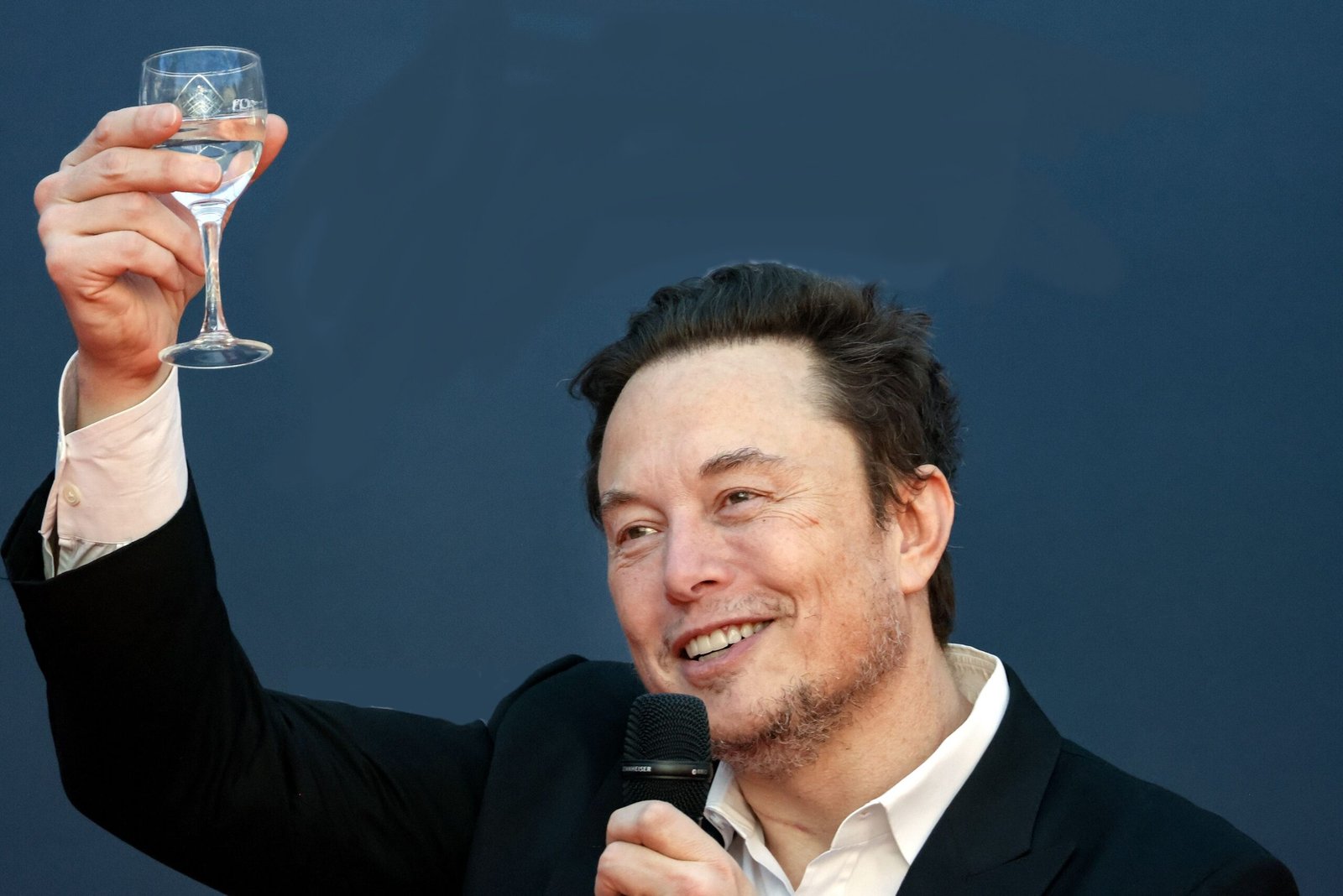
Following the pricing of the SpaceX IPO, Elon Musk has become the world’s first trillionaire, on paper. A significant portion of the response will predictably focus on wealth and inequality. Yet the more interesting story is something else entirely. Following SpaceX’s opening public market valuation of approximately $1.77 trillion on June 11, and an IPO share price of $135 per share, Elon Musk’s estimated net worth stands near $1.1 trillion. That figure is extraordinary, but what it principally reflects is not income, compensation, or consumption. Rather, it is a measure of how financial markets value the future, particularly when financing colossal, extraordinarily uncertain, long-term technological bets.
Most of Musk’s wealth is not cash. It consists primarily of equity: ownership stakes in firms such as Tesla, SpaceX, and xAI. Equity markets are inherently forward-looking. Investors are not paying primarily for what these companies earn today, but for what they believe they may produce years or even decades from now. When valuations become enormous, it is because markets collectively judge the underlying technologies — electric vehicles, reusable launch systems, satellite networks, artificial intelligence, robotics, and energy storage-as possessing the potential to fundamentally reshape industries and economic life.
SpaceX itself illustrates this dynamic vividly. At an IPO valuation of roughly $1.8 trillion, investors are not simply valuing rockets and satellite launches. They are assigning probabilities to a sprawling and highly speculative set of future possibilities: global satellite broadband, orbital computing infrastructure, reusable heavy launch systems, interplanetary transportation, and AI-enabled applications that do not yet fully exist. According to the company’s own filings, SpaceX sees a total addressable market measured in the tens of trillions of dollars, driven heavily by artificial intelligence and orbital data infrastructure. Skeptics, however, argue these expectations may be wildly optimistic. Morningstar, for example, has suggested a base-case enterprise value closer to $1 trillion, assigning only a small probability to a “moonshot” scenario approaching $2 trillion. Goldman Sachs’ underwriting projections reportedly envision revenue growing from roughly $19 billion in 2025 to nearly $475 billion by 2030, while more conservative estimates see growth as substantial but far smaller. The point is not which estimate is correct, but rather that today’s valuation represents markets pricing profoundly uncertain futures rather than certainties.
This is where capital structure becomes crucial. Musk’s companies have relied heavily on equity financing rather than debt, for good reason. Debt requires fixed repayment obligations on a schedule, making it more suitable for stable and predictable enterprises. Equity is more adaptable. If projects fail or underperform, shareholders bear the losses. If they succeed, shareholders participate in the upside. For ventures where outcomes range from complete failure to transformative success, equity is generally the more appropriate financing mechanism.
It could be wiser to view SpaceX’s speculative AI and orbital businesses as akin to a call option: investors pay today for exposure to a potentially enormous future payoff. The analogy is apt: equity financing permits firms to fund experiments with asymmetric outcomes, where failure is common but success can be civilization-altering. Investors voluntarily bear the downside in exchange for the possibility of enormous gains.
That distinction matters for the broader economy. Funding long-term, high-risk innovation with equity rather than leverage reduces systemic fragility. It lowers the likelihood that failed projects trigger cascading defaults or financial instability. At the same time, it permits firms to pursue ambitious and uncertain ideas without the burden of rigid repayment schedules. Historically, many major advances in transportation, communications, computing, and energy have emerged from precisely this type of financing environment. The gains extend beyond founders and investors to consumers and workers through better products, lower costs, and entirely new industries.
Large valuations additionally reveal how markets price uncertainty. Investors are effectively assigning probabilities to vastly disparate future scenarios. Most will not fully materialize, but a small subset may generate enormous value if they do. A core function of financial markets is to incorporate those possibilities into current prices. This helps explain why valuations can sometimes appear disconnected from current earnings or conventional metrics. What looks speculative is often a market attempting to estimate the value of uncertain but potentially revolutionary outcomes.
Macroeconomic conditions matter as well. Interest rates influence how future earnings are valued: lower discount rates generally support higher valuations, especially for firms whose anticipated returns lie far in the future. Investor appetite for risk matters too. When confidence is abundant, capital flows more readily toward uncertain ventures; when it contracts, lofty valuations become harder to sustain. The emergence of a trillionaire reflects not merely an individual’s entrepreneurial success, but the broader financial and monetary environment as well.
It also helps explain why such wealth appears concentrated even though its origins are widely distributed. Asset prices are set by millions of participants, including pension funds, mutual funds, sovereign wealth funds, institutional investors, and retail traders — each of which make judgments about an enterprise’s future prospects. The resulting valuation is collective. Although the headline number belongs to one individual, it reflects a comprehensive market consensus regarding the likely trajectory of technology, production, and innovation.
Seen in this light, the first trillionaire story is far less about egalitarian outcomes than about economic priorities. Markets are directing enormous amounts of capital toward highly uncertain, long-duration innovation while distributing the associated risks across numerous investors of varying levels of sophistication rather than concentrating them through leverage. That is not a flaw of market economies; to the contrary, it is a central mechanism for experimentation, adaptation, and growth.
That Elon Musk is an immigrant to the United States who arrived without wealth, status, or elite connections in America will likely be lost amid the inevitable class-warfare point-scoring. Less remarked upon is that the companies he has founded or helped build — including Tesla, Inc. (134,000), SpaceX (22,000), Neuralink (300), xAI (1200), X (formerly Twitter) (1000), and The Boring Company (400) — now collectively employ on the order of 150,000 people worldwide, directly supporting a workforce larger than many midsized American cities. The temptation will be to generate interpretations of such a milestone in resentment-driven, zero-sum political terms. The more useful and accurate lenses are both financial and structural. An individual with a trillion-dollar net worth ultimately reflects markets allocating vast amounts of equity capital not to an individual, but toward uncertain but potentially transformative ideas; and, in the process, generating benefits extending across billions of lives and potentially generations beyond.
