

The zeal of the convert can be a terrifying force to behold. An acolyte convinced of their own prior heresy will often be a more thorough inquisitor than the native-born believer. This dynamic may help explain why It’s on You by Nick Chater and George Loewenstein is so shrill and devoid of self-awareness.
Having been leading researchers in behavioral psychology and economics who sought to manipulate individuals into ostensibly healthier and smarter choices — the world of “nudge” theory — they are doing a righteous penance by exposing the flaws of their former discipline. They have now decided that only government dictates can be relied upon to improve everything from retirement savings to climate change, and they are on a crusade to expose anyone who believes voluntary action by human beings can be useful for, well, anything.
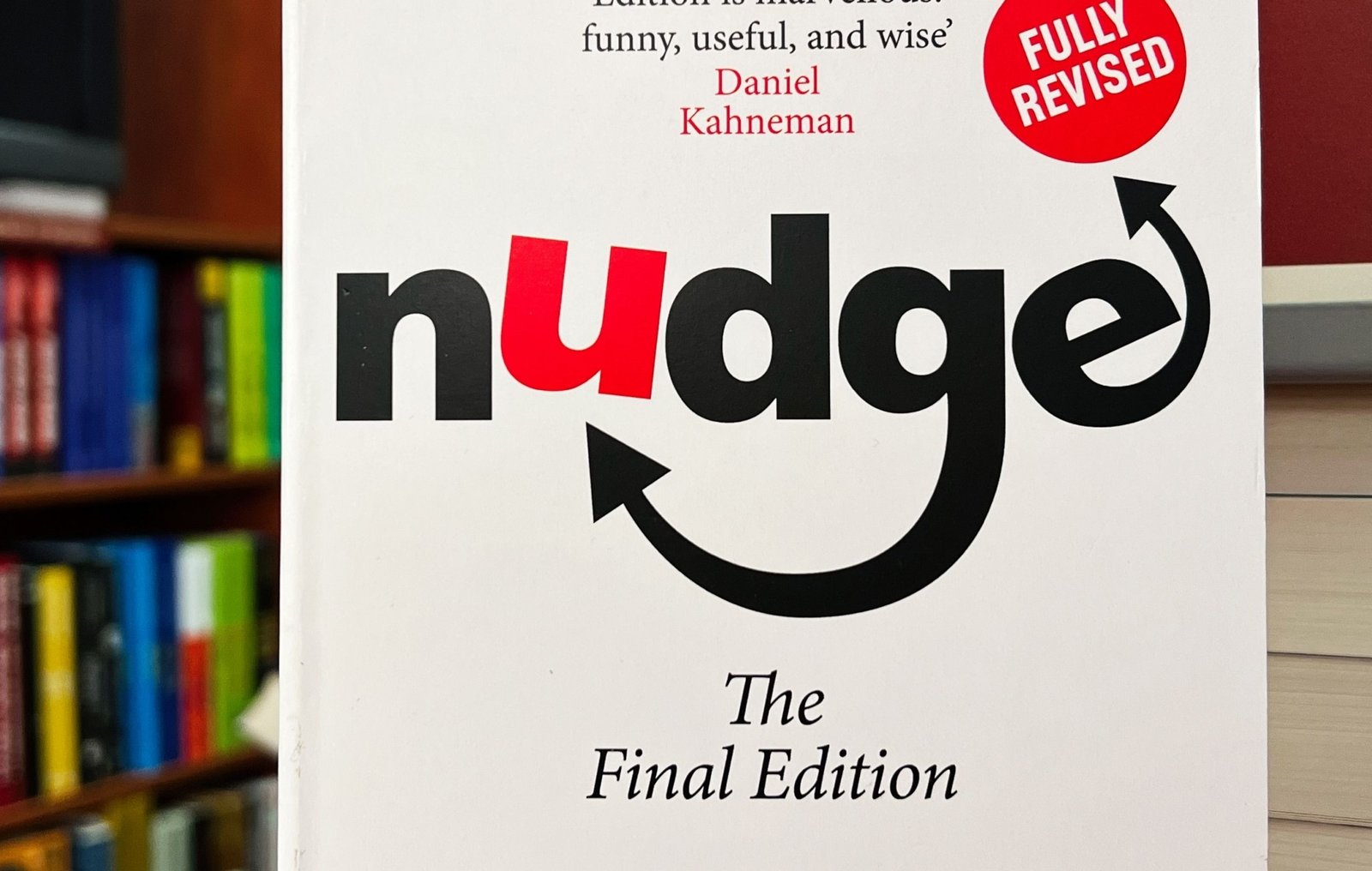
As the authors recount, the popularity of luring people into making the decisions that policymakers think best, rather than outright coercing them, really took off with the success of the book Nudge: Improving Decisions About Health, Wealth, and Happiness (2008) by economist Richard Thaler and legal scholar Cass Sunstein. Sunstein would later hold an influential policy role as President Obama’s Administrator of the Office of Information and Regulatory Affairs, the chief White House overseer of proposed new federal regulations.
The idea of government officials nudging the human cattle into their government-approved chutes was soon all over the news. It was also popular in academia and in dedicated nudge policy units and working groups in governments worldwide. The authors describe having done extensive work in the area, both experimentally and by offering specific advice to policymakers. Nudge-adjacent proposals proliferated in the late 2000s and early 2010s, including ideas like changing restaurant menus to discourage gluttony and offering gamified incentives to encourage saving for retirement, exercising, and medication adherence.
But the success of nudge behavioralism, after a first flush of success, yielded disappointing long-term results. Upon wider reading and investigation, Chater and Loewenstein grew so disenchanted with their own specialty that they turned against it entirely with the vengeance of the betrayed. They now attack nudge interventions as not just ineffective but actively harmful, in part because people who are concerned about societal problems can be seduced by the supposed effectiveness of nudges, thus eroding support for more aggressive interventions.
And their preferred alternative is a bold one indeed. They claim that the major problems of the day can only be solved by flushing away any pretense of voluntary inducement and going full speed ahead on banning (or mandating) the behaviors and outcomes they want abolished (or to see more of). They now consider it absurd and unjust to expect anyone in America to actually manage how many calories they eat, decide how their retirement nest egg is invested, or pick which health plan they pay for.
Everything must be federally mandated to ensure the just outcomes that the co-authors have already helpfully decided upon. Liberating Americans from the tyranny of making their own choices will leave them, readers are helpfully reminded, with ample leisure time for hobbies and entertainment.
The number of things that would be directly regulated under the plan laid out in It’s on You would be bracingly broad. Under this technocratic utopia, the government would decide which health care plan you will have, how much and under what conditions you are allowed to gamble, how you interact with social media, what vehicle you are allowed to drive, how much you save for retirement, the THC content of the cannabis you consume, and how often you are allowed to fly. That is, if the exigencies of climate change can be strained to allow you the luxury of flying at all. But don’t worry — agoraphobes might be able to cash in their tradable flight allowances on an exchange, if there are enough credits to go around.
Your diet would, of course, also be regulated from multiple angles. “Ultraprocessed” foods would certainly be, shall we say, discouraged. Sugary drinks would come in for greater regulation, though it’s possible they would only have their sweeteners watered down rather than forbidden entirely. The authors also ominously refer, several times, to the problematic effects that meat consumption has on both human health and the global climate. Readers can safely assume that the future Chatenstein republic will not be known for its world-class steakhouses.
Cataloguing and refuting all of their flawed assumptions and policy proposals would require an entire shelf of additional books, so broad is their self-assigned remit to remake modern society. Suffice it to say that they seem to have a soft spot for every left-wing hobby horse and pet theory of the last half-century, from Malthusian environmentalism and single-payer health care to banning gasoline-powered vehicles and a reflexive “everything is better in Europe” anti-patriotism so common among semester-abroad undergraduates.
Their ideological obsession with everything about life in the US being secretly terrible does occasionally lead them astray in a way that should certainly have been caught by fact-checkers. In an attempt to prove that the American health care system is scandalously underperforming, they claim that “the maternal death rate—the number of women who die each year as a result of complications from childbirth—is on average 4.5 per 100,000 live births in comparable countries, but it is 23.8 per 100,000 live births in the US—over five times higher.” This is not true, and something only the most highly motivated partisan would believe without attempting to verify.
The confusion that led to such statistics being published in the first place was covered, among other places, in a March 2024 Washington Post article fittingly titled “Study says U.S. maternal death rate crisis is really a case of bad data.” Reporters Sabrina Malhi and Dan Keating explain that “Data classification errors have inflated U.S. maternal death rates for two decades.” The 2003 re-design of a commonly used form meant that “…deaths of people 70 or older were mistakenly classified as having been pregnant. Deaths from cancer and other causes also were counted as maternal deaths if the box was checked.” The Post writers reported that according to Cande Ananth, chief of epidemiology and biostatistics at Rutgers Robert Wood Johnson Medical School, “U.S. maternal mortality is actually comparable to that of Canada and Britain.”
That may seem like a troubling enough data error, but Chater and Loewenstein’s worst ideas are inspired by climate alarmism. Readers familiar with the world of energy and environmental economics need only be told of the praise heaped on figures like Naomi Oreskes, Michael Mann, and Bill McKibben to realize that the authors are representing the furthest fringe of the intellectual world. These are people who consider the incremental environmental changes related to modern greenhouse gas emissions to be a planetary emergency requiring the most extreme possible government takeover of society — a responsibility they and others in the climate activist movement are all too eager to award to themselves.
Writing at a time when the environmental activist movement is unraveling around the world and even policymakers in the European Union are watering down or backing away from climate-inspired policies, the authors write as if everyone who is not currently employed by ExxonMobil is pining for the goal of net-zero degrowth. Yet it is likely that enthusiasm for the “wrenching transformation of society” famously called for by Al Gore has never been less salient or politically viable than at any point since the 1992 Rio Earth Summit. In case the authors haven’t noticed, President Biden’s “whole-of-government” approach to climate change has been replaced by President Trump’s energy dominance agenda.
But so impenetrable is the epistemic bubble in which they apparently find themselves that they think that no one who is “thoughtful and well-informed” (to use one of their favorite phrases) could possibly disagree with any of their pronouncements. Only the baleful influence of special interests and corporate lobbying could possibly be responsible for anyone wanting to make their own consumer decisions about the most important parts of their life. Anyone or any group who stands in opposition to them is either venal (because of greed) or deluded to the point of false consciousness.
As self-serving and detached from reality as this rhetorical pose is, it is structurally necessary for their argument. Why, after all, could economic policies that supposedly only benefit the richest 1 percent of society be perpetuated in a country with a democratic political system? How could it be that large numbers of their fellow citizens support oil and gas development, or oppose a government takeover of health care, or want to keep firearms legal, if — as the authors suggest — such things are so obviously wrong? Only a mass mind-numbing on the scale of hundreds of millions of human beings could be responsible. The alternative — that a large portion of US voters simply think they’re wrong about these topics — seems never to have occurred to either writer.
The book does include, if only by accident, a few reasonable policy proposals, such as cutting federal agricultural subsidies and eliminating various targeted tax provisions the authors consider to be loopholes. But in total, It’s on You presents an alarming and deeply illiberal vision of the future in which no decision is too small or too personal to be left to individual choice. A world run by Chater and Loewenstein might allow for you to choose your own clothes or select your own music, but pretty much anything else will be chosen for you without even the disingenuous pretense of trying to nudge you toward the approved outcome first.
Worst of all, the authors also don’t seem to be aware of any meaningful limits to their anti-libertarian paternalism. After all, if we don’t trust ordinary Americans to choose their own vehicles or play high-limit slot machines, why would we allow them to vote and serve on juries? Surely anyone who is so infantilized that they can’t select their own snack foods shouldn’t be trusted to raise children and live unsupervised in their own homes. This view is especially ironic given the authors’ frequent insistence that their theory is the best way to advance, buttress, and defend democracy in America. If democratic governance has friends like these, I’d hate to read a book by its enemies.
