

Freedom of speech is a natural right, not a privilege dispensed by governments when convenient. It precedes the state itself. Behind the vowels and consonants that leave our lips lie creative expression, communication, and ultimately liberty. As captured memorably in Good Will Hunting, “Liberty is the soul’s right to breathe.” Yet in the digital age, speech is increasingly treated not as something to be protected but as something to be managed, licensed, monitored, and punished when it produces discomfort.
Born in the 2000s, platforms like Myspace, Facebook (now Meta), Twitter (now X), and YouTube ushered in a new era of digital communication. The consequences of this digital creative destruction are still being uncovered today. Pew Research Center reports that “about half of US adults (53 percent) say they at least sometimes get news from social media, roughly stable over the last few years.” Members of Gen Z — born between 1997 and 2012 — spend up to three hours a day on these platforms, compared with roughly ten minutes for Boomers, born 1946–1964. Needless to say, Gen Z grew up with social media embedded in everyday life.
Over the past year, this generation’s digital reimagining of political life has moved from screens to streets. Across the world — from Nepal to Mexico to Iran — Gen Z protests erupted over lack of opportunities, corruption, and economic distress. Earlier this year, the Iranian government even shut off the internet for its entire population, roughly 90 million people. Digital speech has become more than commentary. It is now the infrastructure through which a dissatisfied generation challenges political authority and attempts to reshape political legitimacy.
At first glance, these events appear confined to fragile democracies or authoritarian regimes. However, the hardline approach to digital speech has spread to the very nations that first bore the idea against their tyrants over 400 years ago.
England and France are the intellectual birthplaces of modern free expression. In England, John Milton (1608–1674) rejected prior licensing as incompatible with reason while promoting the free circulation of ideas in Areopagitica. As he famously wrote, “Give me the liberty to know, to utter, and to argue freely according to conscience.” Even John Locke (1632–1704), considered the father of liberalism, had to flee England for his outspoken defense of free speech as a natural right that exists prior to the state.
Across the English Channel, French thinkers developed similar arguments. Voltaire (1694–1778) defended the right to challenge authority and religious orthodoxy, while Montesquieu (1689–1755) treated open expression as essential to the preservation of liberty and the separation of powers. Whether expressed in English or French, the Western tradition viewed speech as pre-political: something inherent to the human person, often described as God-given, that governments recognize and protect rather than create.
Freedom of speech’s birthplace is no longer recognizable. In England and France, individuals have faced criminal convictions and even custodial sentences for online posts deemed hateful, harassing, or contributory to disorder. Freedom House reports that “According to an April 2025 Freedom of Information report filed by The Times, over 12,000 people were arrested, including for social media posts, in 2023 under section 127 of the Communications Act 2003 and section 1 of the Malicious Communications Act 1988. The report also found that the number of annual arrests had more than doubled since 2017.”
Just a few weeks ago, French President Macron stated at an AI summit, “Free speech is pure bullsh*t if nobody knows how you are guided through this.”
Furthermore, a French court recently convicted ten individuals of cyber harassment against public figure and French First Lady Brigitte Macron. Across these two nations, such restrictions on speech recall the warning of African dictator Idi Amin: “There is freedom of speech, but I cannot guarantee freedom after speech.” Once speech can be regulated, the next logical step is controlling the identity of the speaker.
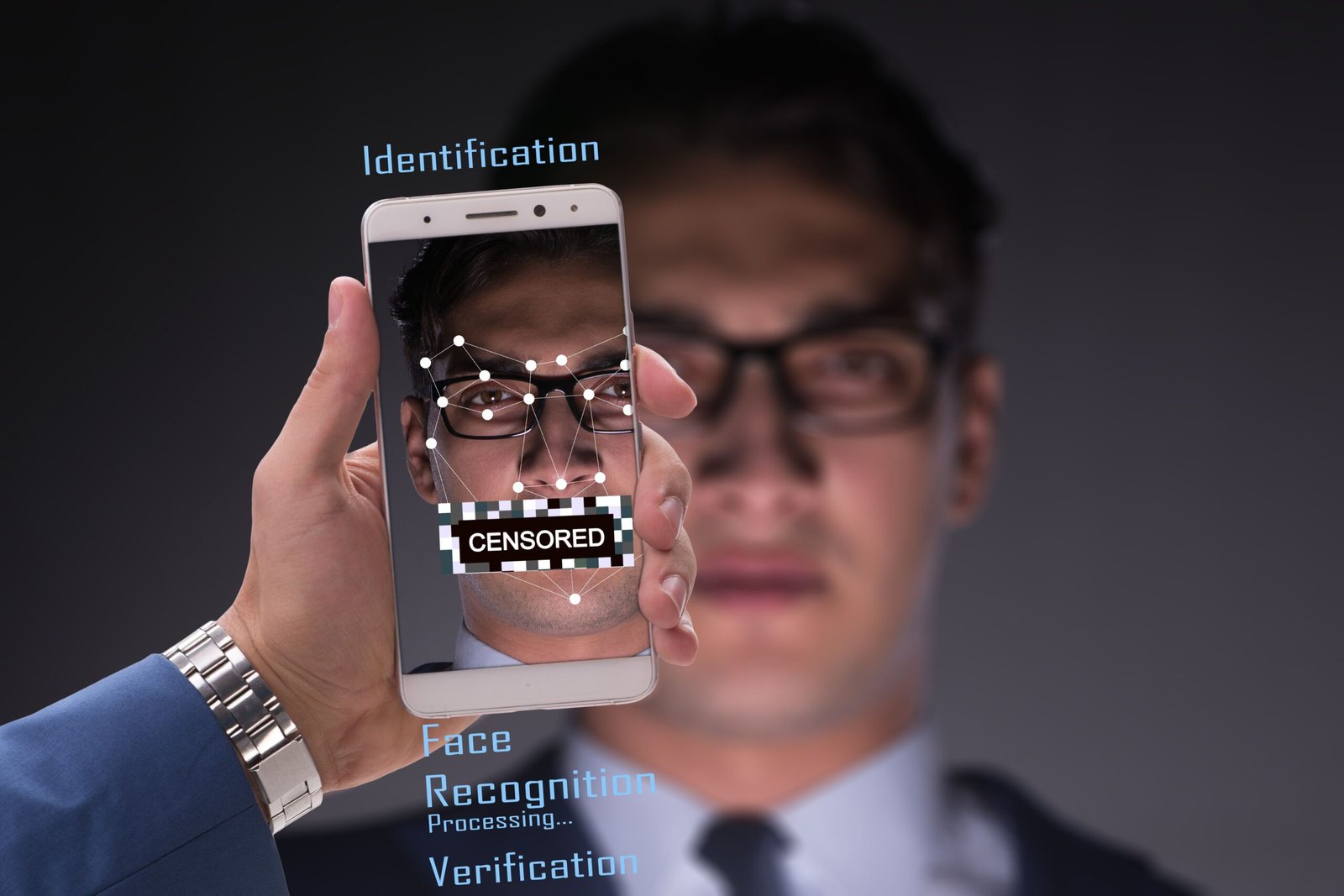
As speech regulation expands, governments are turning toward something even more consequential: digital identity systems. The European Union is developing a Digital Identity Wallet that would allow citizens to authenticate themselves across online services. At the same time, governments are beginning to regulate who can participate in digital spaces at all. Similar proposals in the United States aim to require parental consent or identity verification before minors can access social media platforms.
While these policies are often framed as protecting children from harmful content, they also steer digital communication toward systems that require participants to verify their identities. Social media has existed for more than two decades, yet it is only now — when Generation Z uses these platforms to organize and speak out against corruption, economic hardship, and government mismanagement — that governments are proposing new restrictions.
Anonymous speech, a cornerstone of Western civilization, is becoming increasingly difficult to maintain. When identity verification is required for participation, speech no longer stands alone. What once demanded only a voice now demands credentials and identification.
In his novel 1984, George Orwell imagined a society in which the state did not merely punish dissenting speech after the fact, but sought to prevent it before it could even be expressed. Through the “Thought Police,” citizens were monitored not only for their actions, but for any deviation from officially sanctioned ideas. Modern democracies are flexing similar muscles, where the goal is no longer just to punish speech, but to manage the conditions under which it can occur at all.
A right that exists only after verification, registration, or approval is no longer a natural right — it becomes a licensed activity. Freedom of speech was never meant to function by permission. Like breathing, it exists before government approval. A right that must first ask permission to exist is not a right at all.
