


On-the-job training might feel frictionless at first. It can sound as simple as learning by doing, with no classroom needed, while building skills in real time.
But, in practice, it’s rarely that simple.
Most companies treat on-the-job training as something that happens on its own. Put a new hire next to an experienced colleague, hope they pick it up, and call it done. But hope can’t be treated as a training strategy.
Forty-six percent of employees and 49% of HR managers view training as time away from real work. Time constraints are now the top L&D barrier. If nearly half your people see training and work as competing priorities, on-the-job training (which promises to merge them) is either the solution or the biggest unexamined assumption in your L&D strategy.
This piece breaks down five common on-the-job training myths, explains why they fail, and shows how to structure OJT so it delivers.
What is on-the-job training?
On-the-job training (OJT) is a training method where employees develop skills directly within their work environment, during regular tasks. Effective OJT combines hands-on practice, structured mentoring, and continuous feedback. When designed intentionally, it shortens time-to-competency, improves skill retention, and reduces disruption compared to classroom-based programs.
How does OJT work?
During on-the-job training, employees build skills in their work environment during their day-to-day tasks. Unlike traditional training that pulls people into a classroom, OJT embeds learning into the workflow itself.
It combines three things:
- Hands-on task practice: performing real work under guidance
- Mentoring or coaching: learning from more seasoned colleagues
- Structured feedback: regular check-ins to course-correct early
On-the-job training shows up across industries and use cases:
- New hire onboarding: getting new employees productive in their specific role
- Role transitions: when someone moves teams or takes on new responsibilities
- Cross-training: building coverage across teams so one person’s absence doesn’t create a gap
- Upskilling: teaching new tools, processes, or systems as the work evolves
It’s common in retail, technical roles, healthcare, manufacturing, and anywhere skills are best learned in context rather than in theory.
When it works, OJT delivers clear advantages:
- Shorter time-to-competency. Employees learn what they need the moment they need it.
- Higher retention of skills. Practice beats passive learning.
- Lower disruption. No extended time away from work.
- More cost-effective. Cheaper than standalone traditional training programs when structured properly.
Unmasking 5 on-the-job training myths
In order for on-the-job training to be successful, it must be structured. Without structure, OJT becomes informal learning with no accountability. And that’s where the gap between expectation and reality starts to show.
Here are the five most common myths around on-the-job training along with what’s true.
Expectation #1: People will learn by watching
This type of training is simple. Put someone next to a top performer and let them observe. They’ll absorb the process, pick up the nuances, and immediately start contributing.
Reality: Observation without structured practice doesn’t build skills.
Watching someone handle a client call isn’t the same as handling one yourself. Without hands-on repetition, what looks like learning is really just exposure.
The problem runs deeper than training design. Fifty-six percent of managers use observation as their primary skills assessment method. They watch people work and assume it means people are learning. That’s a measurement gap layered on top of a training gap.
When companies build their on-the-job training around observation, they create a cycle that’s hard to break. The trainer assumes the learner is absorbing. The learner doesn’t want to admit they’re lost. And the manager sees two people working side by side and assumes training is handled. Nobody checks. Nobody measures. Nobody knows the gap exists until it shows up as a performance issue weeks later.
Observation can support on-the-job training. But it can’t replace practice, feedback, and structured skill-building.
Expectation #2: No formal training is needed
OJT is a fast, complete training program on its own. There’s no need for slides, schedules, or learning objectives.
Reality: Unstructured on-the-job training takes longer and produces inconsistent results
One team member gets a thorough walkthrough from a patient, organized mentor. Another gets a distracted ten-minute overview and a link to a shared folder. Both team members are technically trained, yet only one is ready to do their job.
Without defined outcomes, sequenced learning, and consistent delivery, OJT becomes a gamble. Some employees ramp up fast because they happen to get a good mentor or a quieter week. Others struggle silently because nobody set clear expectations and nobody checked in. And the business can’t tell the difference until performance gaps show up in output, quality, or turnover.
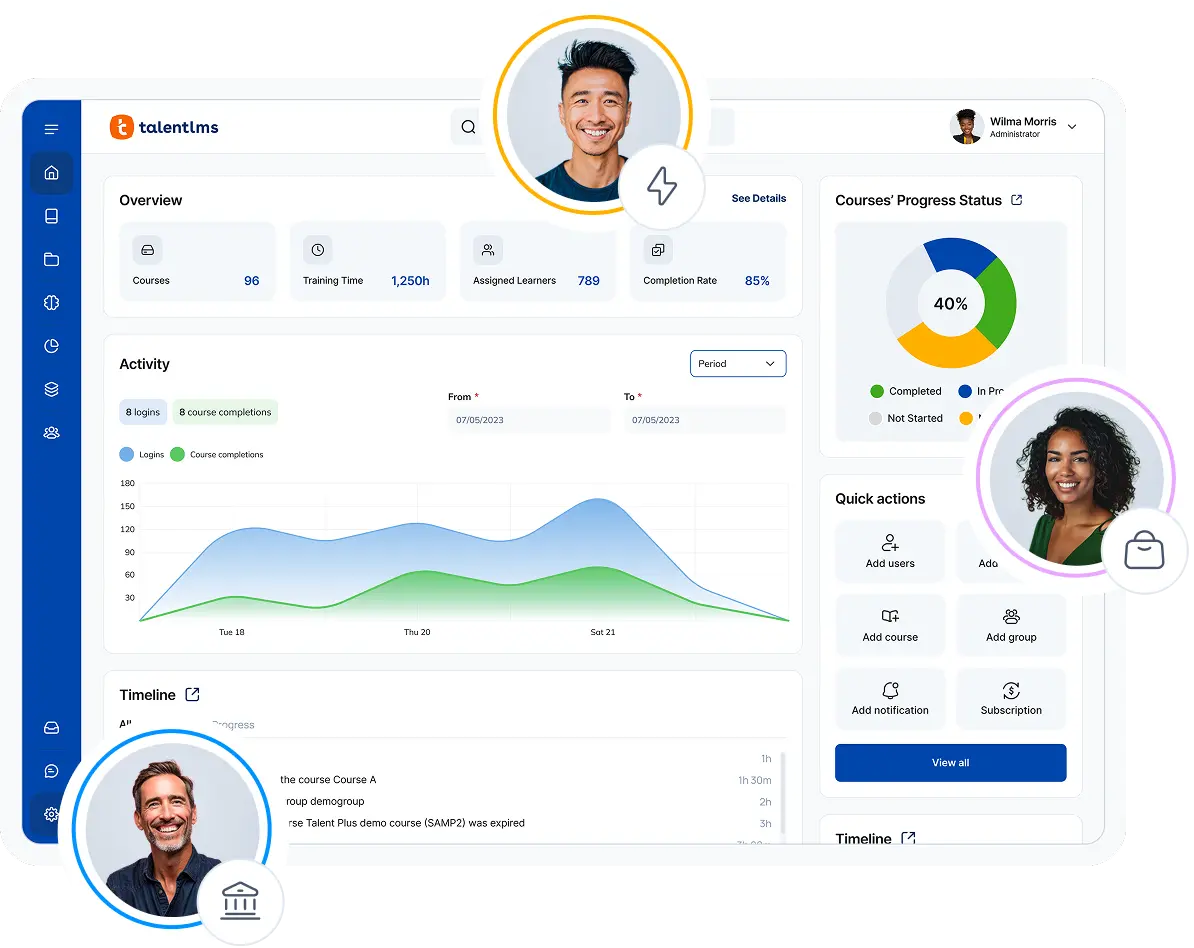
This is the gap that separates organizations that scale from ones that scramble. A company with 20 people might get away with informal hand-offs. A company with 200 people can’t. The more you grow, the more informal training costs in inconsistency, miscommunication, and rework.
Expectation #3: Everyone learns at the same pace
If every employee goes through the same on-the-job training experience, they all end up at the same level.
Reality: People learn at different speeds, from different starting points, with different strengths
A new hire with industry experience isn’t starting from the same place as someone switching careers. Without tracking, you don’t know who’s progressing and who’s stuck.
Fifty-nine percent of managers still use performance reviews as a proxy for skills. That means they wait months to discover what they could catch in weeks. By the time a review flags a skills gap, the consequences (missed deadlines, lower-quality output, frustrated teammates) have already happened.
On-the-job training that doesn’t track individual progress is unmonitored. And this gives organizations no visibility into workforce development gaps until they’re too expensive to ignore.

Expectation #4: OJT is free
No classroom rental. No travel costs. No instructor fees. No training platform. On-the-job training is the budget-friendly option.
Reality: The hidden cost is real
When experienced employees stop their own work to train someone without a structured plan, productivity drops on both sides. The trainer isn’t doing their job. The learner isn’t absorbing information efficiently. And the quality of training depends entirely on who’s available that day, not who’s best suited to teach.
Half of HR managers say high workloads in their companies leave little room for training, even when it’s needed. That’s the OJT tax in action. Training competes with work for the same hours, and without a system to manage it, both suffer. That’s the OJT tax in action. Training competes with work for the same hours, and without a system to manage it, both suffer.
When you add up the mentor’s lost productivity, the learner’s extended ramp-up time, the rework from inconsistent teaching, and the knowledge gaps nobody caught, unstructured OJT often costs more than a formal program would have.
The fix isn’t on spending more. It’s designing on-the-job training so the overhead is built into the workflow. Structured OJT actually costs less eventually because it reduces the ramp-up time, rework, and mentoring drain that unstructured programs create.
Expectation #5: OJT happens naturally
This is the myth that holds the others together. On-the-job training just happens. Learning is a natural byproduct of working.
Reality: OJT is strategic and intentional
It has a plan. It has defined outcomes and clear milestones. It has measurement. What most companies call “on-the-job training” is informal learning. Valuable, but unpredictable and impossible to scale.
If OJT would happen naturally, companies wouldn’t still struggle with skills gaps, slow ramp-ups, and inconsistent performance across teams doing the same work.
The distinction matters. Informal learning depends on the individual, for example, on their curiosity, their initiative, or on who happens to sit near them. Whether they’re comfortable asking questions, and whether anyone notices when they’re stuck.
Structured on-the-job training removes those variables. It delivers consistent results regardless of who’s training and who’s learning. One is a hope, and the other is a system. And systems scale.
How to structure on-the-job training with an LMS
The five myths above share a common thread. They treat on-the-job training as something that happens to people rather than something you design.
The right LMS gives OJT the structure it needs. Here’s what that looks like in practice.
Replace observation with practice
An LMS lets you shift from passive watching to active doing. Instead of hoping a new hire absorbs a process by sitting next to a colleague, you can build realistic scenarios to work through at their own pace.
On-the-job training’s biggest risk is letting people learn only when the pressure is high. Practice environments remove that constraint. Employees can repeat a scenario until it clicks, without worrying about a real customer on the line or a real deadline on the clock.
Learning Playground in TalentLMS lets teams practice through realistic scenarios and AI-powered simulations. Employees build confidence by working through it themselves in a safe, repeatable environment.
Build a consistent path
Unstructured OJT means every team delivers training differently. The result is wildly inconsistent outcomes depending on location, team, who happened to be available that week, or skill needs.
That consistency matters most when you’re scaling. When on-the-job training varies by team, you end up with pockets of excellence next to pockets of confusion and no way to tell which is which until something goes wrong.
The right training software allows you to create one path that works for different needs. The sequence stays consistent for every employee with Learning Paths. Each employee moves through the same stages, regardless of team, location, or particular training needs.
Track skills, not just completions
Course completions tell you someone clicked through the modules. They don’t tell you whether that person can actually do the work.
If your on-the-job training program tracks completions but not capability, you’re measuring effort, not outcomes. Annual reviews can’t tell you whether OJT is working in real time. You need visibility into skill development as
it happens, not months later when the damage is done.
TalentLMS’s Skills gives you a centralized view of skill development across your organization.
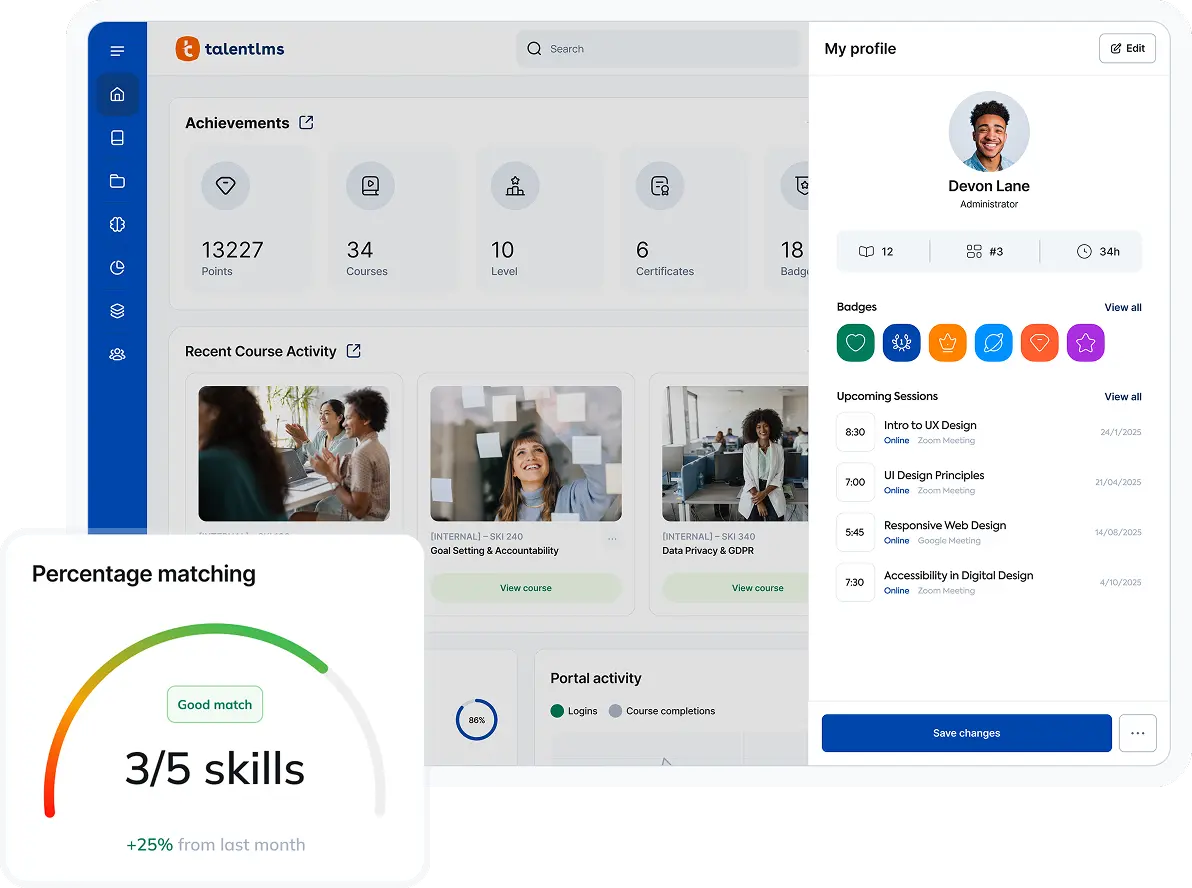
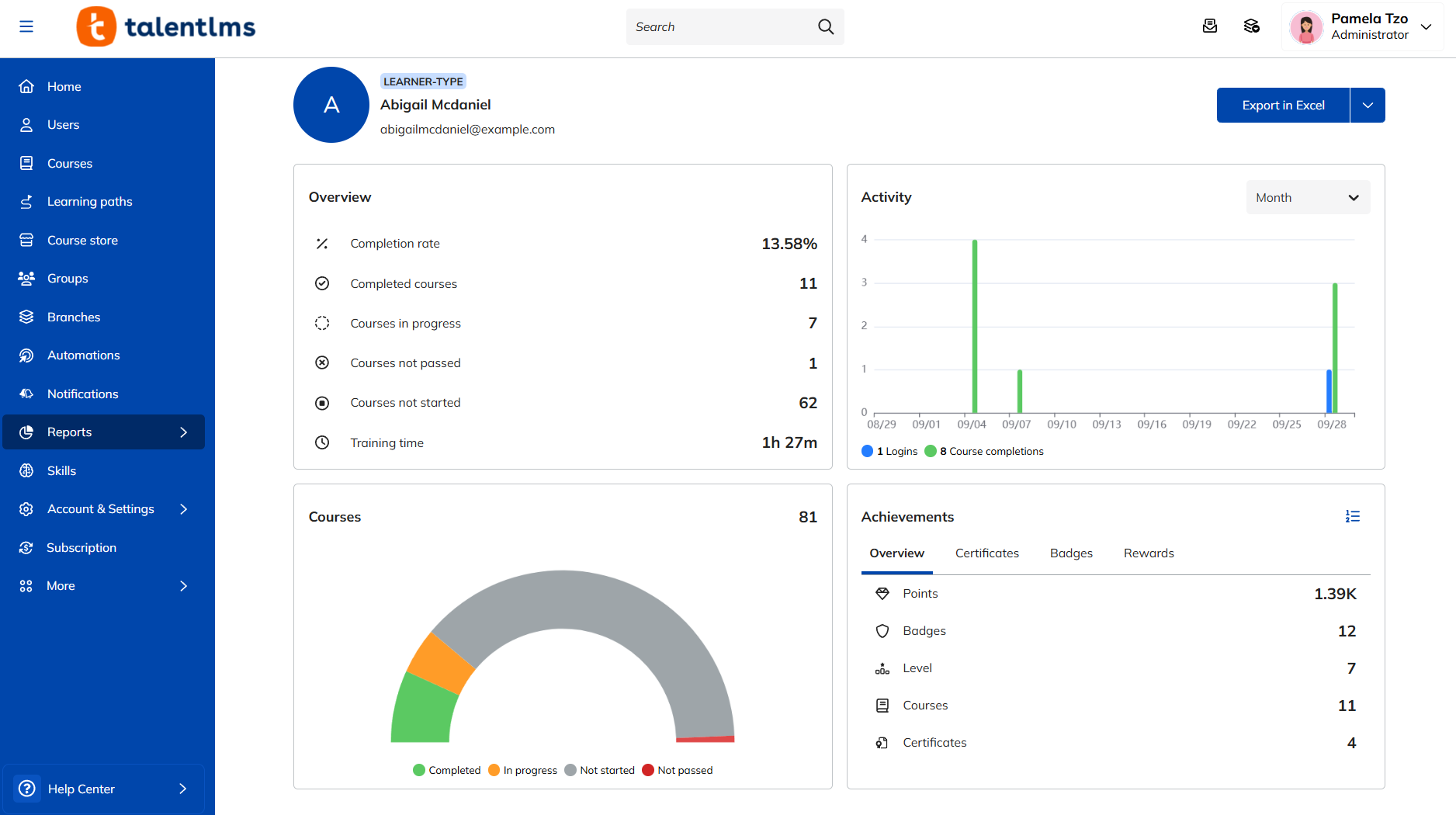
Assessments verify actual competence, and custom Reports show who’s progressing, who’s stuck, and where the gaps are. That’s the difference between hoping your employee training works and knowing it does.
Automate the follow-through
The admin overhead that makes on-the-job training feel expensive (chasing completions, sending reminders, following up on overdue modules) doesn’t need to be manual.
This is where on-the-job training programs often quietly fail. Not because the content is wrong, but because the follow-through is manual. Someone forgets to check in, a reminder doesn’t go out, a new hire finishes one module and doesn’t know what comes next, and so on. Automation doesn’t fix the training itself, but it fixes the gap between training design and training delivery.
TalentLMS handles repetitive admin through built-in automations and notifications. Automations trigger actions based on completions and inactivity. Notifications handle reminders automatically. Nothing falls through the cracks, and experienced team members stay focused on mentoring, not logistics.
Start with what already exists
You don’t need to build every training module from scratch.
That misconception keeps companies stuck in the informal-learning loop: “We can’t afford to formalize our on-the-job training program, so we’ll keep doing what we’re doing.” The barrier to structured on-the-job training is the assumption that you need to build everything from zero before you can start.
TalentLibrary™ provides ready-made courses your team can start with today. It includes courses on soft skills, compliance basics, and all the building blocks that apply across roles.

For the organization-specific content that makes on-the-job training contextual (i.e., your systems, your processes, and your product), TalentCraft lets subject-matter experts turn their knowledge into structured courses with AI.
The best training happens on the job—but never by chance
On-the-job training isn’t broken. The way most companies approach it is.
The myths persist because they match how we imagine learning should work.
When nearly half your workforce sees training and work as competing priorities, the promise of on-the-job training only holds if the design is intentional.
Structure protects on-the-job training’s biggest advantage of learning in context. Consistency, skill tracking, automation, and the right tools through your LMS make sure OJT delivers what it promises.
The shift is only a step away. Moving from assuming learning happens to designing how it happens. From hoping mentors know what to teach to giving them a path to follow. From checking completion to measuring competence.
That’s the gap between the expectation and the reality of on-the-job training. And closing it is how you make it work.
FAQs
What are the benefits of on-the-job training?
When properly structured, OJT reduces time-to-competency by letting employees learn in context. It’s more cost-effective than pulling teams out for extended training sessions, and it builds skills that are immediately applicable. The key is properly structured; unstructured OJT can actually increase costs through inconsistency and lost productivity.
How do you structure on-the-job training effectively?
Start with defined skill outcomes for each role. Build a learning path that sequences foundational knowledge (self-paced modules) with hands-on practice (real-world tasks and simulations). Track progress with skills assessments, not just completion rates. Add feedback loops through regular check-ins and automations so no one falls through the cracks.
What’s the difference between on-the-job training and informal learning?
Informal learning is unplanned. Employees pick up knowledge through observation, conversation, and trial and error. On-the-job training, done right, is intentional. It has a plan, a structure, defined outcomes, and measurement. The two often get confused, which is why many organizations think they have OJT when they actually have informal learning with no accountability.
