

I got my start a couple of decades ago working as a bagger at our local grocery store — the same one from which my Mom just retired after a 25-year career. Grocery supply chains are complex and the logistics are tenuous. And despite what you might have heard, the profit margin s are paper thin, around 1.4 percent.
That’s why it struck me as foolish when I read New York City Mayor Mamdani’s had recently proposed a $30 million municipal grocery store to battle the alleged greed and profit-seeking in the grocery industry.
As is often the case with large public projects — California’s high-speed rail system being a well-known example, still unfinished after years and billions spent — the costs tend to spiral. Mamdani’s proposed grocery tops $3,000 per square foot, roughly four times what private chains typically spend, and includes highly implausible revenue projections. Supermarket magnate John Catsimatidis points out that he could open ten stores with the $70 million Mamdani plans to spend on five. These are serious criticisms, but they miss the deeper problem.
Industry consultants predict the store will lose (and taxpayers will have to pay) at least $300,000 annually, in perpetuity.
The real issue here is that Mamdani’s team is attempting something that cannot, by its very nature, be done well, regardless of who attempts it or how carefully they plan. Municipal grocery retailing fails for structural and incentive reasons baked into the very nature of what grocery stores do and how political institutions work.
Who Decides the Price of Groceries?
Let’s start with the knowledge problem.
Consider what grocery retailing requires. A store manager must decide which products to stock, in what quantities, at what prices, and in what configurations. These decisions depend on knowledge that is highly localized, tacit, and constantly shifting based on the preferences and financial constraints of local customers. Which neighborhoods prefer bone-in chicken thighs versus boneless breasts? When does demand for cilantro spike? How much shelf space should go to gluten-free products? What price point makes a rotisserie chicken an impulse purchase rather than a considered one?
Economist Friedrich Hayek spent much of his career explaining why this kind of knowledge cannot be centralized. This is because, among other reasons, the tacit and local knowledge needed here exists in fragments, dispersed among millions of people, often in forms they cannot articulate. A shopper doesn’t know why she reaches for one brand over another. A produce manager can’t fully explain how he knows the lettuce shipment won’t last the weekend. Private, for-profit grocery stores translate this knowledge, aggregate dispersed information about supply and demand, into prices, profits, and losses. Profits signal that a store is meeting local needs efficiently, and losses signal the opposite. Market feedback is immediate, granular, and unforgiving. A grocery store chain that overprices staples will see customers defect to competitors within days; a store that underprices them may sell out but struggle to afford replacements.
Now consider Mamdani’s proposal, in which the city owns the building and subsidizes operations with a private operator that manages the day-to-day and with “New Yorkers [picking] up the tab for construction, rent and property taxes,” as city officials explained.
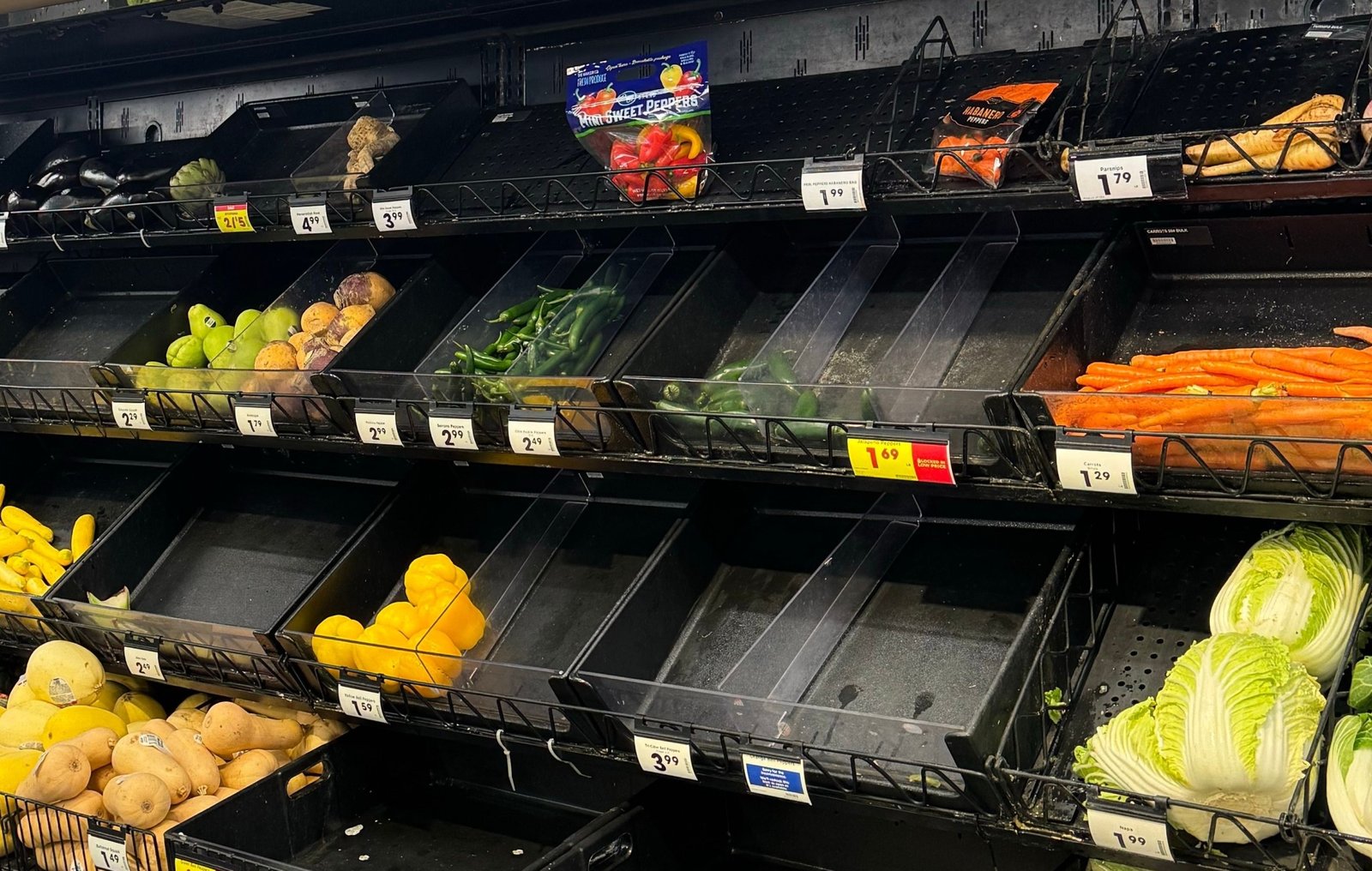
This arrangement severs the feedback loop that makes grocery retailing work. When taxpayer funds cover losses, those losses no longer provide a price signal for whether a store is serving customers well. Fixing prices and stock removes the discipline that punishes the grocer’s failures and rewards his efficiency. Poorly managed stores with inadequate stocks aren’t just possible, they’re virtually guaranteed.
The city’s own predictions claim that to recoup the $30 million construction cost in six years, the 9,000-square-foot store would need to generate $50 million in annual sales. That’s more than double what Food Bazaar — the highest-grossing chain in the city — averages per location, and Food Bazaar stores are typically much larger. City planners arrived at that number by working backward from a political goal, and not, as they should, from market dynamics and customer preferences. They simply planned what they wanted, and assumed the necessary sales to offset the costs would somehow materialize.
Municipal Grocery Stores Don’t Work – Except for Politicians
If municipal grocery stores are such a bad idea, why do they keep getting proposed? Part of the answer lies in what economists call rational ignorance. For most voters, understanding the grocery business in detail would require substantial time and effort — time better spent on their own work and families. The expected benefit of gaining all that extra knowledge, from any individual voter’s perspective, is approximately zero. One vote will not determine whether the policy passes, so there’s no personal return to becoming informed. The policy sounds appealing, and there’s little obvious cost to being wrong (though, the ultimate tax burden imposed by Mamdani’s agenda might make New Yorkers’ ignorance quite costly indeed).
Similarly, policymakers face conflicting incentives. Public choice theory, pioneered by James Buchanan, asks us to apply the same assumptions to politics that we apply to markets: namely that people respond to incentives, pursue their own interests, and face constraints. And from this perspective, Mamdani’s $70 million grocery initiative makes perfect sense. The benefits are concentrated and visible, with a sparkling media rollout on one of the Mayor’s key campaign issues, and five shiny new grocery stores bearing the mayor’s political fingerprints. The costs, by contrast, are diffuse and largely invisible, spread across all city taxpayers and absorbed into the general budget. When the stores lose $300,000 annually, as consultants predict, most voters will never connect the dots between their tax burden and the underperforming stores.
Empty Promises Now, Empty Shelves Tomorrow
Mamdani’s grocery store will fail. Even if shoppers save a dollar over Food Bazaar, that pound of apples will include appropriated tax dollars, food waste, labor distortions, and a thousand other costs that will make it wildly more expensive than the sticker would indicate. The real price is far more expensive than a market competitor’s, even if the shelf price doesn’t show it.
The price of apples is a secret language, the communication of a billion bits of dispersed, organic, intuitive knowledge of costs, trade-offs, and alternatives. All that information, over time and geography, quietly working away in the minds of Washington apple growers and migrant fruit pickers, beekeepers and cider makers, interstate truck drivers and NYC shelf stockers, is infused into the price sticker on a pound of apples in a market-driven grocery store. And Mamdani, like hubristic dreamers before him, thinks he can wipe all that away, slap on a price that looks like success to the voters, and hide all the rest in your tax bill.
