

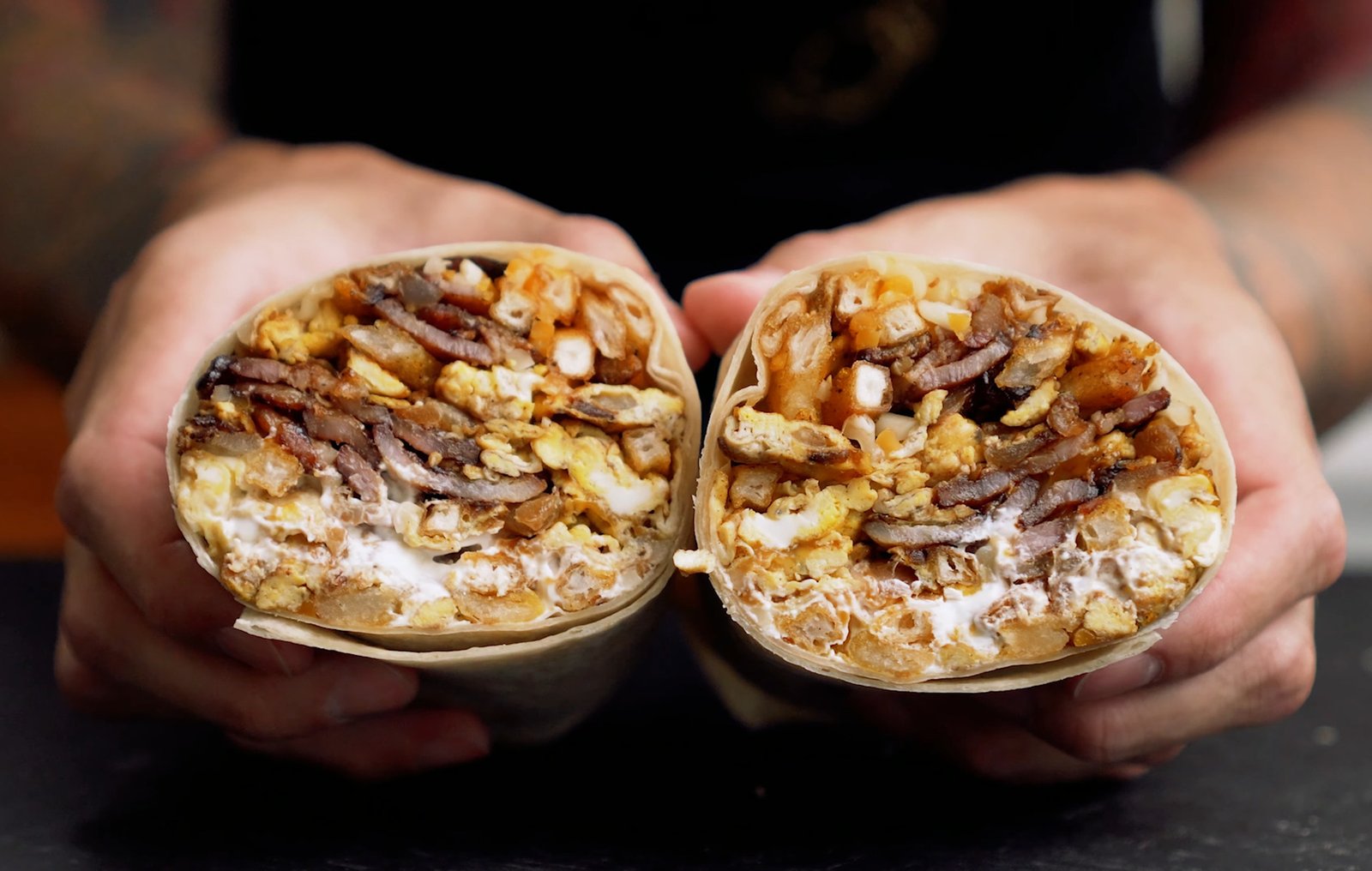
Back in August, the American right spent an entire week arguing about burritos.
The food fight began when Turning Point USA’s Andrew Kolvet relayed a college student’s complaint that a burrito shouldn’t cost $20. Conservative columnist Marc Thiessen didn’t buy the student’s sob story. “Cry me a river,” Thiessen tweeted, pointing out that students could log off DoorDash and grab cheaper burritos from Taco Bell or their school cafeteria.
Prominent conservatives entered the fray. Battle lines were drawn. Aspersions were cast. Fox News labeled the entire ordeal a “GOP civil war over affordability.”
Everyone had an opinion. But nobody bothered to bring the receipts.
Lost amid all the name-calling on the Right was a far more important question about a rather inconvenient truth: how much have Republican-backed policies contributed to today’s “affordability crisis”?
So, enough burrito talk. Let’s talk TACOs — in particular, President Trump’s erratic trade policy and never-ending carousel of new tariffs.
Start with the wrapper. Aluminum foil carries a 50 percent tariff imposed on imported metals under Section 232. So does the steel can that holds the chipotles. When the Can Manufacturers Institute asked the White House to exempt filled food cans, the request was, in the institute’s words, “completely denied.” So before you take your first bite, tariffs have already taken theirs.
Next, the filling. In July 2025, the Commerce Department imposed a 17 percent duty on Mexican tomatoes, which account for roughly 90 percent of American tomato imports. Tomato prices this spring ran 40 percent above their level a year earlier, rising faster than any other grocery store staple. One sandwich chain reported that the price for a case of tomatoes rose from $27 to $93.
Then there’s the beef itself. Ground beef reached $6.89 a pound in July, up 57 percent from five years ago. To be fair, many factors are driving up beef prices. But tariffs themselves caused cattle prices to “swing wildly” as producers tried to anticipate the president’s erratic moves. Unsurprisingly, beef prices spiked. On August 21, the administration announced that it would admit 300,000 metric tons of foreign ground beef, duty-free, to bring prices down. American ranchers reeled.
To recap: the administration that spent two years insisting tariffs would lower prices for Americans suspended its own tariffs to lower the price of beef. If that logic confuses you, join the Trump administration. That’s quite a revealing reversal, albeit one that economists could’ve seen coming from a mile away.
Cheese is the most recent casualty. Midsummer, Trump slapped a 50 percent tariff on Canadian dairy under Section 338 of the Tariff Act of 1930 — a provision no president has invoked. It also violates the terms of his own USMCA trade agreement. Ottawa retaliated within 48 hours. Trump promptly retaliated to Canada’s retaliation, leaving producers continually in the lurch.
And then there’s guacamole. Avocados, mercifully, have been relatively cheap for the past few decades. Mexican avocados have entered the United States duty-free since 1994, and Chipotle’s most recent filing lists falling avocado costs among the few pressures easing its margins. Coffee and cumin have been spared as well, exempted on the grounds that they cannot be “grown or produced in sufficient quantities or at reasonable prices in the United States.” At last, the president has yielded to market forces. It’s just a shame that he waited until the final ingredient—the guac—before succumbing to economic reality. Our wallets and bellies would be fatter if he’d only extended the same logic to other ingredients.
Of course, the fate of many of our favorite dishes remains in flux. In February, the Supreme Court ruled the emergency statute underwriting most of these tariffs, IEEPA, hadn’t authorized tariffs, and the Treasury began refunding some $100 billion. Alas, rather than abandon course, the administration tried various other policy tools: Section 122, then Section 301, then Section 338 — four legal authorities in six months. Variety might be the spice of life and the key to a delicious meal, but such policy whiplash creates tremendous uncertainty for grocers, restaurateurs, and ranchers. Uncertainty means less investment, less supply, and higher prices.
Perceptive readers might ask: Why do tariffs persist if all they do is raise prices? One reason has to do with what economists call the logic of concentrated benefits and dispersed costs. Domestic producers benefit enormously from tariffs. Slapping tariffs on, say, foreign beef and beans allows American farmers to charge higher prices and pocket bigger profits. If those protective tariffs net each of them $1 million in additional sales, each farmer has an incentive to spend up to $1 million per year lobbying their elected representatives to keep those trade restrictions in place.
But what about the millions of Americans stuck paying higher prices? Surely their sheer numbers will allow them to overwhelm the farmers at the ballot box and get the tariffs repealed, right?
Well, not exactly. All told, beef and bean tariffs may cost each consumer a few dozen bucks a year. The average consumer hardly notices that they’re paying marginally more for nearly every element in their burrito. They’ll therefore have little incentive to take the time and incur the cost associated with banding together to lobby politicians to eliminate trade restrictions.
Taken together, however, tariffs are, in fact, putting a big dent in Americans’ wallets. According to the Tax Foundation, tariffs will likely cost the average household $840 a year. All those small price hikes add up quickly. The New York Fed projects that they’ve already raised the price of most imported good by at least 2 percent. That’s enough to be painful for most families, even if it’s not enough to drive the median voter to realize they should support freer trade.
Trump’s critics have an apt name for the threats he issues and quietly walks back: TACO, for Trump Always Chickens Out. We’d propose a new one: BURRITO, for Blowhards’ Unilateral Restrictions Raise Ingredient Tax Overhead. It’s not quite as snappy, but given his trade policy, we think it’s fitting.
Rather than starting silly food fights online, Republicans should get their own house in order. That starts by ending the self-inflicted policy blunders fueling today’s affordability crisis.
The great economic satirist Frédéric Bastiat wrote that the whole of economics lies in seeing not only what is seen, but also what is not seen. Unwrap a burrito, and you’ll find both. The costs of today’s tariffs may be difficult to trace. They’re hidden in a labyrinth of constantly changing levies and restrictions. They’re also swept into a rising tide of monetary inflation, which itself has raised prices by roughly 30 percent since 2020. But make no mistake: they’re taking a bite out of your budget.
These themes are explored further in the authors’ forthcoming book from the Independent Institute. Trade Wars: Why Freedom Trumps Tariffs.
