

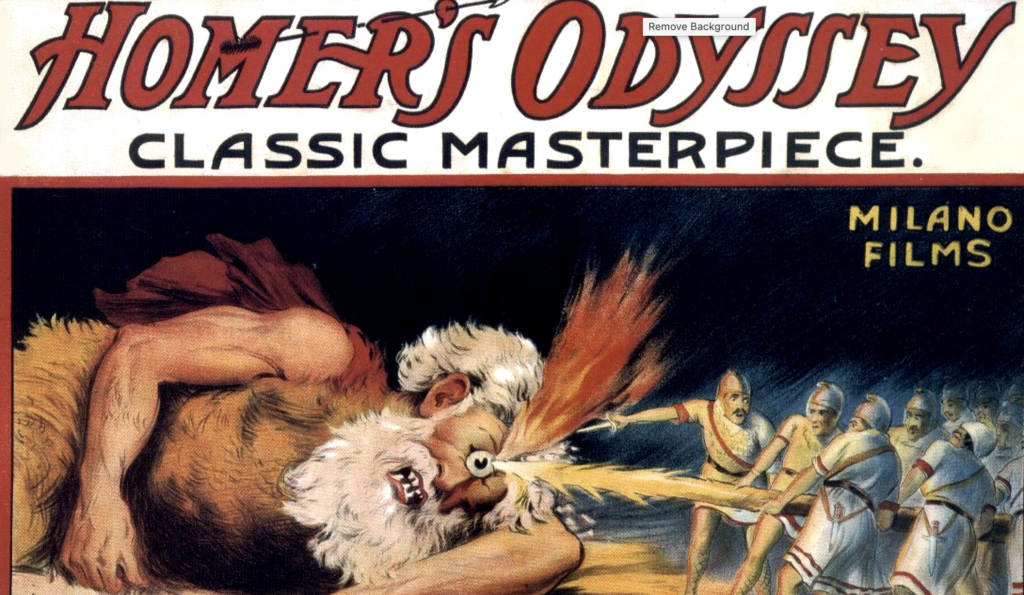
Public and commercial spaces around the world are now lined with imagery of a vertebra-studded battle helmet and statues surrounded by flame. It’s all part of the promotional campaign for Christopher Nolan’s adaptation of the Odyssey, which will begin opening in theaters later this month. Much has been said and written about how the project represents the next phase of Nolan’s ever-grander cinematic ambitions, but banking on the spectacle value of Homer has a long history in filmmaking. When the Italian silent adaptation L’Odissea came out in 1911, for example, it was uncertain even whether audiences would tolerate the 44 minutes it took to depict Odysseus’ arduous journey home.
Though it was released in the fall of 1911 in Italy and the following winter in the U.S., L’Odissea now looks like a summer blockbuster avant la lettre, or ante litteram — or then again, given the material, πρὶν ὀνομασθῆναι, though most of us are still waiting to see just how ancient Nolan and his collaborators have allowed themselves to get.
By the standards of their day, the makers of L’Odissea appear to have spared no expense on sets, costumes, and even visual effects, most notably in its portrayal of the cyclops Polyphemus. Technically, none of it may measure up to what Nolan and company have in store, but the theatrical gestures, shifting color tints, and occasionally battered textures do their part to conjure up a reality of their own.
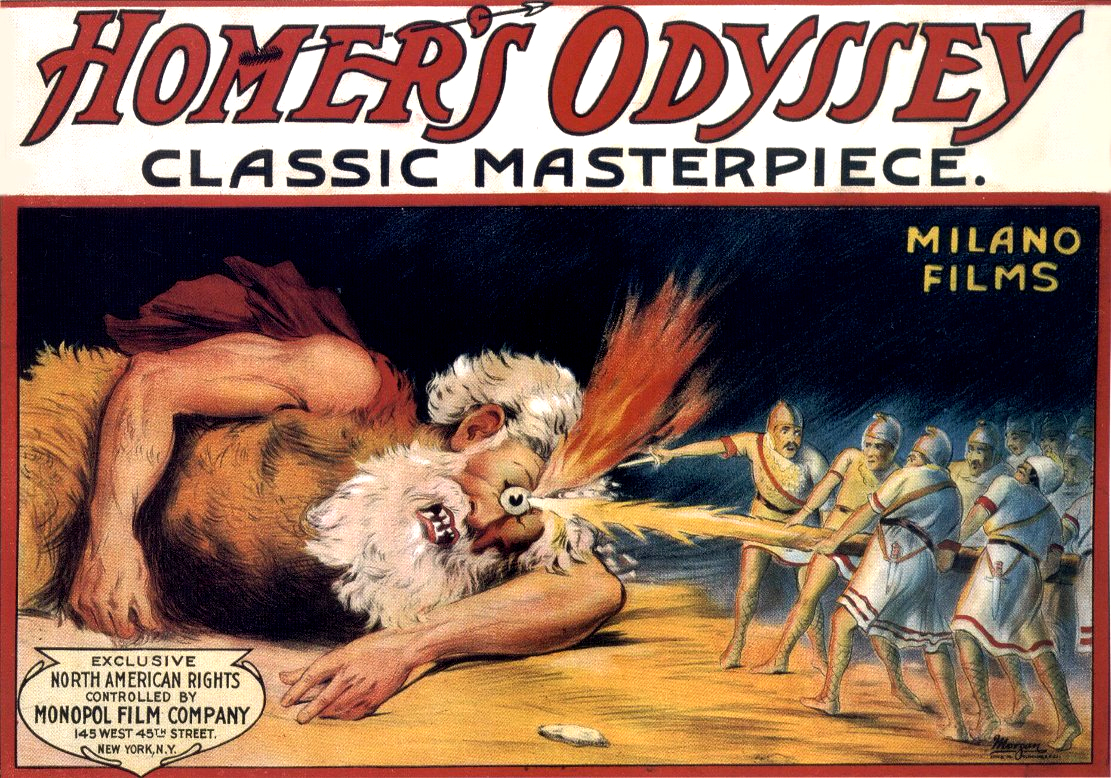
L’Odissea was actually the second major literary adaptation of that year for its directors, the trio of Francesco Bertolini, Adolfo Padovan, and Giuseppe De Liguoro, all working at the studio Milano Films. Here on Open Culture, we’ve previously featured their first, L’Inferno, which dramatizes the first and most famous part of Dante’s Divine Comedy at a length of 73 minutes. That runtime qualified it as the first feature-length film ever produced in Italy, by comparison to which L’Odissea may have actually felt like a more familiar viewing experience to contemporary viewers accustomed to shorts. Now that humanity has been re-acclimated to watching things a few minutes at a time here in the twenty-twenties, Nolan’s nearly three-hour Odyssey looks like a bold move indeed. But then, an epic poem demands an epic interpretation.
Note: If you click “cc” on the YouTube video above, English subtitles will appear.
Related content:
Hear What Homer’s Odyssey Sounded Like When Sung in the Original Ancient Greek
An Interactive Map of Odysseus’ 10-Year Journey in Homer’s Odyssey
Hear the First Book of Homer’s Iliad Read Aloud in the Original Greek
Cinecittà Luce and Google to Bring Italy’s Largest Film Archive to YouTube
Based in Seoul, Colin Marshall writes and broadcasts on cities, language, and culture. He’s the author of the newsletter Books on Cities as well as the books 한국 요약 금지 (No Summarizing Korea) and Korean Newtro. Follow him on the social network formerly known as Twitter at @colinmarshall.
