

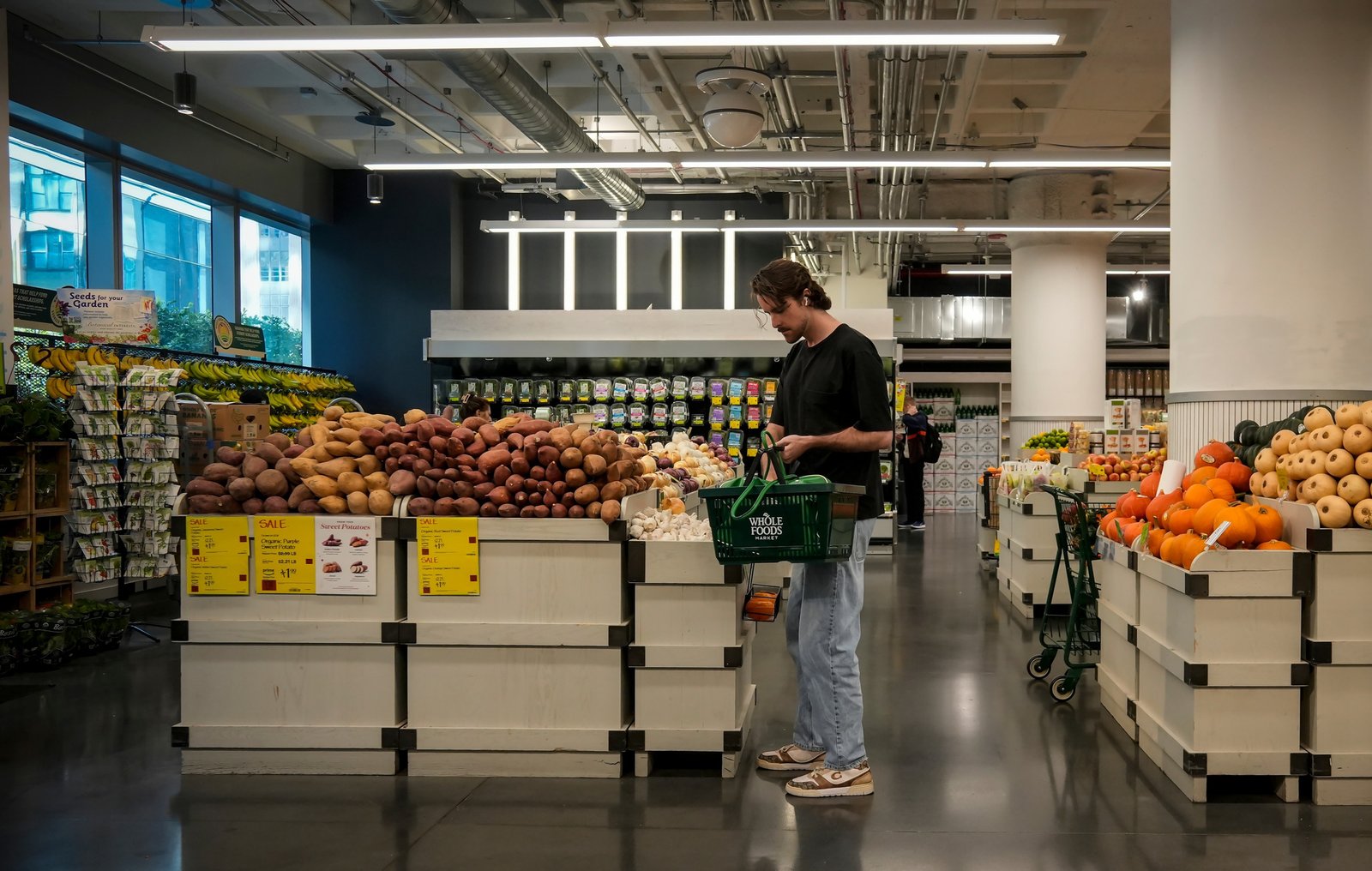
New York City Mayor Zohran Mamdani recently announced the opening of five city-run grocery stores, which will offer goods at 30 percent below retail prices. On paper there’s no reason to oppose this — after all, who could be against lowering grocery prices? But we can list at least three detrimental second-order effects to using the government to artificially suppress grocery prices.
1. Undercutting Local Grocers and Bodegas
New York City is home to more than 1,100 grocery stores and 10,000 bodegas; these stores typically operate on paper-thin margins — roughly two cents for every dollar in sales. As a result, the city-run grocery stores’ 30-percent discount will make it significantly more difficult for existing bodegas and grocers to compete. Mamdani himself recognizes this, offering as a solution that his stores will only sell a handful of staples:
We are not looking to compete with bodegas or grocery stores when it comes to their ability to survive. What we’re looking to do is to provide affordability that is guaranteed to New Yorkers.
But good intentions don’t matter; good outcomes do. And the outcome here is fairly simple to predict. Grocery stores — and even bodegas — rely on selling at least some staples to survive. Accordingly, every store near the city-run grocery stores will be put at risk of closing, because they can’t possibly compete with a subsidized alternative that uses public funds to systematically undercut them.
No additional productivity is created by Mamdani’s grocery stores. They aren’t lowering prices by being more efficient or innovative. Instead, their design continuously undercuts competing prices, no matter how low the competition’s prices go. If chicken costs $5 per pound and a private grocery store finds a way to reduce that price to $3 through more efficient supply chains and automation, Mamdani’s grocery store will still be required to undercut it. The city-run stores’ prices are pegged to 70 percent of the typical market rate. There is quite literally no way for local stores to compete, because every cut they make will cause the city-run stores to cut their prices even further.
2. Shifting Costs to Taxpayers
New York City has already committed $70 million in public spending toward the initial construction and outfitting of the stores. And that’s just the upfront costs.
At this point, it’s unclear what the recurring costs will be, but New York’s own plan makes clear that taxpayers will remain integral to the stores’ funding by offering subsidies that “will lower grocery prices.” To just take a stab at estimating recurring costs, though, one grocery-industry consultant estimates that the 9,000-square-foot La Marqueta location could generate around $8 million in annual sales. Using that as a rough benchmark, five stores would sell approximately $40 million of groceries each year. New York is subsidizing the groceries by 30 percent. Absent equivalent gains in efficiency, taxpayers will have to cover roughly $12–14 million annually merely to preserve the lower prices.
And this doesn’t even account for the more hidden costs to taxpayers, such as the opportunity costs from not being able to use the land for some other function. One brokerage partner estimated the forgone rent at the La Marqueta site alone at approximately $250,000 per year. Assuming similar rent across the other four locations, forgone rent adds more than another million dollars in losses the taxpayer must cover.
Will Mamdani’s city-run grocery stores make groceries cheaper for a small subset of consumers? Sure. But only by redistributing those costs to taxpayers, destroying economic value and burdening taxpayers in order to redistribute a small fraction of what remains to those who happen to live nearby the city-run grocery stores. And there’s no guarantee that these city-run grocery stores will benefit their target audiences — anyone can shop there.
3. Inviting Shortages
Finally, Mamdani’s city-run grocery stores will be highly distortionary, generating artificially high demand and creating arbitrage opportunities for resellers. Recognizing that, New York’s proposal anticipates bulk purchases, yet it simultaneously demands full shelves and calls for “robust demand management.” To make matters worse, New York has no reliable way to identify repeat or bulk buyers — despite below-market prices creating a huge incentive to purchase goods at the city’s 30-percent discount and sell elsewhere at a profit. Unless New York maintains effectively unlimited inventories, empty shelves will follow.
The city can respond in limited ways: by rationing purchases, by tolerating chronic shortages, or by committing still more taxpayer money to additional inventory. Every option undermines part of the proposal. Rationing limits how much struggling families can save and requires purchase monitoring to prevent abuse. Shortages make the discount meaningless. Increasing inventory merely magnifies the problem of government subsidies.
Grocery affordability is a real problem — and policymakers can take steps to address it. City-run grocery stores, however, are not one of them.
