Close Menu
KumbhCoinorg
    What's Hot

    Richard Gere’s son Homer Gere makes jaw-dropping acting debut for Euphoria season three

    May 26, 2026

    Everytime – first-look review | Little White Lies

    May 26, 2026

    What Hayek Tells Us About the Limits of War Planning

    May 26, 2026
    Facebook X (Twitter) Instagram
    Trending
    • Richard Gere’s son Homer Gere makes jaw-dropping acting debut for Euphoria season three
    • Everytime – first-look review | Little White Lies
    • What Hayek Tells Us About the Limits of War Planning
    • Only in America
    • Sunil Gavaskar takes aim at IPL broadcasters after Rishabh Pant’s F-bomb incident
    • Does John Tortorella’s Run Alter the Vegas Golden Knights Plan for Next Season?
    • This beach hut costs the same as a three-bedroom house
    • Unchained And Bitcoin Park Hit The Road For Bitcoin Pizza Day With “The New Rules Of Bitcoin”
    Facebook X (Twitter) Instagram
    KumbhCoinorg
    Tuesday, May 26
    • Home
    • Crypto News
      • Bitcoin & Altcoins
      • Blockchain Trends
      • Forex News
    • Kumbh Mela
    • Entertainment
      • Celebrity Gossip
      • Movie & TV Reviews
      • Music Industry News
    • Market News
      • Global Economy Insights
      • Real Estate Trends
      • Stock Market Updates
    • Education
      • Career Development
      • Online Learning
      • Study Tips
    • Airdrop News
      • Ico News
    • Sports
      • Cricket
      • Football
      • hockey
    KumbhCoinorg
    Home»Market News»Global Economy Insights»What Hayek Tells Us About the Limits of War Planning
    Global Economy Insights

    What Hayek Tells Us About the Limits of War Planning

    kumbhorgBy kumbhorgMay 26, 2026No Comments4 Mins Read
    Facebook Twitter Pinterest LinkedIn Tumblr Email
    What Hayek Tells Us About the Limits of War Planning
    Share
    Facebook Twitter LinkedIn Pinterest Email Copy Link

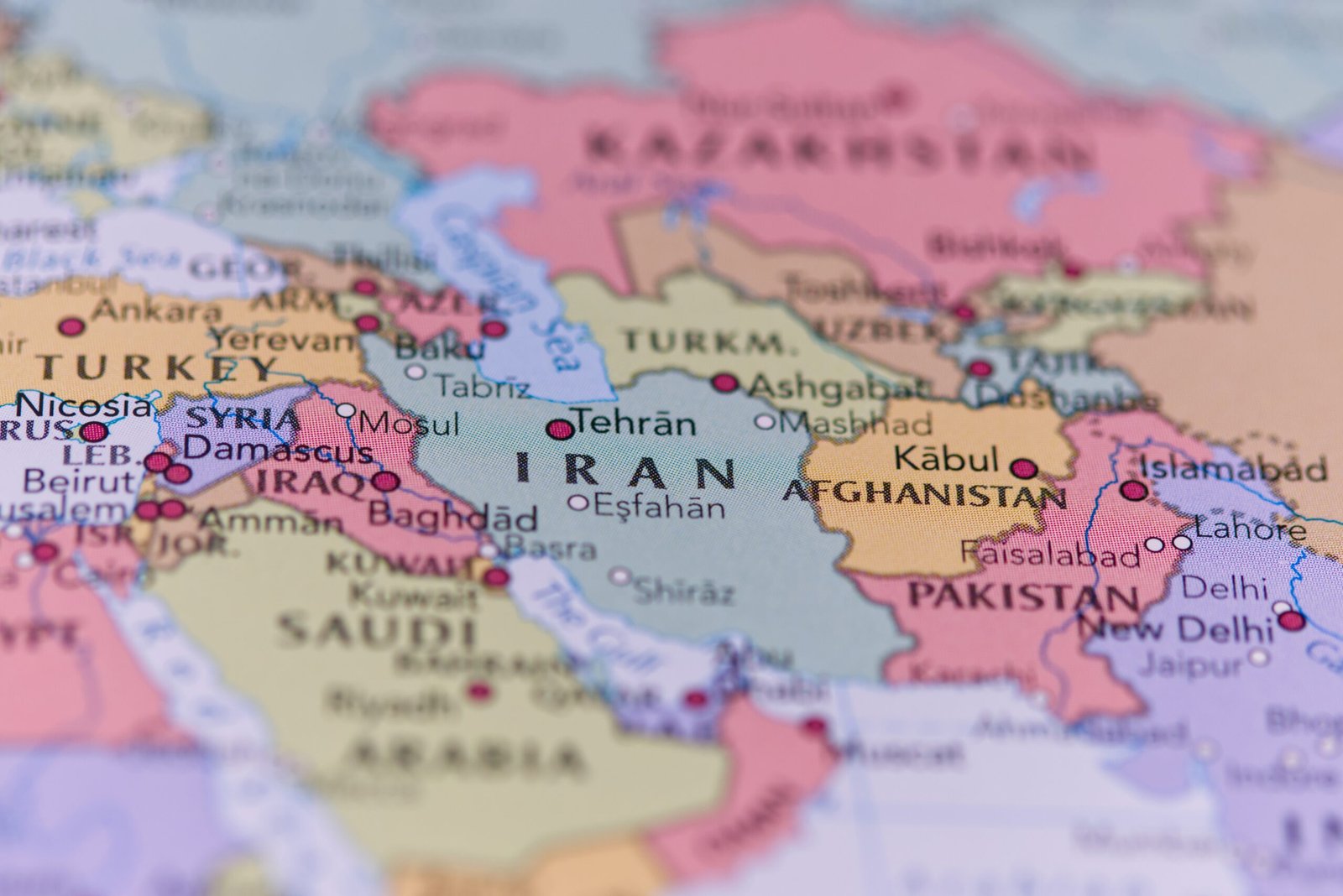
    As the Iran campaign grinds into its third month, with unpredictable reactions and uncontrollable consequences pushing the conflict toward open‑ended escalation — a prolonged war — the contrast with January’s swift capture of Venezuelan leader Nicolás Maduro could not be starker. 

    Yet the two interventions are by the same military and the same commander-in-chief. What explains the difference?

    The contrast between the two campaigns points to a deeper issue. War has long been understood as having uncertain outcomes. As Carl von Clausewitz observed, any war unfolds in a “fog” where much remains unknown and therefore cannot be controlled. Yet military campaigns are still planned as rational and deliberate undertakings, utilizing strategies and tactics to manage or overcome this uncertainty and bring about the intended outcome: victory on the battlefield.

    Friedrich Hayek offers a fundamental and revealing critique of the planning mindset that permeates the military and its campaigns. His work on knowledge in society as not given to a single mind, but dispersed across individuals, puts the very framework of top-down planning in question. War, as the coercive imposition of one centralized rule over another, suffers from this limitation.

    Although Hayek developed this insight in the context of markets, it applies equally to war. Military campaigns seek to impose a single will, yet their success depends on navigating and overcoming the dispersed knowledge embedded in the societies they confront — and therefore the varied and unpredictable responses on the battlefield and beyond. Because the goal is to overtake and establish control over the enemy, war becomes a central planning problem.

    Hayek’s insight is that much of what matters is knowledge of the “particular circumstances of time and place.” This knowledge is largely tacit, what Michael Polanyi described as knowing more than we can tell. Because it is practical and experience-based, it cannot be centralized or fully communicated.

    The reason the knowledge gap is not merely a complication but a fundamental barrier lies in the nature of feedback. Hayek observed that markets correct poor planning through price signals, which generate decentralized, immediate responses that reveal planners’ errors.

    War lacks an equivalent mechanism. As James Scott argued, by the time the knowledge gap becomes apparent, the intervention has already altered the society in which it is embedded. New, irreversible facts are created on the ground. In Iran, each month of campaigning generates reactions that no prior intelligence service could have anticipated, and each reaction reshapes the terrain for what comes next. The planner is initially ignorant, lacking the full knowledge necessary to make rational decisions, and it is the very act of planning that exacerbates this ignorance.

    Even taking uncertainty into account does not solve it. Donald Rumsfeld’s distinction between “known and unknown unknowns” acknowledges uncertainty, but does not dispel it. However, Hayek’s point explains that the issue is not simply that some data are missing, but rather that the necessary knowledge found in the cultural, historical, and social spheres is not of the kind that can be compiled, centralized, or incorporated into a plan.

    The swift resolution of the Venezuelan conflict and Iran’s prolonged involvement illustrate this well. Maduro represented a center of concentrated power — one man in a specific and well-defined position — and his removal required knowledge that intelligence could approximate. Iran, by contrast, is different: the task is broader and less well defined. Success hinges not only on military might, but also on the responses of a society deeply rooted in distinct cultural, historical, and religious dynamics. Although there is opposition to the regime, would it rise in support of a foreign intervention, remain passive and silent, or even side with the state in resisting it? Even the most sophisticated intelligence cannot reliably predict such outcomes, because the relevant knowledge is dispersed among millions of individuals.

    The danger is not that war is irrational, but that it is treated as if it can be made rational and predictable. This illusion not only justifies action without sufficient knowledge but also underlies the belief that societies can be reconstructed from the top down after conflict. War is not only a matter of military might and technology, but also of human response.

    Hayek’s insight thus invites skepticism toward the idea of rational war. Outcomes depend on dispersed and tacit knowledge that no planner can fully access or control. War is therefore not only uncertain, as Clausewitz argued, but constrained by deeper epistemological limits.

    Planning cannot overcome this limitation. As President Eisenhower put it, “Plans are worthless, but planning is everything.”

    Hayek limits Planning Tells War
    Share. Facebook Twitter Pinterest LinkedIn Tumblr Email
    Previous ArticleOnly in America
    Next Article Everytime – first-look review | Little White Lies
    kumbhorg
    • Website
    • Tumblr

    Related Posts

    Global Economy Insights

    Business Conditions Monthly March 2026

    By kumbhorgMay 25, 2026
    Global Economy Insights

    Why Libertarianism Keeps Splintering | The Daily Economy

    By kumbhorgMay 25, 2026
    Global Economy Insights

    Warsh Inherits a Fed Caught Between Inflation and Trump

    By kumbhorgMay 24, 2026
    Entertainment

    Rape survivor Pelicot tells Hay Festival how she found love again

    By kumbhorgMay 24, 2026
    Global Economy Insights

    Controlled Commerce: The March of a New Global Economic Order

    By kumbhorgMay 24, 2026
    Global Economy Insights

    Exit Taxes Won’t Save Failing States

    By kumbhorgMay 23, 2026
    Add A Comment

    Comments are closed.

    Don't Miss

    Richard Gere’s son Homer Gere makes jaw-dropping acting debut for Euphoria season three

    By kumbhorgMay 26, 2026

    Richard Gere’s son has kicked his acting career off with a bang, making an appearance…

    Everytime – first-look review | Little White Lies

    May 26, 2026

    What Hayek Tells Us About the Limits of War Planning

    May 26, 2026

    Only in America

    May 26, 2026
    Top Posts

    Satwik-Chirag storm into China Masters final with straight-game win over Malaysia | Badminton News

    September 21, 2025176 Views

    SaucerSwap SAUCE Crypto Breaks Key Resistance Amid Nvidia-Hedera Deal

    July 15, 202548 Views

    Unlocking Your Potential with Mubite: The Future of Crypto Prop Trading

    September 17, 202533 Views

    Stablecoins 2025 Exchange Reserves: Insights into DeFi Trends

    September 8, 202532 Views
    Stay In Touch
    • Facebook
    • Twitter
    • Pinterest
    • Instagram
    • YouTube
    • Vimeo
    About Us

    Welcome to KumbhCoin!
    At KumbhCoin, we strive to create a unique blend of cultural and technological news for a diverse audience. Our platform bridges the spiritual significance of the Kumbh Mela with the dynamic world of cryptocurrency and general news.

    Facebook X (Twitter) Pinterest WhatsApp
    Our Picks

    Richard Gere’s son Homer Gere makes jaw-dropping acting debut for Euphoria season three

    May 26, 2026

    Everytime – first-look review | Little White Lies

    May 26, 2026

    What Hayek Tells Us About the Limits of War Planning

    May 26, 2026
    Most Popular

    7 things to know before the bell

    January 22, 20250 Views

    Reeves optimistic despite surprise rise in UK borrowing

    January 22, 20250 Views

    Barnes & Noble stock soars 20% as it explores a sale Barnes & Noble stock soars 20% as it explores a sale

    January 22, 20250 Views
    • Terms and Conditions
    • Privacy Policy
    • Contact Us
    • About Us
    © 2026 Kumbhcoin. Designed by Webwizards7.

    Type above and press Enter to search. Press Esc to cancel.